What's inside
As an Amazon Associate I earn from qualifying purchases. This post may contain affiliate links at no extra cost to you.
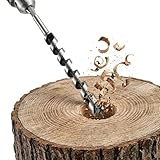
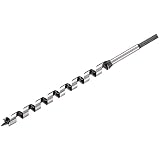
A ship auger is a useful choice for deep, fairly clean holes in framing lumber, joists and other thick stock. The bit’s screw tip pulls it into the wood, while its open flute carries chips back out. For hardwood, though, the auger is only part of the decision: shank fit, bit length, drill torque and how well the bit sheds chips all affect the result.
As an Amazon Associate we earn from qualifying purchases at no extra cost to you.
What we cover
Choose the right ship auger for the hole
Match the bit diameter to the job rather than buying a large set by default. Common sizes for construction work run from about 1/2 to 1-1/2 inches. A wider hole removes much more wood and puts a heavier load on the drill. If you need a hole for a pipe or cable, check the required clearance and any framing rules before drilling; a larger bit can weaken a joist more than expected.
For hardwood, a sharp, well-ground cutting edge matters more than a long list of premium features. Look for a self-feeding screw tip and a flute long enough for the hole depth. A standard ship auger is often a sensible, lower-cost pick for occasional work in oak, maple or ash. A higher-quality bit may be worthwhile for repeated holes, where consistent cutting and longer edge life save time.
Ship auger and alternative bit types
| Bit type | Best use | Hardwood trade-off |
|---|---|---|
| Ship auger | Deep holes in framing and solid lumber | Fast chip removal, but the screw tip can pull aggressively and bind if the drill stalls |
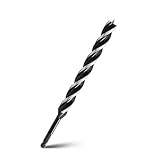
| Brad-point bit | Accurate, shallow holes in finished stock | Leaves a clean entry, but small bits are not a practical choice for deep, wide holes |
| Forstner bit | Flat-bottomed holes and clean counterbores | Produces a neat hole but generates heat and is slower in deep hardwood |
| Spade bit | Inexpensive, occasional rough holes | Cheap and quick in a drill, but usually rougher and less controlled in hardwood |
Choose a ship auger bit for deep holes where chip clearing matters. For a clean, shallow hole or a flat-bottomed recess, a different bit style may do a better job.
Check the shank and the drill before buying
Many ship augers use a 7/16-inch hex shank, but confirm the bit’s actual shank size and the chuck capacity of your drill. A bit that does not fit securely can slip, damage the chuck or come loose under load. Avoid using a small impact driver as a substitute for a substantial drill: an auger’s screw tip can grab suddenly, and impact action does not make that reaction easier to control.
A high-torque cordless drill with a side handle is a better match for larger augers. For holes around 1 inch or larger in dense hardwood, a drill with a mechanical low gear and a firm auxiliary handle gives more control than a compact, single-speed model. Use the manufacturer’s recommended speed range; as a practical starting point, large augers generally need a slower setting than small twist bits. If the drill bogs down, release the trigger rather than forcing it. For a compatible drill with an auxiliary handle, see high-torque cordless drills with side handles.
Drill hardwood without cooking the bit
Clamp the work securely and support the exit side when possible. Mark the center, start the bit square to the surface and let the lead screw establish the path. Do not lean your full weight on the drill: excessive pressure can make the bit bind, stall the motor or tear out the back of the workpiece. Keep both hands on the drill when using a large auger.
For a deep hole, withdraw the bit periodically to clear chips, especially if the drill slows or the flute stops moving material out. Hardwood chips can pack tightly in the flute, causing friction and heat. Stop if you smell scorching, see smoke or feel the drill housing heating rapidly. Pulling out the bit to clear it is faster than trying to power through a jam.
Pay attention as the tip approaches the far side. Reduce pressure, and if the work can be accessed from both sides, drill partway through and finish from the opposite side using the center mark. That reduces breakout. If the hole must be straight through a thick member and access from one side is all you have, back off as the point emerges and let the cutting edges finish gradually.
When to spend more—and how to keep the bit cutting
For a few holes in a home project, a reasonably priced carbon-steel ship auger is usually enough. Buy a better-ground bit if you will drill many holes, work in dense hardwood regularly or need reliable cutting after repeated use. A dull edge takes more force, runs hotter and increases the chance of a stall; replacing a worn bit can be cheaper than losing time or damaging the work.
After use, brush chips from the flute and wipe the bit dry before storage. Do not sharpen the screw tip casually: its shape controls how aggressively the bit feeds, and changing it can make the auger grab or stop feeding properly. If you need several diameters, compare the sizes you will actually use before buying a set; a single quality bit in the right diameter is often better value than a large assortment of rarely used sizes. For occasional rough work, a single ship auger in the required diameter keeps the purchase simple.