What's inside
As an Amazon Associate I earn from qualifying purchases. This post may contain affiliate links at no extra cost to you.
Structural screws and lag bolts can both make strong timber connections, but they are not interchangeable by default. The right choice depends on the connector, the load, the lumber, and whether you can drill and drive the fastener correctly. For ordinary outdoor framing, a rated structural screw is often quicker. A lag bolt can still be the sensible, cheaper choice when the plans or hardware call for one and you have room for the required pilot hole and washer.
As an Amazon Associate we earn from qualifying purchases at no extra cost to you.



What we cover
What counts as a structural screw or lag bolt?
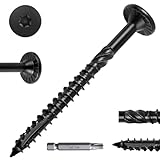
A structural screw is designed and tested for specified wood-to-wood or connector applications. It typically has a hardened steel shank, a sharp point, and a head shaped for driving with a bit. Some are intended for direct driving; others require a pilot hole. Their allowable loads depend on the screw’s diameter, length, wood species, spacing, edge distances, and installation angle. Check the manufacturer’s technical data rather than judging strength by appearance.
A lag bolt—more accurately, a lag screw—is a heavy, coarse-threaded fastener with a hex head. It is usually driven with a wrench or socket and normally needs a pilot hole. A washer under the head spreads bearing pressure. Lags are common in decks, timber framing, and repairs, but they are not automatically stronger than structural screws of similar size.
Quick comparison
| Factor | Structural screw | Lag bolt |
|---|---|---|
| Installation | Often driven directly with an impact driver; follow product instructions | Usually needs a pilot hole and a wrench or socket |
| Typical advantage | Fast installation and published capacities for listed uses | Low purchase cost and familiar hardware-store availability |
| Common risk | Overdriving, wrong bit, or using a screw outside its rated application | Splitting from an undersized or missing pilot hole; head or shank damage |
| Best guide | Manufacturer’s installation and load tables | Plans, connector instructions, and appropriate pilot-hole guidance |
When structural screws make more sense
Choose structural screws when speed matters, access is awkward, or the connection uses a product with published load values for the exact application. Many can be installed with a cordless drill or impact driver, which is useful when fastening overhead or assembling a deck frame. A purpose-made bit is usually included. Keep the driver straight and stop when the head seats; an impact driver can drive past the surface or snap a fastener if you lean on the trigger too long.
Do not assume every large construction screw is a structural screw. Drywall screws and general-purpose deck screws are not substitutes for rated timber fasteners in a load-bearing connection. Their steel, head, and tested capacities may not suit that job. If you are buying for a structural repair or new framing, compare the fastener’s stated use and load data, not just its diameter. Browse structural wood screws.
Direct-drive installation can still split timber, especially near an edge, at a board end, or in dry, dense lumber. Use the specified pilot hole when the instructions call for one, and respect minimum edge and end distances. If the screw binds, backs out, or begins to twist, stop rather than forcing it; a damaged fastener may have lost capacity.
When lag bolts are the practical choice
Lags are reasonable for noncritical connections, repairs, or work where the plans specifically specify them. They can also be attractive when you already own the right socket and drill bits and need only a few fasteners. Their lower unit price can matter on a small job, although drilling pilot holes adds time and may erase the savings on a larger one. For a straightforward connection that is not governed by a structural design, the cheaper option can be fine when installed correctly.
Pilot holes are not optional simply because a lag can be forced into the wood. The hole lets the threaded portion bite without splitting the timber and reduces the risk of snapping the fastener. Guidance varies with lag diameter, wood species, and which part of the fastener is being fitted, so use a reliable pilot-hole chart or the plan’s instructions. A hole that is too large weakens thread engagement; one that is too small can split the wood or overload the lag. Use a washer beneath the head and tighten it snugly, not so hard that the head crushes the surface fibers.
For a deck ledger, beam connection, or other life-safety application, do not choose a lag by habit. The connector instructions may require a particular fastener type, diameter, length, and spacing. A lag of the wrong length can miss the intended member; one driven too close to a board edge can start a split. If you are sourcing lags for a specified connection, check lag screws with washers, then verify that the size matches the plans.
Match the fastener to your drill and the timber
A cordless drill is useful for pilot holes and controlled installation. An impact driver makes quick work of many structural screws, but it is less forgiving near the final seating point. Start at a moderate setting if available, keep the bit fully engaged, and finish carefully. For large lags, drilling a pilot hole with a sharp bit is more reliable than trying to power the bolt through with an impact driver. A socket adapter can work, but excessive impact can damage the head or fastener.
Measure the total thickness before buying. The fastener must pass through the first member and engage enough of the receiving timber, without emerging where it can cause damage. Account for washers and any connector plate. In exterior or treated-lumber applications, choose corrosion protection suitable for the exposure and compatible with the wood treatment; ordinary bright steel can corrode quickly outdoors.
A practical buying decision
For a rated connection, use the fastener specified by the structural plan, connector maker, or applicable design information. Do not swap a lag for a screw—or the reverse—just because the diameter looks similar. For a modest, noncritical project, a properly sized lag with a pilot hole is often adequate and economical. When speed, awkward access, or a tested screw connection matters, buy a rated structural screw and follow its installation directions. In either case, sound timber, correct spacing, and careful installation matter more than choosing the fastener that looks most substantial.