What's inside
As an Amazon Associate I earn from qualifying purchases. This post may contain affiliate links at no extra cost to you.
Metabo HPT drill sets are a strong value pick for DIYers and tradespeople who want capable 18V tools, long warranty coverage and batteries that also work with the brand’s 36V MultiVolt line, but the right set depends on whether you choose a basic brushed kit or a brushless hammer drill combo. This review breaks the lineup into tiers, explains what the numbers mean, and shows where each kit makes sense.
As an Amazon Associate we earn from qualifying purchases at no extra cost to you.


What we cover
Who Metabo HPT is
Metabo HPT is the North American name for the company formerly sold as Hitachi Power Tools; the rebrand took place in 2018. The tools, designs and much of the engineering lineage carried over, so many older Hitachi 18V tools and batteries remain compatible with current Metabo HPT 18V gear.
The brand’s battery story is the main differentiator. MultiVolt packs run 36V tools and also slide into the 18V tools, automatically supplying 18V. That means a set bought today does not lock you out of higher-powered saws or grinders later.
The main types of Metabo HPT drill sets
Kit model numbers change frequently, so it is more useful to compare by configuration. These are the common tiers you will see, with typical performance ranges for each class.
| Kit tier | Motor | Typical drill torque | Tools included | Batteries | Typical price range |
|---|---|---|---|---|---|
| Entry drill/driver kit | Brushed | About 400 to 550 in-lbs | Drill/driver | 1 or 2 compact 1.5Ah to 2Ah | $80 to $140 |
| Entry 2-tool combo | Brushed | About 400 to 550 in-lbs | Drill/driver plus impact driver | 2 compact packs | $130 to $200 |
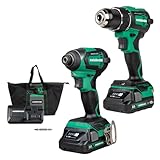
| Brushless compact combo | Brushless | About 500 to 700 in-lbs | Drill or hammer drill plus impact driver | 2 packs, 2Ah to 3Ah | $170 to $280 |
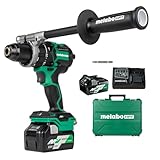
| Brushless full-size hammer drill kit | Brushless | About 800 to 1,200 in-lbs | Hammer drill, often with impact driver | 2 packs, 3Ah to 5Ah or MultiVolt | $220 to $400 |
| Multi-tool combo (3 to 5 tools) | Mixed or brushless | Varies by drill | Drill, impact, circular saw, reciprocating saw, light | 2 packs, often larger | $300 to $650 |
Brushed vs brushless: is the upgrade worth it?
Brushless motors replace carbon brushes with electronic commutation. The practical results are more torque from the same battery, longer runtime per charge (often 20 to 50 percent more in comparable work), cooler running and a more compact body.
- Choose brushed if you hang shelves, assemble furniture and drill pilot holes a few times a month. A brushed 18V drill handles all of that easily.
- Choose brushless if you drive long structural screws, use hole saws or spade bits regularly, drill masonry with the hammer function, or work on job sites daily.
The price gap between a brushed and brushless two-tool combo is often $50 to $100. For anyone who plans to use the drill weekly, that difference is usually recovered in battery life and reduced frustration.
Drill, hammer drill or impact driver: what each tool does
| Task | Drill/driver | Hammer drill | Impact driver |
|---|---|---|---|
| Drilling wood and metal | Excellent | Excellent | Fair with hex-shank bits |
| Drilling brick or block | Poor | Good for holes up to about 1/2 in | Not suited |
| Driving 3 in deck screws | Fair; clutch helps | Fair | Excellent |
| Driving small cabinet screws | Excellent with clutch | Excellent with clutch | Risk of over-driving |
| Hole saws over 2 in | Fair to good (brushless) | Good (brushless full-size) | Not suited |
For most buyers, a hammer drill plus impact driver combo covers the widest range of jobs. A hammer drill does everything a drill/driver does, with an added masonry mode, at the cost of a little extra length and weight.
Batteries and runtime
Battery capacity matters more than the tool for how long you can work. A rough guide for an 18V drill in typical household tasks:
| Battery | Energy | Approx. 3 in screws in softwood (impact driver) | Approx. 1 in spade-bit holes in 2x lumber | Weight feel |
|---|---|---|---|---|
| 1.5Ah to 2Ah compact | 27 to 36Wh | 100 to 200 | 30 to 60 | Light, good overhead |
| 3Ah | 54Wh | 200 to 300 | 60 to 100 | Balanced |
| 5Ah | 90Wh | 300 to 500 | 100 to 160 | Heavier, better for big jobs |
| MultiVolt 36V/18V | Varies by pack | Similar to 4Ah to 5Ah on 18V tools | Similar to 4Ah to 5Ah | Heaviest, most flexible |
Figures vary with wood density, bit sharpness and screw type. The pattern is what matters: compact packs suit light work and overhead drilling, while larger packs suit decks, fences and framing.
Warranty and ownership costs
Metabo HPT has long offered generous warranty coverage on cordless tools, including lifetime coverage on many cordless tools when registered, with shorter coverage on batteries and chargers. Terms differ by product and change over time, so read the warranty card in the kit and register promptly.
- Chuck: Keyless 1/2 in chucks are standard on full-size drills. Grip loosens over years of use; keep the jaws clean and avoid using the drill as a pry bar.
- Batteries: Usually the first part to need replacing, often after several years of regular use. Store at moderate temperatures and avoid leaving packs fully drained.
- Carbon brushes: Brushed models eventually need brush service; brushless models skip this entirely.
- Bits: Budget for quality bits. A cheap bit set will make any drill feel weak.
Strengths and weaknesses of the platform
Strengths
- Competitive pricing against brands with similar performance
- MultiVolt batteries bridge 18V and 36V tools
- Backward compatibility with many older Hitachi 18V slide-style batteries
- Strong warranty coverage on cordless tools
Weaknesses
- Smaller tool range than the largest platforms, especially for niche trade tools
- Kit names and model numbers change often, which makes comparing generations confusing
- Entry brushed kits ship with small batteries that limit runtime on heavier work
Which Metabo HPT drill set should you buy?
| Your situation | Recommended kit tier |
|---|---|
| Renter or first toolbox, light assembly | Entry brushed drill/driver kit |
| Homeowner doing regular repairs and small builds | Brushless compact combo with impact driver |
| Deck, fence or remodel projects | Brushless full-size hammer drill plus impact combo with 3Ah to 5Ah packs |
| Planning to add saws and grinders | Multi-tool combo or a kit that includes a MultiVolt battery |
| Already own Hitachi 18V tools | Bare tools or a brushless combo to reuse existing batteries |
Overall, a Metabo HPT drill set delivers solid performance per dollar. Skip the smallest brushed kit unless your needs are genuinely light, and put the money into a brushless combo with larger batteries; that choice will matter far more to daily use than any single headline torque figure.