What's inside
As an Amazon Associate I earn from qualifying purchases. This post may contain affiliate links at no extra cost to you.
What we cover
The 7 Best Mag Drills for Steel Fabrication
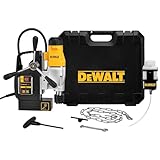
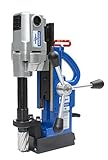
For most steel fabrication shops, the Hougen HMD2MT is the best all-around mag drill; choose a compact low-profile model for tight clearances, a cordless drill for site work, or a larger machine when cutter capacity matters more than weight. The right choice depends on more than maximum holding force: match the drill’s annular-cutter capacity and body height to the work, then make sure its magnet is suitable for the steel surface and drilling orientation.
Specifications below are representative manufacturer-published figures; configurations can vary by model suffix and market. Holding force is a rated figure, not a guarantee that a drill will stay attached in every real-world setup.
As an Amazon Associate we earn from qualifying purchases at no extra cost to you.


Quick comparison
| Mag drill | Power | Annular cutter capacity | Magnet holding force | Approx. weight | Best fit |
|---|---|---|---|---|---|
| Hougen HMD2MT | 115 V corded | 2 in. diameter | 1,000 lb | 28 lb | General fabrication |
| Milwaukee 4272-21 | 120 V corded | 2 in. diameter | 1,500 lb | 35 lb | Heavy-duty shop work |
| FEIN KBE 32 | 120 V corded | 1-1/4 in. diameter | 2,250 lb | About 24 lb | Compact, high-hold drilling |
| Hougen HMD904 | 115 V corded | 1-1/2 in. diameter | 1,200 lb | About 29 lb | Moderate-capacity fabrication |
| Hougen HMD150 | 115 V corded | 1-1/2 in. diameter | 1,200 lb | About 30 lb | Short-clearance work |
| Milwaukee 2787-22 | 18 V cordless | 1-1/2 in. diameter | 2,000 lb | About 29 lb with battery | Sites without convenient power |
| Hougen HMD130 | 115 V corded | 2 in. diameter | 1,200 lb | About 35 lb | Larger cutters and shop use |
Always verify the exact manual for cutter capacity, magnet force, and weight before buying. Some makers rate capacity by diameter and material thickness, and battery weight can change a cordless model’s total.
Which mag drill suits your work?
Best all-around: Hougen HMD2MT
The HMD2MT balances a 2-inch annular-cutter rating with a manageable weight for a full-capacity corded machine. It makes sense for a shop drilling structural plate, machine bases, and frames where jobs vary in hole size. Its holding-force rating is lower than some rivals, so surface preparation and plate thickness deserve particular attention when drilling vertically or overhead.
Best for heavy shop work: Milwaukee 4272-21
This model pairs a 2-inch cutter capacity with a 1,500-pound rated magnet. It is a strong candidate for frequent large-hole work on thick, clean steel when the machine’s added weight is acceptable. For overhead drilling, the stronger rating is useful margin—not permission to skip a safety chain or work-area controls.
Best compact high-hold option: FEIN KBE 32
The KBE 32 is a sensible pick where access and secure attachment matter more than maximum cutter diameter. Its 1-1/4-inch capacity is smaller than the two-inch machines, but its compact package and high rated holding force suit repeated holes on awkward structural members. Confirm the machine’s total height with the intended cutter, arbor, and coolant arrangement; “compact” does not mean it fits every confined bay.
Best for moderate-capacity work: Hougen HMD904
With a 1-1/2-inch cutter rating, the HMD904 covers many bolt and conduit-clearance holes without the bulk of a larger-capacity drill. It is a practical choice for fabricators who mainly work in the sub-1-1/2-inch range and occasionally need a larger cutter. Avoid buying to the maximum rating if your routine work involves thick plate and large diameters.
Best when body height is the constraint: Hougen HMD150
A low-profile design is valuable when a flange, wall, or machine component blocks the drill’s normal feed-handle movement. The HMD150 is aimed at that short-clearance problem, with a 1-1/2-inch cutter capacity. Check the published minimum operating clearance for the precise setup: overall body height alone does not account for the cutter, arbor, feed travel, or chip removal.
Best cordless choice: Milwaukee 2787-22
The 2787-22 removes the extension-cord problem on field repairs and remote steelwork while retaining a 1-1/2-inch cutter rating. It is most attractive when mobility saves setup time or power access is limited. Battery runtime varies sharply with cutter size, steel thickness, and feed pressure; bring charged spare batteries for production work rather than treating a single pack’s runtime as fixed.
Best for larger cutters in a shop: Hougen HMD130
The HMD130 reaches a 2-inch annular-cutter capacity and suits shop work where the machine can be supported and moved safely. Its greater weight is a tradeoff for a larger machine envelope. Choose it over a smaller drill only if your common work benefits from that capacity; occasional oversized holes may be better handled by another process than by carrying a heavier drill to every job.
Three checks that matter more than the headline rating
1. Magnet force depends on the setup
Rated holding force assumes favorable test conditions. Paint, scale, rust, chips, a curved surface, or thin steel can reduce effective contact and holding. Clean the magnet pad and work surface, seat the base fully on flat steel, and check the manufacturer’s minimum material thickness. On vertical and overhead work, attach the supplied safety chain or strap to a secure independent point. The magnet is not a fall-arrest system.
2. Size the cutter to the work—not just the drill
An annular cutter removes a ring of metal instead of the full hole area, which can make large holes faster than twist drilling. Match the cutter shank and arbor to the machine, and check the specified cutting depth as well as diameter. For a 1-inch hole through 1-inch plate, the cutter must have enough usable depth for the material plus a little clearance; a diameter rating by itself does not confirm that fit.
3. Measure the complete clearance envelope
Before choosing a low-profile drill, measure from the steel surface to the nearest obstruction and compare that with the manufacturer’s minimum operating clearance. Allow room for the cutter, pilot pin, feed movement, handle position, and removal of the slug. A drill that fits with the handle removed or repositioned may still be impractical if there is nowhere to clear chips safely.
Ownership realities: cutters, slugs, and magnet care
Annular cutters are consumables. Dull teeth, chipped edges, poor lubrication, and excessive feed pressure all increase cutting time and can overload the drill. Replace a damaged cutter rather than forcing it through the job; forcing a dull tool is hard on the cutter, arbor, and operator. Use the recommended cutting fluid where appropriate, keep chips clear of the magnet face, and inspect the pilot pin and arbor for wear.
After each job, remove steel chips from the magnet and inspect its contact surface. Chips trapped underneath can tilt the base, weaken contact, or scratch the workpiece. For overhead drilling, secure the machine before starting, keep others clear of the drop zone, and account for the slug when it breaks through. Stop if the magnet shifts, the cutter binds, or the machine behaves unexpectedly.
Bottom line
Choose the Hougen HMD2MT for broad shop versatility, the Milwaukee 4272-21 for a stronger-hold two-inch-class machine, and the FEIN KBE 32 when compact size and holding force take priority over cutter diameter. For short clearance, consider the Hougen HMD150; for remote work, the Milwaukee 2787-22. In every case, verify the exact model’s manual and plan around the actual steel thickness, surface condition, cutter, and overhead safety setup—not the magnet-force number alone.