What's inside
As an Amazon Associate I earn from qualifying purchases. This post may contain affiliate links at no extra cost to you.
What we cover
Best Battery Operated Drills for Every Budget and Project
The best battery operated drill for most first-time buyers is a compact 18V/20V-max brushless drill kit from a major platform they expect to use for other tools; choose a lighter 12V kit for furniture and tight spaces, or a hammer drill when masonry holes are part of the job.
Voltage is not a direct measure of drilling power, and a higher-voltage drill is not automatically the better buy. The useful choice balances the drill’s weight and size against the materials you work with, while accounting for the cost of batteries and future tools that fit the same platform.
As an Amazon Associate we earn from qualifying purchases at no extra cost to you.

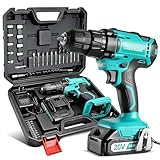


Choose by project, not by voltage alone
- Flat-pack furniture, cabinet hardware, and occasional repairs: A 12V drill is often lighter and easier to control. It is a good fit if you rarely drill large holes or drive long fasteners.
- General home maintenance and woodworking: A compact brushless 18V/20V-max drill is the adaptable middle ground. It can handle pilot holes, screws, and many larger bits without the bulk of a heavy-duty model.
- Decks, renovations, and frequent large holes: Look for an 18V/20V-max drill with a strong motor, a two-speed gearbox, and a side handle if offered. Buy a hammer-drill version if you also need to drill into brick or concrete.
- Very tight spaces or overhead work: Prioritize a short head length and low tool weight with battery installed. A right-angle drill is a specialized choice for framing and plumbing access, not a general replacement.
For a woodworking setup, a drill/driver is usually more useful than a drill with hammer mode. Hammer action is for masonry; switch it off for wood, metal, and screws. If you regularly drive screws, a drill plus a separate impact driver can be more comfortable than forcing one tool to do every task.
How 12V, 18V, and 20V-max compare
“20V max” and “18V” are commonly different ways of labeling similar nominal-voltage battery platforms. A pack’s maximum voltage is measured at full charge; its nominal voltage is lower. Compare tools by size, weight, performance, and compatible battery system rather than treating the label as a simple power ranking.
| Class | Typical kit weight with battery | Common battery capacity | Best fit | Main trade-off |
|---|---|---|---|---|
| 12V compact | About 2–3 lb | 2.0–4.0 Ah | Assembly, small pilot holes, overhead tasks | Less reserve for repeated large holes and long fasteners |
| 18V/20V-max compact | About 3–5 lb | 2.0–5.0 Ah | Home repairs and general woodworking | Heavier than 12V; performance varies by model and pack |
| 18V/20V-max heavy-duty | About 4–7 lb | 4.0–8.0 Ah | Frequent large holes, demanding site work | More tiring for small jobs; larger batteries add weight |
These are typical ranges, not specifications for every model. Manufacturers may quote tool-only weight, while a battery changes the balance and total weight substantially. Check the exact kit specifications before buying, especially if you will work overhead or in confined cabinets.
Good starting points by budget and use
- Lowest-cost occasional-use setup: Choose a reputable brushed 12V or compact 18V/20V-max drill kit with two batteries, a charger, and a case. General kit prices vary widely, but entry-level options are often in the roughly $80–$150 range. A second battery matters when the first is charging.
- Best all-around first system: Consider a brushless compact drill kit from an established platform such as DeWalt 20V MAX, Milwaukee M18, Makita 18V LXT, or Bosch 18V. Kits commonly fall around $150–$300, depending on battery capacity, included tools, and sales. Brushless motors generally make better use of battery energy and avoid replacing motor brushes.
- For frequent demanding work: Step up to a higher-torque 18V/20V-max model, preferably with two speeds and a second handle where available. Expect roughly $250–$450 for a substantial kit, though bare tools and bundled sets vary. Do not buy the heaviest model unless your work needs the extra capacity.
- For masonry as well as wood: A hammer-drill/driver adds a selectable hammer mode. It is useful for occasional holes in brick or concrete with suitable masonry bits, but it is not a substitute for a rotary hammer for frequent or large masonry work.
Those brands have broad tool ecosystems, but their battery packs are generally not interchangeable across brands, and even a brand’s separate voltage lines may not share batteries. Confirm compatibility at the platform level before purchasing. A bare tool can look inexpensive until you add a compatible battery and charger.
Battery platform lock-in: plan the next tool
A battery operated drill machine is often the first purchase in a system, not the last. Once you own several packs and a charger, adding compatible tools can cost less than starting a second platform. Before choosing, list two or three likely future purchases—perhaps a circular saw, sander, work light, or impact driver—and check that they are available in the same battery family.
Compare the complete entry cost, not just the drill’s advertised price. For example, a $120 kit with two batteries and a charger may be a better starting point than a $90 bare tool if you own no compatible packs. Conversely, if you already have batteries in a supported platform, a bare drill may be sensible. Don’t buy a large set of tools just to justify a platform; choose a system that fits work you actually expect to do.
A quick decision matrix
| Situation | Recommended direction | What to prioritize |
|---|---|---|
| First drill; occasional apartment repairs | Compact 12V kit | Low weight, two batteries, manageable grip |
| First drill; growing woodworking hobby | Compact brushless 18V/20V-max kit | Platform range, two-speed gearbox, 2–5 Ah batteries |
| Weekly projects or larger bits | Higher-capacity 18V/20V-max drill | Torque, cooling, side handle, battery availability |
| Mostly overhead or confined-space work | Compact 12V or short-head 18V/20V-max | Installed weight and head length |
| Regular holes in masonry | Hammer drill, or rotary hammer for heavier use | Correct mode, masonry-bit capacity, vibration and control |
Make the drill last—and avoid common mistakes
Bits and batteries often determine day-to-day usefulness more than a small difference in drill specifications. Use sharp bits suited to the material, clamp work securely, and drill a pilot hole when the fastener or wood calls for one. A dull or oversized bit can make a capable drill overheat and drain a battery quickly. Use the low gear for controlled screw driving and the high gear for faster drilling; set the clutch so the screw head seats without stripping the drive or sinking too far.
After dusty work, clear debris from the chuck and ventilation openings with a dry brush or compressed air used according to the manufacturer’s guidance. Avoid storing lithium-ion batteries fully discharged or in extreme heat, and use the platform’s specified charger. Replace damaged packs rather than trying to repair them. If a chuck begins slipping, first check that it is tightened correctly and that the bit shank is clean; worn chuck jaws may eventually require service or replacement.
For most beginners, a compact brushless 18V/20V-max kit is the safest long-term choice if the added weight is comfortable and the platform has tools you will actually use. Pick 12V for light, frequent handling; choose a heavy-duty or hammer model only when your projects justify the extra size and cost.