What's inside
- Quick comparison of the best Nikon DSLR cameras
- Best Nikon DSLR for a beginner: Nikon D3500
- Best affordable step-up: Nikon D5600
- Best Nikon DSLR for enthusiasts: Nikon D7500
- Best for wildlife and sports: Nikon D500
- Best full-frame all-rounder: Nikon D780
- Best for maximum detail: Nikon D850
- DX or FX: which sensor format should you choose?
- Nikon F-mount compatibility and lens costs
- Decision matrix: match the camera to your situation
- Used-buying and ownership checks
- Final recommendation
- Quick comparison of the best Nikon DSLR cameras
- Best Nikon DSLR for a beginner: Nikon D3500
- Best affordable step-up: Nikon D5600
- Best Nikon DSLR for enthusiasts: Nikon D7500
- Best for wildlife and sports: Nikon D500
- Best full-frame all-rounder: Nikon D780
- Best for maximum detail: Nikon D850
- DX or FX: which sensor format should you choose?
- Nikon F-mount compatibility and lens costs
- Decision matrix: match the camera to your situation
- Used-buying and ownership checks
- Final recommendation
As an Amazon Associate I earn from qualifying purchases. This post may contain affiliate links at no extra cost to you.
The best Nikon DSLR cameras are the Nikon D3500 for beginners, D5600 for affordable everyday photography, D7500 for enthusiasts, D500 for action, D780 for full-frame versatility, and D850 for maximum detail.
Nikon has largely shifted its new-camera development toward the Z mirrorless system, but Nikon DSLRs remain compelling in 2026 because they offer excellent image quality, long battery life, familiar optical viewfinders, and access to a huge F-mount lens market. The right choice depends less on the newest release date than on sensor size, autofocus demands, handling preferences, and which lenses you plan to own.
As an Amazon Associate we earn from qualifying purchases at no extra cost to you.



What we cover
- Quick comparison of the best Nikon DSLR cameras
- Best Nikon DSLR for a beginner: Nikon D3500
- Best affordable step-up: Nikon D5600
- Best Nikon DSLR for enthusiasts: Nikon D7500
- Best for wildlife and sports: Nikon D500
- Best full-frame all-rounder: Nikon D780
- Best for maximum detail: Nikon D850
- DX or FX: which sensor format should you choose?
- Nikon F-mount compatibility and lens costs
- Decision matrix: match the camera to your situation
- Used-buying and ownership checks
- Final recommendation
Quick comparison of the best Nikon DSLR cameras
| Camera | Sensor and resolution | Autofocus and burst | Viewfinder coverage | Approximate weight | Best for |
|---|---|---|---|---|---|
| Nikon D3500 | APS-C/DX, 24.2 MP | 11 points, 5 fps | 95% | 365 g body only | Beginners and travel |
| Nikon D5600 | APS-C/DX, 24.2 MP | 39 points, 5 fps | 95% | 465 g body only | Family, travel, and learning |
| Nikon D7500 | APS-C/DX, 20.9 MP | 51 points, 8 fps | 100% | 640 g body only | Sports and enthusiast work |
| Nikon D500 | APS-C/DX, 20.9 MP | 153 points, 10 fps | 100% | 760 g body only | Wildlife and fast action |
| Nikon D780 | Full frame/FX, 24.5 MP | 51 points through viewfinder, 7 fps | 100% | 840 g body only | Low light and general full-frame use |
| Nikon D850 | Full frame/FX, 45.7 MP | 153 points, 7 fps | 100% | 915 g body only | Landscape, studio, and commercial detail |
Weights are approximate body-only figures and can vary slightly by market specification. Battery life also depends on flash use, Live View, temperature, and lens operation. The D3500 is rated for roughly 1,550 shots per charge under Nikon’s testing method, while the D780 can exceed 2,200 shots and the D850 is rated at approximately 1,840 shots.
Best Nikon DSLR for a beginner: Nikon D3500
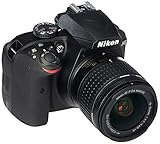
The D3500 is the simplest recommendation for someone buying a first interchangeable-lens camera. Its 24.2-megapixel DX sensor produces enough resolution for large prints and cropping, while the relatively small body and straightforward controls make it less intimidating than professional models.
Its Guide Mode explains common photographic choices, such as freezing movement or softening a background. The optical viewfinder has only 95% frame coverage, so the final image can include a little more around the edges than you see while composing. That is easy to accommodate once you know it is there.
The main limitations are its basic 11-point autofocus system, fixed rear screen, lack of built-in Wi-Fi on some regional versions, and modest controls. It is best for portraits, landscapes, holidays, and family photography rather than demanding sports. Look for a kit with the AF-P DX 18-55mm f/3.5-5.6G VR lens; its vibration reduction and quiet focusing are useful for everyday shooting.
Best affordable step-up: Nikon D5600
The D5600 is a better choice than the D3500 if you want a vari-angle touchscreen, easier smartphone transfer, and more control without moving to a bulky enthusiast body. Its 39-point autofocus system gives moving subjects more coverage, although it is still not designed as a dedicated action camera.
The 3.2-inch vari-angle screen is valuable for low-angle landscapes, overhead family photographs, and video framing. The camera remains relatively light at about 465 grams, making it a practical travel body. Its 24.2-megapixel sensor is similar in resolution to the D3500, so the upgrade is mainly about handling, connectivity, and composition rather than a dramatic increase in image quality.
Choose the D5600 when your budget needs to cover a useful lens rather than a premium body. A DX 18-140mm lens costs more and is heavier than the standard 18-55mm, but it reduces lens changes and is often the more convenient single-lens travel setup.
Best Nikon DSLR for enthusiasts: Nikon D7500
The D7500 is the strongest all-purpose DX option for photographers who have outgrown entry-level controls. Its 20.9-megapixel sensor gives up some resolution compared with the D3500 and D5600, but it offers faster processing, better high-ISO performance, 8 frames per second continuous shooting, and a larger buffer for action sequences.
It has weather sealing, a top-plate LCD, dual control dials, a comfortable grip, and a 100% viewfinder. The 51-point autofocus system is substantially more capable for moving subjects than the beginner models. The rear screen tilts, though it does not fully articulate.
Its single SD card slot is a notable drawback for wedding or paid event work where an immediate backup is important. For personal travel, portraits, street photography, and outdoor action, the D7500 offers an attractive balance of speed, durability, and price on the used market.
Best for wildlife and sports: Nikon D500
The D500 remains one of the best Nikon DSLRs for fast-moving subjects. Its 153-point autofocus system, 10 fps burst rate, large buffer, rugged construction, and responsive subject tracking are designed for demanding field work. The DX crop factor also gives a telephoto lens a narrower field of view: a 500mm lens frames approximately like a 750mm lens would on a 35mm full-frame camera.
That apparent reach does not magnify the subject optically, but it can place the subject across more pixels when the lens and distance are suitable. The D500 also includes a bright 100% viewfinder, illuminated controls, dual card slots using XQD or CFexpress Type B and SD formats depending on configuration, and a durable professional-style body.
It is heavier and more expensive than the D7500, and its 20.9-megapixel resolution is less suitable for aggressive cropping than the D850. Choose it when focus acquisition and burst performance matter more than maximum still-image resolution.
Best full-frame all-rounder: Nikon D780
The D780 is the most balanced full-frame Nikon DSLR for photographers who want better low-light flexibility, shallow depth of field, and modern Live View performance. Its 24.5-megapixel FX sensor is well suited to weddings, portraits, travel, events, and landscapes.
Through the optical viewfinder, it uses a 51-point autofocus system and shoots at up to 7 fps. In Live View, its on-sensor focusing is more sophisticated, with eye-detection capabilities for still subjects. This makes the D780 more adaptable than many older DSLR designs, especially when composing from the tilting rear screen.
The larger FX sensor works best with FX lenses, although DX lenses can be mounted with an automatic crop mode that reduces the usable image area. The D780 is an excellent ownership choice if you already have Nikon full-frame lenses, but it is usually more costly than a D7500 or D5600 once lenses are included.
Best for maximum detail: Nikon D850
The D850 is the high-resolution choice. Its 45.7-megapixel FX sensor captures exceptional fine detail for landscapes, architecture, studio work, wildlife cropping, and commercial photography. It also offers a 100% viewfinder, tilting touchscreen, illuminated buttons, dual card slots, excellent battery life, and a rugged weather-sealed body.
The trade-off is size, weight, storage demand, and slower file handling. A single lossless compressed 14-bit RAW file can be roughly 50 to 60 MB, so a 64 GB card may hold only around 900 to 1,100 such files after allowing for formatting and file variation. If you photograph long bursts, budget for fast cards, multiple batteries, and computer storage.
DX or FX: which sensor format should you choose?
- Choose DX for a smaller kit, lower lens costs, travel convenience, and extra apparent reach for wildlife or sports.
- Choose FX for better control over depth of field, stronger low-light performance, and access to Nikon’s broad full-frame F-mount lens selection.
- Do not choose FX solely for megapixels. A good DX camera with an appropriate lens can outperform a full-frame body paired with an unsuitable or inexpensive lens.
For example, suppose a wildlife photographer uses a 200-500mm lens from the same position. On a DX body, the lens provides a narrower angle of view comparable to about 300-750mm in full-frame terms. On an FX body, the photographer gains the wider view, which is useful when a nearby animal moves quickly, but may need to crop more heavily for distant subjects.
Nikon F-mount compatibility and lens costs
All of these cameras use Nikon F-mount lenses, but compatibility is not identical. AF-S lenses autofocus on all six bodies. AF-P lenses work particularly well on newer bodies such as the D7500, D780, D850, and D500; older cameras may require a firmware update or may not support every AF-P feature. Very old screw-drive autofocus lenses can autofocus on the D7500, D500, D780, and D850, but not on entry-level bodies without an in-body focus motor.
Manual-focus lenses can often be mounted, but exposure metering and focus assistance vary by body. DX lenses are designed for the smaller sensor. FX lenses work on both formats, but they are usually larger and more expensive. Before buying a used lens, confirm autofocus support, aperture control, vibration reduction behavior, and whether the lens has fungus, haze, scratches, or a loose zoom barrel.
Decision matrix: match the camera to your situation
| Your situation | Recommended body | Why | What to accept |
|---|---|---|---|
| First camera, limited budget, occasional use | D3500 | Light, simple, excellent battery life | Basic autofocus and fixed screen |
| Frequent travel and family photography | D5600 | Vari-angle screen and compact DX kit | Slower burst rate and modest viewfinder coverage |
| Weekly photography and growing skills | D7500 | Better controls, speed, and weather sealing | One card slot and lower resolution than 24 MP models |
| Birds, wildlife, or sports | D500 | Fast autofocus, 10 fps, rugged build | Heavy body and higher used-market cost |
| Portraits, events, and low-light work | D780 | Full-frame sensor and strong Live View system | FX lenses add size and expense |
| Large prints, landscapes, and studio detail | D850 | 45.7 MP resolution and professional handling | Large RAW files and substantial weight |
Used-buying and ownership checks
Because these DSLR models are commonly purchased used in 2026, inspect the shutter count, battery condition, card-slot operation, hot shoe, ports, tripod socket, and rubber grips. A high shutter count is not an automatic rejection, but it should influence the price and your repair reserve. On a used body, worn control dials and sticky buttons often reveal heavy professional use more clearly than cosmetic marks.
Inspect the sensor under a bright light, but do not confuse ordinary dust with scratches. Dust can usually be removed with a proper blower or professional sensor cleaning; never use compressed workshop air or touch the sensor with an unsuitable cloth. Check lenses for fungus, internal haze, oily aperture blades, and uneven zoom or focus movement. Store equipment dry, cap both ends of lenses, and avoid changing lenses in blowing dust or rain.
Final recommendation
Buy the D3500 if simplicity and cost matter most, the D5600 if you want a more flexible beginner body, and the D7500 if you want one DX camera to develop with. Pick the D500 for serious action, the D780 for the most versatile full-frame experience, and the D850 when resolution is the priority. In every case, reserve part of the budget for the lens, spare battery, fast memory card, and basic cleaning supplies—the lens and your shooting habits will influence results at least as much as the body.