What's inside
As an Amazon Associate I earn from qualifying purchases. This post may contain affiliate links at no extra cost to you.
What we cover
Best Panasonic Cameras for Photos and Video: The Quick Picks
The best Panasonic cameras for most hybrid shooters are the Lumix S5II for full-frame image quality and dependable autofocus, the Lumix GH7 for advanced video and Micro Four Thirds reach, and the Lumix G9II for a photo-first balance of speed and stabilization. Choose the smaller Lumix S9 if portability matters more than a viewfinder or extensive controls, or the Lumix BS1H if you need a compact cinema camera for a rig rather than a conventional camera body.
Panasonic’s camera lineup makes the most sense when you choose a lens system and shooting situation first. Full-frame L-mount bodies suit low-light work, shallow depth of field, and a broad lens selection. Micro Four Thirds bodies are smaller as a system and offer a narrower field of view from a given focal length, useful for wildlife, sports, and travel video. Panasonic has also strengthened phase-detection autofocus on recent models, but older cameras differ substantially in how reliably they track moving subjects.
As an Amazon Associate we earn from qualifying purchases at no extra cost to you.

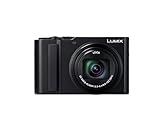


Compare the leading Panasonic cameras
Weights below are approximate body-only figures, including battery and memory card. They vary slightly by configuration; lenses can add far more weight than the body difference suggests.
| Camera | Format and resolution | Stabilization | Body weight | Best fit |
|---|---|---|---|---|
| Lumix S5II | Full-frame, 24.2 MP | 5-axis sensor shift; Active I.S. for video | About 740 g | All-around hybrid shooting |
| Lumix S5IIX | Full-frame, 24.2 MP | 5-axis sensor shift; Active I.S. | About 740 g | External recording and production workflows |
| Lumix S9 | Full-frame, 24.2 MP | 5-axis sensor shift; Active I.S. | About 486 g | Compact travel and social video |
| Lumix GH7 | Micro Four Thirds, 25.2 MP | 5-axis sensor shift; Dual I.S. 2 with compatible lenses | About 805 g | High-end video and long-lens shooting |
| Lumix G9II | Micro Four Thirds, 25.2 MP | 5-axis sensor shift; Dual I.S. 2 with compatible lenses | About 800 g | Wildlife, sports, and still photography |
| Lumix BS1H | Full-frame, 24.2 MP | No in-body sensor-shift stabilization | About 585 g | Multi-camera and rig-based video production |
Resolution alone doesn’t determine detail or video quality. Sensor readout, lens choice, stabilization, recording format, and how you plan to edit all matter. Confirm the exact recording modes and limits for your region and firmware before buying, especially if a project depends on a particular frame rate, codec, or external recording setup.
Choose by shooting situation
One camera for portraits, travel, and video: Lumix S5II
The S5II is the safest starting point for many photographers moving into video. Its 24.2-megapixel full-frame sensor gives room for cropping and performs well in dimmer light, while phase-detection autofocus is better suited to tracking people than the contrast-detection systems in many earlier Lumix bodies. It records high-resolution video, supports an electronic viewfinder and a vari-angle screen, and includes in-body stabilization for handheld work.
It is not the smallest travel kit once you add a full-frame zoom. If the camera will spend most of its time on a gimbal or you need advanced internal or external recording options, compare it with the S5IIX and GH7 before settling on a body.
Video production and demanding formats: Lumix GH7 or S5IIX
The GH7 is the stronger choice when video specifications, long recording sessions, and a production-ready feature set take priority. It offers extensive recording options, including internal ProRes RAW HQ recording to a compatible CFexpress Type B card, alongside a fan-equipped body designed for thermal management. The Micro Four Thirds system also makes it easier to build a relatively compact kit with telephoto reach.
The S5IIX is a better fit if you want full-frame rendering and a body built around external recording or streaming workflows. It adds features such as RAW video output over HDMI and USB-SSD recording compared with the S5II. Those capabilities only help if your recorder, storage, editing computer, and workflow support them; otherwise, the standard S5II may be the better value.
Wildlife and sports on a smaller system: Lumix G9II
The G9II pairs a 25.2-megapixel Micro Four Thirds sensor with fast burst shooting, subject-detection autofocus, and strong stabilization. Its crop factor gives a narrower field of view than full frame with the same focal length, so a moderate telephoto lens can frame distant subjects tightly. That is a framing advantage, not free magnification: lens quality, focus accuracy, and light still determine the result.
For a hybrid shooter who records a lot of video as well as stills, the GH7’s additional video tools may justify its cost and complexity. For someone primarily photographing action, the G9II is the more direct pick.
Light carry and quick sharing: Lumix S9
The S9 puts a full-frame sensor and modern autofocus in a compact body, making it appealing for travel, everyday photography, and vertical or social-first video. The trade-offs are practical: it has no built-in electronic viewfinder, fewer direct-control conveniences than larger bodies, and no mechanical shutter. If you often photograph fast-moving subjects, prefer composing through a viewfinder, or need a more complete working setup, the S5II is easier to live with.
Rigged or multi-camera video: Lumix BS1H
The box-shaped BS1H is made for production setups where a camera may be mounted on a cage, gimbal, vehicle, or fixed position. Its full-frame video sensor and connectivity options are useful in a controlled rig, but it lacks the handling and in-body stabilization expected of a handheld camera. Buy it for the system you are building, not as a general-purpose stills camera.
Format and lens system: the decision that lasts longest
Panasonic’s S-series cameras use the L-Mount, shared with Leica and Sigma. That gives buyers access to lenses from multiple manufacturers, including compact primes and professional zooms. Full-frame lenses can be large and expensive, though, so compare the weight and cost of the entire kit rather than the camera body alone.
GH-series and G-series cameras use Micro Four Thirds lenses. The system includes a broad range of Panasonic and OM System lenses, and many kits remain relatively compact. A 300 mm lens gives roughly the field of view of a 600 mm lens on full frame, but the actual focal length remains 300 mm. This distinction helps with framing decisions without implying that the smaller sensor changes a lens’s physical focal length.
In general, favor full frame if low-light performance, background separation, and a wider choice of full-frame lenses matter most. Favor Micro Four Thirds if you value compact telephoto setups, reach for wildlife or sports, or want a video-centered body with extensive recording tools.
Autofocus and stabilization: what to expect
Recent models such as the S5II, S5IIX, S9, GH7, and G9II use phase-detection autofocus, improving tracking for people and moving subjects compared with many older Panasonic cameras. That doesn’t guarantee every shot will be in focus: low contrast, rapid movement, subject obstruction, and the selected focus settings still affect results. If reliable tracking is central to your work, prioritize a newer phase-detection model.
In-body stabilization helps reduce camera shake, especially with still subjects and slower handheld video movements. It cannot freeze a moving person, animal, or sports action; a faster shutter speed is needed for that. For walking video, combine stabilization with a lens or technique suited to motion, and expect that electronic stabilization can crop the image.
A practical buying checklist
- Set the lens budget first. A body that leaves no room for the lenses you need is a poor system choice.
- Check recording media. High-bitrate video may require fast SD cards, CFexpress Type B cards, or a compatible USB SSD, depending on the model and format.
- Plan for batteries and heat. Video, wireless transfers, and bright-screen use drain batteries faster than occasional stills. Carry spares for long shoots, and follow the manual’s ventilation and temperature guidance.
- Keep the sensor clean carefully. Change lenses with the mount facing down when practical, use a blower for loose dust, and avoid touching the sensor. Stubborn marks are best handled with appropriate sensor-cleaning tools or a camera service.
- Don’t overbuy codecs. Large, high-quality files take more card space and demand faster storage and more capable editing hardware. Choose the lightest format that meets your delivery and color-grading needs.
Bottom line
For a balanced full-frame hybrid, choose the Lumix S5II. For production-focused video, compare the GH7’s internal options and cooling with the S5IIX’s full-frame and external-recording workflow. Choose the G9II for action and telephoto photography, the S9 for a compact everyday full-frame camera, and the BS1H when your setup calls for a rig-ready cinema body. The best Panasonic camera is the one whose lenses, handling, recording media, and autofocus match the work you actually do.