What's inside
- Best checked luggage at a glance
- The best choice by trip and packing style
- Shell material versus soft-sided fabric
- Wheel design and handling
- Airline size and weight limits
- A practical decision matrix
- How to avoid buying more capacity than you can use
- Durability and ownership details that matter
- Final recommendation
- Best checked luggage at a glance
- The best choice by trip and packing style
- Shell material versus soft-sided fabric
- Wheel design and handling
- Airline size and weight limits
- A practical decision matrix
- How to avoid buying more capacity than you can use
- Durability and ownership details that matter
- Final recommendation
As an Amazon Associate I earn from qualifying purchases. This post may contain affiliate links at no extra cost to you.
The best checked luggage depends on your trip: choose a 25–28-inch expandable spinner for most one-week journeys, a 29–30-inch case for bulky or two-week packing, and a trunk-style bag only when its extra capacity outweighs its greater empty weight and awkward shape.
As an Amazon Associate we earn from qualifying purchases at no extra cost to you.


What we cover
- Best checked luggage at a glance
- The best choice by trip and packing style
- Shell material versus soft-sided fabric
- Wheel design and handling
- Airline size and weight limits
- A practical decision matrix
- How to avoid buying more capacity than you can use
- Durability and ownership details that matter
- Final recommendation
Best checked luggage at a glance
| Bag or type | Best for | Approx. capacity | Empty weight | Shell or body | Wheel design | Typical price range |
|---|---|---|---|---|---|---|
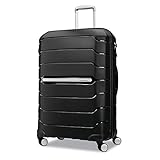
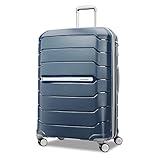
| Samsonite Freeform Large Spinner | Lightweight, affordable packing | ~110–125 L | ~9–10 lb | Polypropylene | Four dual spinner wheels | $180–$280 |
| Travelpro Platinum Elite 29-inch Spinner | Frequent flyers and organized packing | ~110–120 L | ~12–13 lb | Ballistic nylon fabric | Eight-wheel spinner system | $350–$450 |
| Briggs & Riley Baseline Large Spinner | Frequent use and repairable construction | ~115–125 L | ~12–13 lb | Ballistic nylon fabric | Four double spinner wheels | $700–$900 |
| Away The Large Flex | Clean organization with occasional expansion | ~100–115 L | ~12–13 lb | Polycarbonate | Four 360-degree spinner wheels | $325–$425 |
| Delsey Paris Chatelet Air 2.0 Large | Structured packing and distinctive styling | ~110–125 L | ~11–13 lb | Polycarbonate | Four double spinner wheels | $300–$450 |
| Large soft-sided suitcase, 25–27 inches | Short trips and conservative packing | ~75–100 L | ~8–11 lb | Nylon or polyester | Two wheels or four spinners | $100–$300 |
Capacity and weight vary by size, expansion position, production year, and whether the listed dimensions include wheels and handles. Treat the table as a buying comparison rather than a substitute for the current specification sheet.
The best choice by trip and packing style
For a three- to seven-day trip: a 25- to 27-inch suitcase
A medium checked bag is usually the most efficient choice for ordinary clothing, shoes, and toiletries. It is easier to keep under common airline weight limits than a huge case, and its smaller footprint is less cumbersome on trains, stairs, and hotel elevators. A soft-sided model is particularly useful if you pack irregular items because exterior pockets provide quick access and the fabric can accommodate small gaps.
Choose a four-wheel spinner for airports and smooth hotel floors. Choose a two-wheel roller if you regularly cross broken sidewalks or cobblestones; its larger recessed wheels are generally less vulnerable to impacts and roll better when tilted over rough ground.
For one to two weeks: a 28- or 29-inch spinner
This is the best checked luggage category for most travelers who want one substantial suitcase. It normally offers enough room for layered clothing, two or three pairs of shoes, and a few souvenirs without forcing you into an oversized trunk. The main risk is filling the extra space until the bag weighs more than the airline allows.
A Travelpro Platinum Elite 29-inch spinner suits travelers who value compartments, a garment section, and fabric flexibility. A Samsonite Freeform Large Spinner is a better fit when low empty weight and a lower purchase price matter more than premium interior organization.
For bulky clothing or shared packing: a large trunk or 30-inch case
Cold-weather clothing, ski equipment, children’s gear, or two people sharing one case can justify a trunk-style design. A trunk’s tall, deep body can use vertical space efficiently, while its split-opening lid often makes compression easier. The trade-off is a heavier empty bag and a shape that may be harder to fit into rental-car trunks or hotel luggage racks.
Do not select a large case merely because it has the highest advertised capacity. A bag that is 13 pounds empty leaves less of a 50-pound airline allowance for your belongings than a 9-pound case of similar usable volume.
Shell material versus soft-sided fabric
Polycarbonate
Polycarbonate shells balance impact resistance, moderate weight, and a little controlled flex. They are a strong all-purpose choice for travelers who check luggage several times a year. Scratches and scuffs are normal, and glossy finishes show them sooner than textured ones. Compression straps and a fully opening divider help prevent contents from shifting inside the rigid case.
Polypropylene
Polypropylene is often lighter and less expensive than polycarbonate. Its flexibility can be useful when a bag receives rough handling, but thin shells may feel less rigid around the corners and closure. It is a good budget material when every pound of empty weight matters.
Ballistic nylon and polyester
Soft-sided luggage is usually more forgiving with overstuffed clothing and offers useful exterior pockets. Ballistic nylon generally resists abrasion better than ordinary polyester, although zippers, corner piping, and wheel housings still determine how long the case lasts. Fabric can absorb moisture and odors, so dry it completely before storing it.
Wheel design and handling
- Four spinner wheels: easiest to push beside you and turn in narrow airport aisles, but the exposed wheels reduce packing space and can catch on rough pavement.
- Two-wheel rollers: better for cracked sidewalks and long outdoor walks because the wheels are recessed and usually larger, but the tilted pull position puts more load on your wrist.
- Double spinner wheels: provide a wider contact area and can feel stable when fully loaded. They are not automatically stronger; wheel housing and axle construction matter more.
- Replaceable wheels: valuable for frequent users. Confirm that replacement parts and service are available before buying a premium case.
Test the handle height before purchase. A handle that is too short makes you kick the suitcase; one with excessive flex transfers movement into the frame. The best handle is not necessarily the thickest one, but it should lock securely with minimal side-to-side play.
Airline size and weight limits
Many U.S. airlines use a checked-bag maximum of 62 linear inches for standard economy luggage. Linear inches are height plus width plus depth, measured from the outside and often including wheels and handles. For example, a suitcase measuring 30 by 20 by 12 inches totals 62 linear inches.
International airlines may use different limits, and some charge by a 158-centimeter total instead of inches. Weight limits commonly fall near 50 pounds for economy passengers, while higher cabin classes may receive a heavier allowance. Oversize and overweight charges can cost more than the suitcase itself.
Before traveling, check the exact airline rule for your ticket and route. Do not rely on a bag’s “29-inch” label: a 29-inch body can exceed the limit once wheels and handles are included.
A practical decision matrix
| Your situation | Recommended choice | Reason |
|---|---|---|
| Occasional traveler, limited budget | 25–28-inch polypropylene spinner | Low purchase cost and low empty weight |
| Weekly or monthly business travel | 28–29-inch premium soft-sided spinner | Better organization, repair support, and flexible expansion |
| Mostly rough sidewalks and older stations | Two-wheel fabric roller | Recessed wheels tolerate uneven surfaces better |
| Winter trip or family sharing one bag | Large trunk or 30-inch case | High volume for bulky items, with greater weight risk |
| Strict airline weight limit | Lightweight 25–28-inch case | Leaves more of the allowance for contents |
| Frequent long-term ownership | Repairable premium case | Replaceable wheels, handles, and stronger service network |
How to avoid buying more capacity than you can use
Lay out everything you expect to pack, then measure the packed weight before choosing the largest bag. Suppose your clothing and toiletries weigh 34 pounds, shoes and accessories add 6 pounds, and the suitcase weighs 12 pounds. Your total is already 52 pounds, exceeding a 50-pound allowance before souvenirs. A 9-pound case would reduce that total to 49 pounds without removing anything.
Expansion zippers should be treated as an occasional reserve, not as permanent capacity. Expanding a case can push it beyond airline depth limits and makes it easier to overload the frame, wheels, and zipper.
Durability and ownership details that matter
- Wheels and zipper sliders usually wear before the main shell. Inspect them after each trip for cracks, grinding, or separation.
- Do not drag a spinner sideways over curbs. Lift it by the top or side grab handle to protect the wheel mounts.
- Keep liquids in sealed bags even inside a waterproof-looking shell; a broken toiletry bottle can stain fabric and corrode metal hardware.
- Clean hard shells with mild soap and water, not abrasive cleaners. Vacuum fabric interiors and allow the suitcase to dry fully before closing it.
- Use a luggage scale at home. Bathroom scales are often too imprecise near the airline limit.
- Record the model name and photograph the bag before checking it. This helps with identification and warranty or baggage claims.
Final recommendation
For the broadest range of trips, buy a 28- or 29-inch checked spinner that stays below 13 pounds empty and remains within the airline’s 62-linear-inch limit. Choose a lightweight polypropylene model for value, a soft-sided premium spinner for frequent organized travel, and a trunk only when bulky packing genuinely requires its additional volume. The right capacity is the largest bag you can fill without routinely exceeding the weight limit—not the largest case you can find.