What's inside
As an Amazon Associate I earn from qualifying purchases. This post may contain affiliate links at no extra cost to you.
The best hammer drill machine for most concrete, brick, and wood projects is the Milwaukee M18 FUEL 1/2-Inch Hammer Drill/Driver (2904-20), while a rotary hammer is the better tool when holes are larger than 1/2 inch or drilling concrete is frequent. The picks below are ranked by useful impact rate, speed, 1/2-inch chuck capacity, control, and the concrete-hole depth each class of tool can realistically handle.
As an Amazon Associate we earn from qualifying purchases at no extra cost to you.


What we cover
Hammer drill machine vs. rotary hammer: choose the right mechanism first
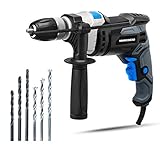
A true hammer drill machine uses a pair of toothed discs to vibrate the chuck forward and backward. It is relatively compact, accepts ordinary round-shank drill bits, and is excellent for small anchor holes in brick, block, mortar, and occasional concrete. The hammer action is usually measured in blows per minute (BPM).
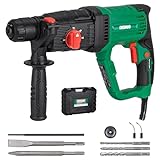
A rotary hammer uses a piston and air-pressure mechanism. It delivers substantially more impact energy and normally accepts SDS-Plus or SDS-Max bits. Rotary hammers drill concrete faster, tolerate larger diameters, and can often perform light chiseling. They are heavier and less versatile for ordinary wood and metal work.
| Task | Best tool | Typical useful hole range | Why |
|---|---|---|---|
| Wood, metal, and occasional masonry | Hammer drill machine | Up to about 1/2 in. in masonry | 1/2-inch chuck and adjustable clutch handle mixed materials |
| Brick and block anchors | Hammer drill machine | 1/4 to 3/8 in., sometimes 1/2 in. | Enough impact for light-duty fasteners without rotary-hammer bulk |
| Frequent concrete drilling | SDS-Plus rotary hammer | 1/4 to 3/4 in. routinely | Higher impact energy removes material more efficiently |
| Large holes, demolition, or deep concrete | SDS-Max rotary hammer | 3/4 in. and larger | Designed for high-energy drilling and chiseling |
9 best hammer drill machines for 2026
1. Milwaukee M18 FUEL 2904-20 — best overall cordless choice
The 2904-20 combines a 1/2-inch all-metal chuck, up to 2,100 RPM, and up to 33,000 BPM with a brushless motor and anti-kickback protection. It is a strong general-purpose choice for users who drill wood often but still need reliable masonry capability.
Use a 1/4-inch masonry bit for small concrete anchors and expect practical holes around 2 to 3 inches deep before clearing dust. A 3/8-inch hole is possible, but drilling becomes slower in dense concrete. The bare tool is commonly sold in the roughly $180–$230 range; a battery and charger kit costs more.
2. Makita XPH14Z — best for high-speed wood drilling
The XPH14Z offers a 1/2-inch chuck, up to 2,100 RPM, and up to 31,500 BPM. Its two-speed gearbox and strong low-speed torque make it well suited to large wood bits, hole saws, and long screws as well as masonry anchors.
For concrete, treat it as a light-duty hammer drill: 1/4-inch holes about 2 inches deep are a sensible target, while 3/8-inch holes require patience and frequent bit withdrawal. Its relatively high output can drain a compact battery quickly when hammer mode is used continuously.
3. DeWalt DCD996B — best for demanding mixed-material work
The DCD996B remains a powerful 20V MAX option, with a 1/2-inch carbide nitride chuck, up to 2,000 RPM, and up to 38,250 BPM. It includes three mechanical speeds, giving better control than many two-speed models when moving between small masonry bits and larger wood accessories.
Its practical concrete range is about 1/4 to 3/8 inch, with approximately 2 to 3 inches of usable anchor depth depending on aggregate and bit quality. At about 5.1 pounds bare, it is more tiring overhead than newer compact drills.
4. Bosch GSB18V-50 — best compact everyday hammer drill
The GSB18V-50 is a smaller 18V brushless hammer drill with a 1/2-inch chuck, up to 1,900 RPM, and up to 28,500 BPM. It gives up some peak output to remain easier to carry and control in cabinets, framing, and overhead work.
Choose it for occasional 1/4-inch concrete or brick anchors, typically up to about 2 inches deep. It is not the best choice for repeated 3/8-inch concrete drilling, but its lower weight can matter more than maximum BPM for installers who work all day.
5. Metabo HPT DV18DBFL2 — best value brushless option
This 18V hammer drill machine has a 1/2-inch keyless chuck, a maximum speed around 1,800 RPM, and up to 27,000 BPM. It provides the core capabilities needed for household masonry anchors and general woodworking without paying for the highest-output professional platform.
Expect good results in brick and block with 1/4-inch bits and modest results in concrete. A practical target is a 1- to 2-inch hole depth in concrete, with pauses to clear dust. It is especially attractive when sold as a kit in the approximate $120–$180 range.
6. Bosch GSB 13 RE — best inexpensive corded hammer drill
The GSB 13 RE is a compact corded model with a 1/2-inch chuck, roughly 750W input power, up to 3,000 RPM, and up to 48,000 BPM. The high BPM figure does not make it a rotary hammer; its toothed-disc impact mechanism still suits smaller holes.
It is a practical workshop tool for brick, block, wood, and occasional concrete anchors where a power outlet is available. Use 1/4-inch masonry bits for approximately 2-inch holes. Its key advantage is unlimited runtime, while its disadvantages are cord management and more vibration.
7. DeWalt DWD520K — best corded high-impact model
The DWD520K supplies a 1/2-inch chuck, up to 2,500 RPM, and up to 56,000 BPM, with a two-speed gearbox and side handle. It can be useful for repeated light masonry work and large wood drilling in a fixed workshop.
Despite its high BPM rating, it is still not the right machine for deep or large concrete holes. Use it for roughly 1/4-inch anchors and occasional 3/8-inch holes, generally around 2 to 3 inches deep with dust removal.
8. Ryobi P251 — best budget homeowner pick
The Ryobi P251 is a 1/2-inch 18V hammer drill machine with a two-speed transmission and a maximum impact rate around 27,200 BPM. It is aimed at homeowners who may drill a few anchors each year rather than contractors making hundreds of holes.
It handles wood and fasteners well and is suitable for 1/4-inch brick or concrete holes around 1 to 2 inches deep. Battery availability and kit pricing can make it an economical entry point, but sustained masonry work will expose its slower cooling and lower reserve.
9. Makita HP1640 — best simple corded tool for occasional anchors
The HP1640 is a straightforward corded hammer drill with a 1/2-inch chuck, approximately 680W input power, up to 2,800 RPM, and up to 44,800 BPM. Its uncomplicated design is useful when the tool may sit in a garage for months between projects.
It is best matched with 1/4-inch masonry bits in brick, block, and light concrete. Plan on about 1 to 2 inches of practical hole depth in concrete, rather than treating its high BPM rating as evidence of rotary-hammer performance.
Decision matrix: match the drill to your actual use
| Your situation | Recommended pick | Reason |
|---|---|---|
| One or two anchor projects per year | Ryobi P251 or Makita HP1640 | Low ownership cost and adequate 1/4-inch capability |
| Daily mixed wood and masonry work | Milwaukee 2904-20 or Makita XPH14Z | Strong brushless motors, 1/2-inch chucks, good speed control |
| Many holes in brick or block | DeWalt DCD996B or a corded DWD520K | High BPM and cooling capacity for repeated light masonry work |
| Small workspace or overhead drilling | Bosch GSB18V-50 | Lower weight and easier handling |
| Concrete holes over 3/8 inch or deeper than 3 inches | SDS-Plus rotary hammer | Impact energy matters more than hammer-drill BPM |
How to size a concrete anchor and drill the hole
Start with the anchor manufacturer’s required bit diameter, not the screw diameter. A common 1/4-inch sleeve or wedge anchor may require a 1/4-inch or 5/16-inch bit, depending on its design. Drill depth should exceed the embedment by roughly 1/2 inch so dust and small debris do not prevent the anchor from seating.
- Mark the hole and check for electrical, plumbing, or reinforcing hazards.
- Fit a masonry bit with carbide cutting edges. A worn bit creates heat instead of removing concrete.
- Set hammer mode and the lower gear for larger bits or dense concrete.
- Drill square to the surface, withdrawing the bit every few seconds to clear dust.
- Measure depth with the drill’s stop rod or tape around the bit.
- Vacuum or brush the hole before inserting the anchor; dust left inside reduces holding performance.
For example, if an anchor needs 2 inches of embedment, a 2.5-inch hole is a reasonable target. A hammer drill machine may complete that hole in light concrete, but ten such holes can consume significant battery capacity and time. If the same job requires 3/8-inch holes, dense aggregate, or several inches of depth, an SDS-Plus rotary hammer usually costs less in labor even if its purchase price is higher.
Ownership realities: what wears first
Masonry bits usually wear before the drill itself. Replace bits when the carbide edge is rounded, drilling speed collapses, or the shank becomes visibly bent. Hammer mode also accelerates chuck and gearbox wear, so do not leave the tool in hammer mode for wood or metal.
Keep ventilation slots clear, remove concrete dust from the chuck after each job, and avoid forcing the bit with excessive body weight. On cordless models, use a larger battery for repeated masonry work: a high-capacity pack generally provides longer runtime and less voltage sag, but adds weight. A side handle is not optional for larger bits; it improves control and reduces wrist loading if the bit catches.
Final verdict
Choose the Milwaukee 2904-20 for the strongest all-round cordless performance, the Bosch GSB18V-50 when compact handling matters, and the Ryobi P251 for occasional homeowner use. Choose a corded Bosch or DeWalt when unlimited runtime is more important than portability. For regular concrete drilling beyond small anchor holes, skip every true hammer drill machine on this list and buy or rent an SDS-Plus rotary hammer instead.