What's inside
- The five non-negotiables in a starter tool kit with drill
- Chuck size, torque and motor: reading the drill’s spec sheet
- The battery platform decision outlasts the kit
- Piece count is the most misleading number on the box
- Weight, grip and who the kit is really for
- How the three kit tiers compare
- Match the kit to your situation
- What wears out first (and what to budget later)
- FAQ
- The five non-negotiables in a starter tool kit with drill
- Chuck size, torque and motor: reading the drill’s spec sheet
- The battery platform decision outlasts the kit
- Piece count is the most misleading number on the box
- Weight, grip and who the kit is really for
- How the three kit tiers compare
- Match the kit to your situation
- What wears out first (and what to budget later)
- FAQ
As an Amazon Associate I earn from qualifying purchases. This post may contain affiliate links at no extra cost to you.
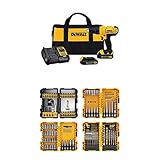
A good starter tool kit with a drill machine needs only five things to earn its shelf space: an 18V (or decent 12V) cordless drill with a metal chuck, two batteries or one battery plus a fast charger, a small set of bits that are genuinely sharp, a handful of hand tools you’ll actually use, and a case that keeps it all together. Everything else printed on the box is negotiable — and a lot of it is padding. Here’s the checklist that separates a kit you’ll use for a decade from one you’ll replace within a year.
As an Amazon Associate we earn from qualifying purchases at no extra cost to you.


What we cover
- The five non-negotiables in a starter tool kit with drill
- Chuck size, torque and motor: reading the drill’s spec sheet
- The battery platform decision outlasts the kit
- Piece count is the most misleading number on the box
- Weight, grip and who the kit is really for
- How the three kit tiers compare
- Match the kit to your situation
- What wears out first (and what to budget later)
- FAQ
The five non-negotiables in a starter tool kit with drill
- The drill itself: 12V minimum for cordless; 18V/20V if you plan heavier work. Metal gear housing, single-sleeve metal chuck, two-speed gearbox.
- Batteries: two 2.0Ah packs, or at minimum one 2.0Ah with a charger that refills it in under 90 minutes. A single 1.5Ah battery will stop a job mid-afternoon.
- A usable bit set: roughly 10–20 HSS twist bits, a few brad-point wood bits, 20–30 driver bits including PZ2 and Torx, and a magnetic bit holder.
- Basic hand tools: tape measure, torpedo level, adjustable wrench, combination pliers, hex keys, a claw hammer.
- A case you can live with: most kits arrive as a blow-molded tool box with a drill machine sitting in the centre tray — check the latches, because they fail before anything else does.
Chuck size, torque and motor: reading the drill’s spec sheet
The drill is 80% of a kit’s value, so read its specs before you count accessories.
Chuck size comes in two standards: 10mm (3/8 inch) on 12V tools and light 18V compacts, and 13mm (1/2 inch) on heavier drills. The chuck size caps the largest shank you can fit — hole saw arbors, large spade bits and auger bits want 13mm. For general household and woodworking use, 10mm handles nearly everything and keeps weight down.
Torque is the honest measure of capability. A 12V drill makes 20–40 Nm, enough for flat-pack furniture, shelves and screws up to about 75mm in softwood. An 18V drill makes 45–85 Nm; around 50 Nm is where hardwood, structural screws and larger spade bits stop being a struggle. Look for 15–25 clutch positions plus a drill mode, and two gears (roughly 0–400 rpm for driving, 0–1,500+ rpm for drilling).
Motor type splits the market: brushed motors are cheaper and perfectly adequate for occasional use; brushless motors run cooler, deliver roughly 20–30% more work per charge and survive heavier duty. Above about $150, brushless is worth insisting on.
Hammer mode turns a drill/driver into a combi drill for masonry. If your walls are brick or concrete, get it; if they’re timber stud and plasterboard, save the money and the ~200g of extra weight.
The battery platform decision outlasts the kit
Batteries are the most expensive consumable you’ll buy, so the platform matters more than the piece count. A starter kit on Ryobi ONE+, DeWalt 20V MAX, Makita 18V LXT, Milwaukee M18 or Bosch 18V means your second and third tool can be bought “bare” for 40–60% less. A kit on an orphaned platform means every future tool starts from zero.
On capacity: a 2.0Ah 18V battery drives roughly 100–150 4x50mm screws into softwood per charge; a 5.0Ah pack more than doubles that but adds about 300g. Store lithium-ion packs at 40–60% charge if they’ll sit for weeks.
What a Bosch tool kit with drill machine typically includes
Bosch sells kits in two ecosystems that share nothing: the green Home & Garden line (EasyDrill 1200 12V, UniversalDrill 18V) whose batteries work across the Power for All alliance with Gardena and other brands, and the blue Professional line (GSB 18V combi drills, usually boxed in an L-BOXX with one or two 2.0–4.0Ah batteries). Both frequently bundle a 100-piece accessory set in the same product listing — check whether it arrives as a separate case, and whether the drill inside is the plain driver or the combi version with hammer mode.
Piece count is the most misleading number on the box
A “200-piece” kit counts every duplicate driver bit, wall plug and cable tie as a piece. Do the real maths instead: that $80 box often contains only ~40 genuinely usable items — $2.00 per usable piece. A $180 kit with 60 listed pieces and ~45 usable ones costs $4.00 each, but those bits are machined steel that hold an edge through five to ten times more holes. Cheap PH2 and PZ2 bits round off within a few dozen screws; cheap masonry bits survive a handful of holes in brick. You pay less per hole with the better kit, not less per piece.
When comparing any tool kit set with drill inside, count only these: twist bits in real sizes (3–8mm), brad-point wood bits, impact-rated driver bits, sockets you’d use, and hand tools that aren’t stamped-metal novelties.
One common confusion: a Drill Master rotary tool kit — Harbor Freight’s house brand — bundles a small rotary tool (roughly 8,000–35,000 rpm, 3.2mm collet) with dozens of cut-off wheels and sanding drums. It’s a useful companion for grinding and carving detail, but it is not a drill: no chuck, no torque, no ability to bore holes or drive screws. Don’t let it substitute for one.
Weight, grip and who the kit is really for
Drill weight with battery runs about 0.9–1.3kg for 12V, 1.4–1.7kg for a compact 18V, and 1.8–2.2kg for a full-size hammer drill. A loaded kit weighs 4–9kg. For smaller hands or limited grip strength, a 1kg 12V drill is genuinely easier to control overhead — that’s a spec, not a marketing segment.
Which is why the “ladies tool kit with drill” category deserves scrutiny. Most pink tool kit with drill bundles from brands like Hi-Spec, Apollo Tools and WORKPRO put a decent 12V drill in a coloured case — perfectly fine if torque is around 25 Nm or better and the bits are real steel. But some swap in a 3.6V/4V electric screwdriver that cannot drill at all. Same checklist applies regardless of colour: torque, chuck, battery, usable pieces.
How the three kit tiers compare
| Spec | Budget kit ($60–$120) | Mid-range kit ($130–$250) | Pro-grade kit ($280–$500) |
|---|---|---|---|
| Voltage / motor | 12V or corded, brushed | 18V, brushed or brushless | 18V brushless |
| Chuck | 10mm, plastic sleeve | 10–13mm, metal | 13mm all-metal ratcheting |
| Max torque | 20–35 Nm | 45–60 Nm | 60–85 Nm |
| Batteries | 1 × 1.5–2.0Ah | 2 × 2.0Ah | 2 × 4.0–5.0Ah |
| Charge time | 3–5 hours | 60–90 min | 35–60 min |
| Claimed pieces | 60–200 | 40–100 | 20–60 |
| Realistic usable pieces | 25–50 | 30–60 | 20–40 |
| Loaded kit weight | 4–7 kg | 5–8 kg | 6–9 kg |
| Typical warranty | 1–2 years | 2–3 years | 3–5 years |
Cost per use tilts the picture further: a $70 kit used a dozen times a year for two years before its battery or bits give up works out near $2.90 per use. A $200 kit used 25 times a year across five years lands near $1.60 per use — and its batteries power whatever you buy next.
Match the kit to your situation
| Your situation | Buy | Skip |
|---|---|---|
| First apartment, shelves and curtains | 12V kit, ~1kg drill, 10mm chuck | 200-piece filler sets |
| New homeowner, regular weekend DIY | 18V, 2 batteries, 45+ Nm, hammer mode | Single-battery kits |
| Woodworking focus | 18V brushless, quality brad-point and countersink bits | Masonry-heavy accessory sets |
| Smaller hands / limited grip strength | 12V at 0.9–1.3kg, slim grip | Full-size 2kg hammer drills |
| Building a collection over time | Pick the battery platform first (Ryobi, DeWalt, Makita, Milwaukee, Bosch) | Kits on orphaned platforms |
| Gift purchase | The same checklist — 12V drill at 25+ Nm, real steel bits | Kits where the “drill” is a 3.6V screwdriver |
What wears out first (and what to budget later)
Consumables go first: PZ2/PH2 driver bits round off within weeks of regular use, so plan on a $10–15 pack of impact-rated replacements. Kit twist bits dull but can be sharpened; kit masonry bits often can’t be saved. Case latches snap and foam trays tear within the first year. Budget chucks develop runout you can see when a bit wobbles. The battery is the big one — expect three to five years of occasional use before capacity drops noticeably, and active DIYers should budget roughly $20–40 a year for fresh bits. The mistakes that actually cost money are buying on piece count, accepting a single battery, skipping hammer mode when your walls are masonry, and choosing the biggest box instead of the most usable one.
FAQ
Is a 12V starter kit enough?
For roughly 80% of household tasks — flat-pack furniture, shelves, pilot holes, screws up to ~75mm — yes. Move to 18V when you’re regularly boring holes over 20mm or driving screws over 100mm.
Do corded drill kits still make sense?
A few exist, and a corded drill offers unlimited runtime at lower cost. But the accessory ecosystems are shrinking, and the saving rarely justifies losing battery compatibility later.
What should a good starter kit cost?
Under $120 buys usable 12V sets. The sweet spot for an 18V tool kit with a drill machine, two batteries and honest accessories is $130–$250; $280 and up buys pro-grade brushless kits that a serious DIYer will never outgrow.