What's inside
As an Amazon Associate I earn from qualifying purchases. This post may contain affiliate links at no extra cost to you.
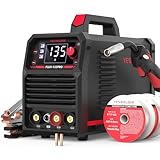
The best 110 volt welder for most home workshops in 2026 is a 140-amp MIG-capable machine—specifically the Hobart Handler 140 or Lincoln Electric POWER MIG 140 MP—because they run cleanly off a standard 15–20 amp household circuit, weld up to 1/4-inch mild steel in a single pass, and hold their resale value better than budget imports. But “best” depends on what you weld, how often, and what your breaker panel can actually deliver, so this guide compares welders 110 volt by process, amperage, duty cycle, and circuit requirements so you can match the machine to your shop’s real limits.
As an Amazon Associate we earn from qualifying purchases at no extra cost to you.


What we cover
What a 110-Volt Outlet Can (and Can’t) Power
A standard North American receptacle delivers 110–120 volts through either a 15-amp or 20-amp breaker. That translates to roughly 1,800–2,400 watts of continuous input power. A 110 volt welder rated at 140 amps output typically draws 20–28 amps at full tilt—meaning you’ll trip a 15-amp breaker if you run sustained beads at max output.
Practical implications:
- 15-amp circuit: stay at or below ~90–100 amps output. Fine for sheet metal up to about 3/16 inch.
- 20-amp dedicated circuit: full 140-amp range usable. If your garage has GFCI outlets shared with a freezer, expect nuisance trips.
- Extension cords: use 12-gauge or heavier, under 50 feet. A 16-gauge cord causes voltage drop that shows up as sputtering arcs and cold welds.
Top 110 Volt Welder Picks Compared
The machines below are the established names in this category—each is a real product line with a documented track record into 2026.
| Model | Process | Output Range | Duty Cycle | Max Mild Steel | Weight | Typical Price Range |
|---|---|---|---|---|---|---|
| Hobart Handler 140 | MIG / flux-core | 25–140 A | 20% @ 90 A | 1/4 in | 57 lbs | $500–650 |
| Lincoln POWER MIG 140 MP | MIG / flux-core / stick / TIG-capable | 20–140 A | 20% @ 90 A | 3/16–1/4 in | ~50 lbs | $700–900 |
| Miller Millermatic 141 | MIG / flux-core | 30–140 A | 20% @ 90 A | 1/4 in | 51 lbs | $800–1,000 |
| Forney Easy Weld 140 MP | MIG / flux-core / stick / DC TIG | 10–140 A | 30% @ 90 A | 1/4 in | 25 lbs | $250–350 |
| Eastwood MIG 140 | MIG / flux-core | 30–140 A | 20% @ 90 A | 1/4 in | 45 lbs | $350–450 |
Hobart Handler 140 — Best All-Round MIG
The Handler 140 has been the default recommendation for home shops for years, and the current version keeps the same strengths: simple tapped voltage settings, an industrial drive-roll system that feeds .024–.035 wire without birdsnesting, and a duty cycle honest enough for real repair work. It welds 24-gauge sheet up to 1/4-inch plate. Skip it only if you want stick or TIG capability in the same box.
Lincoln POWER MIG 140 MP — Best Multi-Process
If your projects mix exhaust work, angle-iron frames, and occasional stick repairs outdoors, the 140 MP covers MIG, flux-core, stick, and scratch-start DC TIG. The digital interface takes a session to learn but removes the guesswork of matching wire speed to voltage. You pay a premium over single-process machines—worth it only if you’ll actually use the extra processes.
Forney Easy Weld 140 MP — Best Budget and Lightest
At roughly 25 pounds, this is the machine you carry up a ladder or toss in a trunk. It handles MIG, stick, and lift-arc DC TIG, and its 30% duty cycle at 90 amps actually beats the pricier machines on paper. The trade-offs: a lighter-duty wire feed mechanism, a shorter warranty history, and less refined arc at the bottom of its range for thin auto-body sheet.
Choosing by Welding Process
- MIG (gas-shielded): cleanest welds, best for auto body and indoor shop work. Requires a gas bottle (75/25 argon-CO2 for steel), which adds $150–300 for cylinder fill/refill setup.
- Flux-core: same machine, no gas needed, better penetration on dirty or rusty metal, and works outdoors in wind. More spatter and slag cleanup.
- Stick: best for farm repairs, fence posts, and rusty steel where surface prep is unrealistic. Steeper learning curve.
- TIG (DC): precision work on thin steel and chromoly. No 110-volt machine TIG-welds aluminum properly—that requires AC output and more power than a wall outlet provides.
Decision Matrix: Match the Machine to Your Situation
| Your Situation | Recommended Choice | Why |
|---|---|---|
| First welder, mixed home repairs, indoor garage | Hobart Handler 140 or Eastwood MIG 140 | Simple controls, forgiving arc, MIG + flux-core flexibility |
| Tight budget, occasional use, portability matters | Forney Easy Weld 140 MP | Half the price, half the weight, three processes |
| Want one machine for MIG, stick, and TIG | Lincoln POWER MIG 140 MP | Only established multi-process unit in the 140-amp class |
| Auto body / thin sheet (22–26 ga) | Miller Millermatic 141 (Auto-Set) | Auto-set simplifies low-amp tuning; smooth low end prevents burn-through |
| Outdoor repairs, rusty steel, no gas bottle | Any flux-core-capable unit above | All run flux-core; skip gas entirely |
Ownership Realities: What Wears, What Costs
A welder’s sticker price is not the real cost. Expect these ongoing expenses:
- Consumables: contact tips ($1–2 each, replace every few hours of arc time), nozzles, drive rolls, and liner ($15–25, replace yearly or after a birdsnest jams it).
- Wire: a 10-lb spool of ER70S-6 runs $25–40 and lasts a casual user 6–12 months. Flux-core wire costs about 30% more per pound.
- Gas: an 80 cu ft cylinder refill is typically $40–60 and covers roughly 4–6 hours of welding.
- Common mistakes: running a long lightweight extension cord (voltage drop kills arc quality), ignoring duty cycle limits until thermal shutdown, and storing flux-core wire unbagged where it absorbs moisture and starts welding poorly.
- Duty cycle reality: 20% at 90 amps means 2 minutes of welding per 10-minute window at that setting. For hobby work you rarely hit it; for trailer repairs with 1/4-inch plate, plan around cooling breaks.
Frequently Asked Questions
Can a 110 volt welder weld 1/4-inch steel?
Yes, at the top of its range—140 amps with flux-core wire and proper joint prep (beveled edges, tight fit-up). For repeated 1/4-inch work, a 220-volt machine is a better long-term fit.
Do I need a dedicated circuit?
Strongly recommended. A 20-amp dedicated circuit lets you use the full output range. On a shared 15-amp circuit, keep settings under ~90 amps.
Is gasless flux-core as strong as MIG?
On mild steel, flux-core actually penetrates deeper. The weld is slightly less ductile and produces more spatter, but for structural repairs it is perfectly adequate.
What’s the thinnest metal these machines handle?
Most weld down to 24-gauge sheet; the Millermatic 141’s low end is particularly stable for 26-gauge auto-body patch panels.
Bottom line: for a first 110 volt welder that will handle nearly everything a home shop throws at it, the Hobart Handler 140 is the safe pick. If you need multi-process capability, step up to the Lincoln 140 MP; if budget and portability rule, the Forney 140 MP delivers surprising capability for the money.