What's inside
As an Amazon Associate I earn from qualifying purchases. This post may contain affiliate links at no extra cost to you.
What we cover
What installing drawer slides demands from a drill
Drawer slides are a precision job, not a high-torque one. You need to drill small pilot holes and drive short screws without stripping the heads, splitting a cabinet side, or pulling a slide out of alignment. A compact cordless drill with a variable-speed trigger and a clutch is usually the best fit. An impact driver can work, but its hammering action makes it easier to overdrive small screws.
Most slide screws are around 1/2 to 5/8 inch long, though the hardware instructions should set the final size. Pilot-hole diameter depends on the screw and the cabinet material; for many small wood screws, a bit around 1/16 to 3/32 inch is a reasonable starting range. Test on scrap first. In particleboard or MDF, oversized pilots can leave screws with too little material to grip.
As an Amazon Associate we earn from qualifying purchases at no extra cost to you.


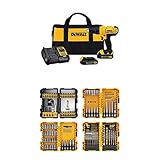

Drill, impact driver, or hammer drill?
A standard drill is the most forgiving choice. Its clutch lets you limit torque, and its chuck holds small drill bits securely. A 12-volt model is generally enough for slide installation and is lighter in tight cabinets. An 18- or 20-volt drill is useful if you also drill larger holes or do frequent home projects, but extra power does not make slides install straighter.
An impact driver is designed to turn stubborn fasteners, not to offer the same delicate control. It can be handy for longer cabinet screws, but use a low setting if available and stop as soon as the screw head seats. A hammer drill adds a masonry hammering mode that is unnecessary for wood cabinets. It can still function as an ordinary drill with hammer mode switched off, but you may pay for capability you will not use.
Quick comparison
| Tool | Best use | Trade-off for slide work |
|---|---|---|
| 12V cordless drill | Pilot holes and short screws | Less suited to repeated large-hole drilling |
| 18V/20V cordless drill | Mixed home projects and cabinet work | Often heavier and more power than needed |
| Impact driver | Longer screws or resistant fasteners | Easy to overdrive small slide screws |
| Hammer drill | Occasional drilling into masonry | Hammer function is irrelevant to cabinets |
What to buy
For a one-time installation or occasional furniture repair, a basic variable-speed 12V cordless drill is usually sufficient. Prioritize a clutch with several settings, a comfortable grip, and a chuck that accepts small bits. A second battery is convenient, but not essential for a few drawers.
If you already own a reliable 18V or 20V drill, use it rather than buying another tool. Set the clutch low and keep the speed slow near the end of each screw. A full-size cordless drill is a better all-round purchase if you expect to tackle shelving, larger pilot holes, and other household repairs too.
Buy an impact driver only if you have other jobs that justify it. For this task, a drill is the safer primary tool. If you use an impact, choose a correctly sized driver bit, keep the tool square to the screw, and finish by hand if the head is close to the slide.
Features that matter
Variable speed is more useful than a high maximum speed. It lets you start a pilot hole cleanly and approach the final screw seating without a sudden jerk. A clutch is important because it reduces the chance of stripping a screw or crushing a thin cabinet panel. A 3/8-inch chuck is adequate for common small bits; a 1/2-inch chuck is useful for broader drilling tasks but not required for slides.
Weight matters when you are working inside a cabinet or holding a drill at an awkward angle. Compact tools are easier to keep perpendicular to the mounting hole. If you are comparing kits, check whether the battery and charger are included: bare tools can look cheaper but require a compatible battery system.
Use the drill without losing alignment
First, mark the slide position and confirm the drawer and cabinet measurements against the slide maker’s instructions. Slides often require a specific side clearance; a mismatch of even 1/16 inch can cause binding. Clamp or hold the slide firmly, and use its elongated adjustment holes for initial positioning where the design allows.
Drill pilot holes through the slide’s mounting holes. Keep the bit perpendicular to the cabinet side, and use a depth stop or a piece of tape on the bit if you need to limit depth. Drive the first screw only snug, check alignment, then add the remaining screws. Do not bury the screw head: a proud head can catch the moving rail, while an overdriven one can deform the slide or strip the hole.
Test the drawer before tightening every adjustment point. If it binds, check that the left and right slides are parallel and at matching heights before blaming the drill. In particleboard, stop if a screw spins without tightening; moving the slide slightly to fresh material or using the hardware maker’s recommended repair method is safer than forcing a larger screw into a damaged hole.
Bits, batteries, and common mistakes
Use a sharp pilot bit and a driver bit that fits the screw head exactly. A loose Phillips bit cams out and can damage both the head and slide finish. Keep a spare bit nearby; a worn tip is especially troublesome with small screws. A magnetic bit holder can help in cramped spaces, but it should not replace steady alignment.
For a handful of drawers, battery capacity is rarely a deciding factor. A 1.5- to 2.0-Ah battery is typically enough for light assembly work, while larger batteries add runtime and weight. The cheapest drill is fine if it has controlled speed, a working clutch, and a secure chuck. Paying more is worthwhile when you want a lighter tool, a better battery platform, or one drill for varied projects—not because drawer slides require heavy-duty power.