What's inside
As an Amazon Associate I earn from qualifying purchases. This post may contain affiliate links at no extra cost to you.
What we cover
What long screws in rafters demand from a drill
Driving a 3- to 6-inch structural screw into a rafter is harder on a drill than hanging a shelf. The screw has to cut through a lot of wood, and a long bit can amplify wobble. Knots, dense lumber, and screws driven near the end of a board add resistance. A small drill may manage a few screws in soft framing lumber, but repeated driving can overheat it, stall it, or twist your wrist.
For most homeowners, the practical choice is a brushless 18V or 20V drill with a two-speed gearbox, a side handle, and a clutch. Voltage labels are not a useful way to compare brands: 18V and 20V Max tools belong to the same general battery class. Look instead for a substantial grip, a chuck that holds large bits securely, and a side handle that can be fitted for controlled high-torque work.
As an Amazon Associate we earn from qualifying purchases at no extra cost to you.


Drill or impact driver?
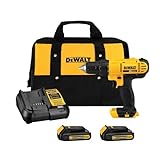
A drill gives you a clutch and smoother control. That makes it a sensible primary tool if you also need to drill pilot holes, countersink, or work with ordinary bits. Use low gear for driving long screws, start slowly, and stop when the head seats. The clutch can reduce overdriving, though it is not a substitute for watching the screw.
An impact driver delivers short bursts of rotational force and usually handles long screws more easily in dense wood. It is compact and less likely to twist your wrist suddenly, but it is loud, offers less precise depth control, and needs compatible hex-shank bits. An impact driver is often the better purchase if installing structural screws is the main job. For occasional fastening, a good drill is fine. Avoid using either tool to force a screw that has stopped moving; back it out and check for a knot, misalignment, or an undersized pilot hole.
Compare brushless cordless drills with a side handle if you want one tool for drilling and controlled screw driving. If long fasteners are your main workload, compare brushless cordless impact-driver kits instead.
Quick comparison
| Tool type | Best fit | Main trade-off |
|---|---|---|
| Compact brushed drill | A few screws in soft wood; light drilling | More likely to bog down or heat up during repeated long-screw driving |
| Brushless 18V/20V drill | Mixed drilling and fastening; controlled work | Bulkier models cost more; clutch settings still need judgment |
| Brushless impact driver | Repeated long screws, especially in tougher lumber | No conventional clutch; loud and easier to overdrive a screw |
| Right-angle drill | Restricted access between framing members | Specialty purchase; not a replacement for a general drill |
A compact drill that you already own may be enough for six screws into ordinary, dry framing lumber. Buying a high-output tool for a small repair is not automatically worthwhile. If the tool repeatedly stalls, smells hot, or leaves screws partly driven, step up in tool capacity or improve the setup before continuing.
Features worth paying for
Brushless motors are useful for repeated heavy work because they tend to run more efficiently and avoid brush wear. They are not essential for a short repair. A 2-speed gearbox matters more: low gear offers better control and mechanical advantage for driving; high gear is for drilling faster in lighter work. For most long screws, start in low gear. If the screw drives smoothly and the tool stays cool, there is no reason to chase a higher torque rating on the box.
A side handle is a meaningful safety feature on a powerful drill. If a bit binds, the drill body can rotate abruptly. Hold the tool with both hands, keep your stance steady, and do not brace your hand against a sharp edge or the rafter itself. A 2.0Ah battery is lighter and fine for a short job; a 4.0Ah battery usually lasts longer and can be a better match for sustained driving, at the cost of extra weight. For overhead work, that added weight matters.
Bits, pilot holes, and screw setup
Use the driver bit specified by the screw maker, seated fully in the head. A worn or incorrect bit can cam out, chew up the recess, or slip off the rafter. Keep a spare bit nearby; long screw jobs are hard on bits, particularly when the tool is angled or the bit is not held square.
Follow the screw manufacturer’s instructions for pilot holes, edge distances, and minimum embedment. A pilot hole can reduce splitting and driving force, especially near the end of a rafter, but a hole that is too large can reduce holding strength. Do not assume a 6-inch screw provides 6 inches of useful embedment: part of its length passes through the material being fastened. A long wood-bit set for pilot holes can help when the joint needs a predrilled path, but match the bit diameter to the screw instructions.
Mark the entry point and keep the screw aligned with the rafter. Start at low speed until the threads bite, then maintain steady pressure without leaning your full weight on the tool. If the screw stops, reverse it out rather than hammering the trigger. Check for a knot, a bit that is wandering, a damaged head, or a pilot hole that needs adjustment. Stop if the tool or battery becomes very hot and let it cool.
Choosing for your workload
For occasional repairs, a brushed drill you already own is worth trying first, provided it has a sound chuck, low gear, and enough charge. For regular framing, pergola, or roof work, a brushless drill with a side handle is the more versatile buy. For many long structural screws, an impact driver is usually the faster, less tiring option; keep a drill available for pilots and holes that need precise control.
Buy into a battery platform you will use for other tools, and compare kits by what is included rather than the tool price alone. A bare tool is a poor bargain if you also need batteries and a charger. Whatever you choose, test the setup on scrap of similar thickness and wood before working overhead. That reveals whether the screw length, pilot hole, bit, and tool are working together—and whether you can control the tool safely.