What's inside
As an Amazon Associate I earn from qualifying purchases. This post may contain affiliate links at no extra cost to you.
What we cover
Choosing a drill bit set for metal fabrication
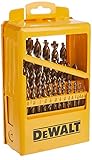
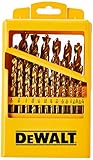
For sheet, plate, angle, and tubing, a useful drill bit set needs more than a large bit count. Look for high-speed steel (HSS) bits with a 135-degree split point, clearly marked sizes, and a case that keeps the bits in order. A split point helps the bit start with less walking, especially on clean, flat stock. It does not replace a center punch, a rigid work setup, or cutting fluid.
For occasional holes in mild steel up to about 1/8 inch thick, an ordinary HSS set can do the job if you punch the center and drill at a controlled speed. For frequent fabrication, cobalt bits cost more but tolerate heat better and are a sensible upgrade for stainless steel or repeated work in tougher alloys. Neither coating nor a premium label makes a bit immune to overheating.
As an Amazon Associate we earn from qualifying purchases at no extra cost to you.

Set types compared
| Set type | Best suited to | Trade-off |
|---|---|---|
| HSS, 135-degree split point | General work in mild steel, aluminum, and mixed shop materials | Good value; edges dull faster under heavy use or excess heat |
| Cobalt HSS, often M35 | Repeated drilling in stainless and other tougher metals | Higher cost; still needs low speed, steady pressure, and lubrication |
| Coated HSS | General-purpose work where the coating suits the material and use | Coating benefits vary; sharpening can remove it at the cutting edge |
| Large indexed set | Shops that need many fractional sizes on hand | Can include sizes you rarely use; more bits to keep organized |
For a practical starter set, choose the size range around the fasteners and holes you actually make. A fractional set in 1/16-inch steps is convenient, but a smaller set with the common sizes you use—and a few individual replacements—may be better value. If your drawings call for metric holes, buy a metric set rather than trying to substitute the nearest fractional bit.
Which bits to buy
A general-purpose 135-degree split-point HSS bit set is a reasonable choice for mild steel fabrication and occasional drilling. Check that the set lists its material and point style; “titanium” alone is not a useful specification. Titanium nitride is a surface coating, not a substitute for a quality HSS cutting edge.
For regular stainless-steel work, consider a cobalt M35 split-point set. Cobalt bits are harder and more heat resistant than standard HSS, but they can be more brittle if bent or used in a loose setup. For mild steel and a small number of holes, buying cobalt bits just because they are “for metal” is usually unnecessary.
Pay attention to shank size as well as cutting diameter. A set with reduced shanks on larger bits can fit a standard drill chuck, while a full-size shank may not. For most fabrication drilling, use a corded drill press when practical or a variable-speed drill with a sound three-jaw chuck. Avoid impact-driver use unless the bit has a suitable hex shank and its manufacturer approves that application; hammering action is not what metal drilling needs.
Drilling without burning up bits
Clamp the work securely. A loose sheet can spin, grab the bit, or cut a hand; thin sheet may need a backing block to reduce burrs and distortion. Mark the hole, then use a center punch for accurate placement. A split point reduces walking but cannot reliably hold position on every curved, painted, or uneven surface.
Use a slow speed and steady feed. As a starting point in mild steel, a 1/4-inch bit often works around 1,000 rpm, while a 1/2-inch bit needs substantially less—roughly 500 rpm or below. These are working ranges, not universal settings: material, bit geometry, and drill rigidity matter. Stainless generally calls for slower cutting and firmer, continuous pressure. If the bit squeals, turns blue, or produces fine powder instead of chips, stop. Letting a bit rub without cutting hardens stainless at the surface, making the next attempt harder.
Apply cutting fluid for steel and stainless, and clear chips from deeper holes rather than forcing the bit through packed swarf. For thin stock, ease pressure as the bit breaks through to limit grabbing. Deburr both sides afterward with a countersink or deburring tool. A 135-degree point is a good general-purpose choice; a 118-degree point can cut readily in softer materials, but it is more prone to wandering without a punched start.
Wear, sharpening, and storage
Dull bits are a common failure, not a reason to push harder. A sharp bit forms chips; a dull one heats the work, squeals, and may work-harden stainless. Replace a badly damaged small bit if sharpening is not practical. Larger HSS and cobalt bits can be sharpened, but maintain the point geometry and equal cutting lips or the hole may wander and the bit may cut oversize.
Keep sizes legible and return bits to their slots. A case with clear markings saves time and prevents a loose bit from cutting into its neighbors. For a shop that uses a handful of sizes every day, buy those sizes as replacements rather than repeatedly replacing an entire set. That is often the better investment than paying for a large assortment whose extras sit unused.