What's inside
As an Amazon Associate I earn from qualifying purchases. This post may contain affiliate links at no extra cost to you.
Drilling a hole in a wood window frame is a small job with a high cost for mistakes. The frame is usually narrow, visible, and close to glass, weather seals, or moving hardware. A good cordless drill should give you controlled speed, a short nose, and enough clutch adjustment to avoid stripping screws or breaking through the far side of the wood.
As an Amazon Associate we earn from qualifying purchases at no extra cost to you.


What we cover
What to Look for in a Cordless Drill
For most wood window frames, a compact 12V drill is the best fit. It is lighter than an 18V model and easier to control when working from a ladder or reaching into a corner. Look for a two-speed gearbox, a variable-speed trigger, a clutch with at least 15 settings, and a keyless chuck that accepts bits from 1/16 to 3/8 inch.
A brushless motor is useful but not essential for occasional window work. It generally runs cooler and gives better battery life, but a cheaper brushed drill can handle a few holes without trouble. Spend extra on brushless if you also expect to drill into masonry, drive many structural screws, or use the drill regularly.
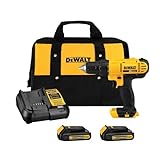
For a suitable selection, compare 12V compact cordless drill kits with a battery, charger, and two-speed gearbox. A kit is usually a better value than buying a bare tool unless you already own batteries in that platform.
Best Drill Types for Window Frames
| Drill type | Best use | Advantages | Drawbacks |
|---|---|---|---|
| 12V compact drill | Pilot holes, curtain hardware, latches, and light fasteners | Light, narrow, easy to control | Less runtime and lower maximum torque |
| 18V or 20V drill | Thick hardwood frames, repeated work, and larger holes | More power and longer runtime | Heavier; easier to overdrive screws |
| Hammer drill | Wood frames mounted near masonry; occasional wall drilling | Can drill brick and concrete with the correct bit | Bulkier and unnecessary for wood-only work |
| Impact driver | Driving long screws, not ordinary drilling | Excellent torque and compact length | Poorer control; can damage trim and small screws |
A hammer setting does nothing useful in wood and can cause unnecessary vibration. Choose a hammer drill only if one tool must also drill holes in brick or block around the window. Keep the hammer function switched off when drilling the frame.
The Best General Choice
For most homeowners, a compact brushless 12V drill is the sensible upgrade. It has enough power for holes up to about 1/4 inch in ordinary pine, fir, or painted softwood, while remaining manageable near glass. A 12V drill can also make larger holes with a sharp brad-point bit, although it will work more slowly than an 18V tool.
Choose an 18V compact brushless drill kit if the frame is dense oak, maple, or another hardwood, or if you will drill dozens of holes. The extra power is not automatically better. It increases the chance of grabbing, splitting the frame, or driving a screw through the inside edge.
A basic brushed 12V drill is fine for two or three curtain-bracket holes. It may cost considerably less, and its limitations will not matter for a short job. Buy the cheaper option when the work is occasional and you already have suitable bits. Battery platform compatibility is often more important than a small difference in motor specifications.
Use the Right Bit
Use a brad-point bit for clean holes in exposed wood. Its center point stays on location, and the outer spurs cut the surface before the main flutes remove material. Standard twist bits work in a pinch, but they tend to wander on paint and can leave a ragged exit hole.
For holes larger than 1/4 inch, use a sharp brad-point set or a small wood-boring bit. A 3/8-inch hole is usually practical with a compact drill. For a 1/2-inch hole, use a slower speed and keep the drill square. Do not force a dull bit; excessive pressure makes the bit grab and can split a narrow stile.
Match the pilot hole to the screw, not just to the drill size. In softwood, a pilot hole close to the screw’s solid-shank diameter prevents splitting. For a typical #8 wood screw, that may be about 1/8 inch in softwood and 9/64 inch in hardwood. Check the screw manufacturer’s chart when the frame is expensive or difficult to repair.
How to Drill Without Damaging the Frame
First, confirm that the screw will not hit glass, a concealed metal reinforcement, wiring, or a counterbalance mechanism. Keep holes at least 3/8 inch from an edge when possible. Very narrow frame sections may not provide enough wood for a secure screw; use a different mounting point or a suitable wall anchor instead.
Mark the location with a pencil, then make a small indentation with an awl. Set the drill to low gear and a moderate trigger speed, roughly 300 to 800 rpm for a small pilot hole. Keep the drill perpendicular to the frame. If the hole must be visible, place painter’s tape over the mark to reduce paint chipping.
Stop just before the bit exits the far side. You can judge depth with a piece of tape wrapped around the bit. For a blind hole, set the tape at the required depth; for a through-hole, clamp a scrap block behind the frame if accessible. Breaking through suddenly is a common cause of splintering.
Use the clutch when driving the screw. Start on a low setting and increase it only if the screw stops short. The screw head should finish flush with the bracket, not buried below the paint. An impact driver is excessive for most window hardware and can snap small screws or crush soft wood around the head.
When More Power Is Worth Buying
Choose an 18V drill when you need to bore repeated holes, drive 2-1/2-inch or longer screws, or work in hardwood. A side handle is useful for large bits, but it adds bulk around a window. If your main task is fastening brackets with short screws, the compact 12V tool remains easier to use.
If you also need masonry holes, consider a compact cordless hammer drill kit. Use a masonry bit and hammer mode only in the wall, never in the wood frame. For wall anchors, drill the hole to the anchor’s stated diameter and depth; an undersized hole can deform the anchor, while an oversized hole lets it spin.
Keep a charged spare battery nearby, but do not solve every problem with a larger drill. Sharp bits, accurate depth control, and a light trigger finger prevent more window-frame damage than extra torque.