What's inside
As an Amazon Associate I earn from qualifying purchases. This post may contain affiliate links at no extra cost to you.
Both an impact driver and a drill can install structural timber screws, but they work differently. For a handful of ordinary screws in accessible framing, a drill may be all you need. For long, thick screws or repeated fastening, an impact driver usually makes the job easier. Neither tool makes an undersized screw, poor connection, or unsuitable timber safe.
As an Amazon Associate we earn from qualifying purchases at no extra cost to you.


What we cover
What the tools do differently
A drill applies steady rotary force. Its adjustable clutch can stop driving when resistance reaches a set point, which helps avoid stripping smaller fasteners. Most drills have a three-jaw chuck that holds round-shank bits and hex bits, though changing bits takes longer than with a quick-release holder.
An impact driver turns the bit while delivering short rotational blows when resistance rises. That pulsing action helps drive long screws without requiring the same sustained force from your wrist. It does not mean every screw will go in cleanly: an unsuitable bit, poor alignment, excessive speed, or a screw binding in the timber can still damage the head or break the fastener.
Which tool should you choose?
| Job condition | Better fit | Reason |
|---|---|---|
| A few short screws, softwood, easy access | Drill | Controlled driving and no need to buy another tool |
| Long structural screws, repeated fastening | Impact driver | More comfortable driving under high resistance |
| Precise depth or delicate timber | Drill with adjustable clutch | More control near the surface, though a depth stop is better still |
| Large pilot holes or boring holes | Drill | Designed to accept a wider range of drill bits |
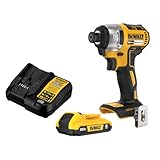
If you are buying one tool mainly for structural screws, a cordless impact driver kit is a practical choice for frequent work. If you already own a capable drill and are installing only a few screws, try it before spending money on another tool. A drill with a side handle can help with larger fasteners, but brace yourself and keep the bit aligned.
Check the fastener and joint first
“Structural screw” covers fasteners designed for particular timber connections, not a universal substitute for every bolt, nail, or connector. Follow the screw maker’s instructions for permitted materials, edge and end distances, pilot-hole requirements, and installation method. Where the connection is part of a permitted building detail or engineered design, follow that specification rather than choosing by screw length alone.
Screw diameter, length, thread design, and the timber species all affect driving effort and holding performance. A screw that is too long can emerge from the far side; one driven too close to an edge can split the timber. Check the required embedment into the receiving member, accounting for the thickness of the first member and any gap between pieces. Do not count the pointed tip as full thread engagement unless the fastener documentation says to.
Pilot holes and bits
Use a pilot hole when the fastener instructions require one, or when the timber, screw size, or location makes splitting a concern. This is especially relevant near ends and edges, in dense hardwood, and with larger-diameter screws. The pilot diameter and depth should come from the screw manufacturer; guessing too large can reduce the screw’s grip, while too small may make installation harder and increase splitting risk. A separate wood drill-bit set is useful even if an impact driver does most of the driving.
Match the driver bit to the screw head exactly and replace it if the tip is rounded. Keep the tool in line with the screw, press firmly enough to keep the bit seated, and start slowly. A slipping bit chews up the recess; a screw driven at an angle may not pull the members together properly. If a screw stalls, stop and check alignment, pilot-hole size, and whether the joint is closing. Continuing to hammer on a stalled screw can strip the head, overheat the bit, or snap the fastener.
Depth and torque control
Impact drivers are powerful, but many have less predictable depth control than a drill’s clutch. Start at low speed if the tool offers it, and ease off as the head approaches the surface. The goal is to seat the head as specified—not bury it deeply enough to crush fibers or weaken the connection. For repeat work, use a compatible depth-control attachment or stop to check the first few fasteners, then verify the rest by sight and feel.
A drill’s clutch can reduce overdriving, but its numbered settings are not calibrated for a particular structural screw or timber. It may also slip before a long screw is fully seated. If that happens, use a higher setting cautiously or switch tools rather than leaning harder on the drill. A cordless drill with an adjustable clutch remains a sensible buy for general drilling and lighter fastening.
Battery and work practice
For occasional screws, battery size matters less than having a charged pack and a sharp, correctly fitting bit. Repeated long screws drain small batteries faster and can heat both the tool and fastener. Use the battery platform you already own when possible; buying into a second system for one small project rarely pays off. Let a hot tool cool rather than forcing it through a long run.
Clamp or otherwise secure the timber so it cannot shift, keep hands clear of the screw path, and wear eye protection. Stop if the wood splits, the screw bends, or the head is damaged. Backing out a compromised fastener and inspecting the joint is safer than treating a damaged screw as acceptable because it appears seated. For a small, straightforward job, a drill is often enough; for repeated high-resistance driving, an impact driver saves effort, provided the screw and connection are specified correctly.