What's inside
As an Amazon Associate I earn from qualifying purchases. This post may contain affiliate links at no extra cost to you.
What we cover
What matters for metal framing screws
For steel studs and track, the right impact driver is usually a compact 18V or 20V tool with a variable-speed trigger, a 1/4-inch hex chuck, and a low-speed or screw-driving mode. Raw torque is less important than control: an impact driver can drive a self-drilling screw fast, but too much speed or pressure can strip the head, spin out the hole, or snap the screw.
First match the fastener to the framing. Light-gauge studs commonly take self-drilling framing screws with a fine thread and a point rated for the steel thickness. Check the screw maker’s guidance for the combined thickness and gauge you are fastening. A screw that is too short may not engage properly; one that is too long can protrude where clearance matters. Do not assume every metal-framing screw is suitable for structural connections.
As an Amazon Associate we earn from qualifying purchases at no extra cost to you.


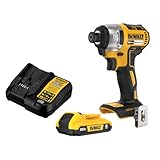

Driver features worth paying for
A low-speed setting or dedicated screw mode makes it easier to start screws squarely and stop when the head seats. A mode that cuts power near the end can reduce overdriving, though it is not a substitute for trigger control. If a tool has only a speed selector, use the lowest setting that drives the screw reliably, then squeeze the trigger progressively rather than flooring it.
Compact length helps when working inside track or close to corners. A belt hook and a work light are useful on a framing job; a large battery can make a compact driver awkward in tight spaces. For routine work, a 2.0Ah or 3.0Ah battery is often a more comfortable balance than a heavy high-capacity pack. Keep a charged spare nearby if you are driving hundreds of screws.
Compare current cordless impact driver kits with variable speed by battery platform, included batteries, and warranty—not just advertised torque. Tool-only pricing can look attractive but may be poor value if you do not already own compatible batteries.
Which setup fits the job?
| Setup | Best for | Trade-off |
|---|---|---|
| Compact 18V/20V impact driver | Regular framing work and repeated self-drilling screws | Fast and capable, but needs a light touch to avoid stripping |
| 12V impact driver | Light-duty work, tight spaces, and occasional repairs | Smaller and lighter; may slow down on thicker steel or long runs |
| Cordless drill/driver with clutch | Small jobs where controlled seating matters more than speed | Often easier to stop gently, but can be slower and may stall on demanding screws |
A basic 12V driver can be enough for thin track and a modest room. If it repeatedly stalls, overheats, or takes several seconds per screw, moving to a compact 18V/20V impact driver is a practical upgrade. A premium high-torque model is rarely necessary for ordinary light-gauge framing and may be harder to control.
Bits, screws, and fit
Use the bit type and size that match the screw head. A worn or undersized bit cams out, chews the recess, and can leave a screw that is difficult to remove. Keep a few fresh bits on hand; if the bit slips repeatedly, replace it instead of pushing harder. A magnetic bit holder can speed up loading, but check that it does not wobble enough to make starting difficult.
For a dedicated screw-driving setup, compare impact-rated bit holders and driver bits. Impact-rated bits are designed for the repeated twisting loads of an impact driver. They still wear, particularly when the bit is a poor fit or the screw is driven at an angle.
Do not use a wood screw where a metal-framing screw is specified. If a self-drilling point will not penetrate, check that the screw is rated for the steel thickness, that the bit is seated correctly, and that the work is supported. For heavier steel or a connection requiring a specified fastener, follow the framing system’s installation instructions rather than substituting a larger screw by guesswork.
How to drive without stripping screws
Hold the driver in line with the screw and start at low speed. Keep steady pressure behind the tool until the point bites, then increase speed once the screw is cutting. Ease off as the head approaches the surface. The goal is a seated head and a secure connection, not a deeply crushed dimple or a spinning screw.
If the screw spins without tightening, stop. The hole may be stripped, the screw may be wrong for the material, or the connection may not have enough grip. Do not keep driving in the same hole; use the repair method specified for the framing system or move to a suitable new location when allowed. If the head snaps, remove the broken piece if possible and replace the fastener rather than treating the damaged screw as secure.
For repetitive work, test the setting on scrap matching the actual stud and track thickness. Check a few completed connections by hand and visually: heads should be seated, not stripped, and the joined pieces should be drawn together. A short test saves time compared with discovering a run of loose or damaged fasteners later.
A sensible buying choice
For frequent metal framing, buy a compact 18V/20V impact driver from a battery platform you already use, with a low-speed setting and a comfortable trigger. A midrange kit is usually the best value; spend extra for a smaller head or better speed control if you work in tight spaces or drive fasteners all day. If this is a one-room project, an entry-level 12V driver—or a drill/driver you already own—may be entirely adequate, provided it drives the specified screws cleanly and consistently.
Whichever tool you choose, control, correct screws, and a fresh matching bit matter more than a headline torque figure. Start slowly, stop when the head seats, and replace any fastener that has stripped or failed to grip.