What's inside
As an Amazon Associate I earn from qualifying purchases. This post may contain affiliate links at no extra cost to you.
Long screws can turn a simple shelf or bracket installation into a frustrating job. An impact driver makes the work easier by delivering brief bursts of rotational force, but the tool is only part of the equation: screw size, pilot holes, bit fit and the stud all matter. For most home projects, a compact 18V or 20V cordless impact driver is the sensible choice. You do not need the biggest model on the shelf.
As an Amazon Associate we earn from qualifying purchases at no extra cost to you.



What we cover
What to look for in an impact driver
Choose a tool with a 1/4-inch hex collet, variable-speed trigger and at least two speed settings. A lower speed helps start a screw straight and reduces the chance of stripping its head; higher speed is useful once the threads have bitten. A brushless motor generally improves efficiency and runtime, but a brushed driver can be a good buy for occasional use.
For driving structural or cabinet screws into framing, check the fastener maker’s guidance before choosing a driver. Many typical 3- to 4-inch wood screws are within the capability of ordinary cordless drivers, provided the screw is suited to the task and the pilot hole is right. More torque is not automatically better: a powerful tool can snap a screw, bury its head or damage the work before you can react.
If you already own batteries from a cordless tool system, buying a bare tool from that same system is often the best value. Otherwise, compare the cost of the driver, battery and charger together. A small 2.0Ah battery keeps the tool light; a larger battery can mean longer runtime but adds weight and may make overhead work tiring.
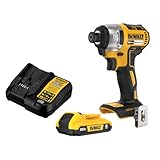
Browse cordless brushless impact driver kits if you need a battery and charger as well as the tool. For light household work, a less expensive brushed kit is also reasonable if it has a responsive trigger and a battery system you can use for other tools.
Impact driver, drill or hammer drill?
An impact driver is usually the easiest tool for repeated long screws, but it is not the only workable choice. A drill driver gives you a clutch and smoother control; a hammer drill’s hammer function is for masonry, not for driving screws into wood.
| Tool | Best use | Trade-off |
|---|---|---|
| Impact driver | Repeated long screws into framing | Loud; can overdrive or strip fasteners |
| Drill driver | Small jobs, delicate materials and mixed drilling and fastening | May stall more readily on long screws |
| Hammer drill | Drilling into concrete or brick with the correct bit | Hammer mode offers no advantage in a wood stud |
If you are installing only a few screws, a drill driver you already own may be enough—especially with a pilot hole. An impact driver is a better purchase when you regularly drive long fasteners or want less wrist reaction as screws encounter resistance.
Match the bit to the screw
Use a driver bit that fits the screw head exactly. A loose Phillips or Torx bit can slip, chew up the recess and leave the screw stuck halfway in. Replace worn bits rather than pressing harder. For a 1/4-inch hex impact driver, buy impact-rated bits; ordinary bits may break under repeated impacts. A short bit gives good control, while a long extension can flex and make it harder to keep the driver aligned.
For a bracket or other load-bearing attachment, choose screws intended for structural fastening or the specific product’s installation instructions. Do not assume that any long deck or drywall screw is a suitable substitute. Screw length should provide enough engagement in the stud after passing through the attached material, without risking plumbing or electrical wiring behind the wall.
Drive long screws without splitting or stripping
First locate and mark the center of the stud. A stud finder can help, but confirm the edges with measurements or a small test hole when the attachment is important. Avoid guessing near outlets or plumbing fixtures: wires and pipes may run through studs, and screws can penetrate farther than expected.
For a long screw or dense wood, drill a pilot hole sized for the screw’s core rather than its outer thread diameter. The right size depends on the screw and wood; follow the fastener maker’s chart when available. A pilot hole reduces splitting and driving force, particularly near the end of a board. It is not a reason to use an undersized or damaged screw.
Seat the bit firmly, hold the driver in line with the screw, and start at low speed. Once the screw is straight and engaged, increase speed gradually. Ease off as the head approaches the surface. If the driver chatters without advancing, stop and check for a poor bit fit, a blocked hole, a blunt screw point or a pilot hole that is too small. Repeatedly forcing it can strip the head or break the fastener.
Stop if a screw suddenly meets hard resistance. It may have hit a knot, another fastener, masonry or something hidden in the wall. Back it out rather than leaning harder on the tool. If the screw is spinning without tightening, its threads may have damaged the wood or missed the stud; remove it and relocate or repair the fastening point as the project allows.
A practical buying choice
For regular DIY framing, shelving and bracket work, look for a midrange brushless impact driver with two or more speed settings, a variable trigger and a comfortable grip. A compact model is easier to maneuver inside cabinets and above shoulder height. Compare tool-only pricing with a kit if you do not already own compatible batteries.
For occasional installations, the cheaper drill driver may be perfectly adequate, especially if you make pilot holes and use the correct screws. Buy an impact driver when long fasteners are a frequent task, not simply because its torque figure is larger. That choice usually saves money while still putting the right tool in your hand for the job.