What's inside
As an Amazon Associate I earn from qualifying purchases. This post may contain affiliate links at no extra cost to you.
What we cover
Choosing a drill for block
Masonry screws need a correctly sized pilot hole in sound material. For most installations in concrete block, a cordless hammer drill with a hammer-and-rotation setting is the practical choice: it drills faster than a standard drill and is easier to control than a rotary hammer. A regular drill can work for a few small holes in softer block, but it may take longer and overheat its bit.
Check the screw maker’s instructions before drilling. The required hole diameter and depth depend on the screw, and using the wrong bit can leave the screw loose or make it seize before it is fully seated. Many common masonry screws call for a 5/32-inch or 3/16-inch carbide-tipped bit, but do not treat either size as universal.
As an Amazon Associate we earn from qualifying purchases at no extra cost to you.
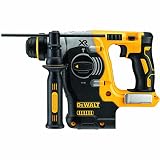


What to buy
For occasional jobs such as fastening a hose hanger, light shelving, or conduit, a quality 18V or 20V cordless hammer drill is usually enough. Look for a model with a two-speed gearbox, variable-speed trigger, clutch, and side handle. The clutch helps limit damage while driving, while the side handle gives you better control when drilling larger holes. Choose a kit with at least a 2.0Ah battery; a second battery is useful if you have many holes to drill.
Compare cordless hammer drill kits if you need one tool for routine drilling and fastening. A compact drill may feel lighter overhead, but some small models have less reserve for repeated holes in dense block. Higher voltage alone does not guarantee better results: bit quality, battery condition, and technique matter too.
A rotary hammer is worth considering for repeated drilling, larger holes, or hard concrete. Its piston mechanism delivers stronger blows than a typical hammer drill, so it can make the job quicker. The trade-off is more weight, higher cost, and less finesse for small anchors. For a handful of masonry-screw pilot holes in ordinary block, it is often unnecessary.
Hammer drill or rotary hammer?
| Tool | Best fit | Trade-off |
|---|---|---|
| Standard cordless drill | A few small holes in soft block | Slowest in hard material; easier to stall or heat the bit |
| Cordless hammer drill | Typical home projects and small to medium pilot holes | Less effective than a rotary hammer in dense concrete or long runs of holes |
| Rotary hammer | Frequent drilling, larger holes, hard concrete | Heavier and usually more tool than a small screw-installation job requires |
Bits and fasteners matter
Use a sharp carbide-tipped masonry bit of the diameter specified for your screws. A worn bit may wander, cut slowly, or produce an oversized hole. If you already own a standard drill and have only a few small holes to make, a carbide-tipped masonry bit may be a better first purchase than a new drill—provided the block is not especially hard and the existing drill is in good condition.
Use the screw type designed for masonry and the material you are fastening. A masonry screw is not a substitute for a structural anchor where the load or consequences of failure are high. For heavy shelves, railings, overhead loads, or anything safety-critical, follow the fixture and fastener maker’s load guidance and consider a rated anchor system. Block webs can be thin, and hollow sections do not offer the same holding conditions as solid concrete.
Drilling and driving without damaging the hole
Mark the hole and check for wiring or plumbing before drilling. Set the hammer drill to hammer-and-rotation mode, fit the side handle, and start slowly to keep the bit from skating. Hold the tool square to the wall, then increase speed once the bit has started. Use steady pressure rather than leaning hard on the drill; excessive force can slow the bit and overheat it.
Drill to the specified depth, allowing room for masonry dust beyond the screw’s embedment. A strip of tape on the bit is a quick depth marker, though a depth stop is more consistent. Withdraw the bit occasionally to clear dust. After drilling, clean the hole with a suitable brush or other method recommended by the fastener maker; packed dust can interfere with screw engagement.
Drive the screw with a drill or impact driver on a low setting and stop as soon as it seats firmly. An impact driver can speed up installation, but it can also overdrive the fastener or strip its threads in block if you hold the trigger too long. For a few screws, a drill with a clutch gives more control. If the screw binds early, do not force it: back it out, check for dust or a wrong-size pilot hole, and inspect the block for damage.
Common failures and when to stop
A screw that spins without tightening usually points to an oversized or damaged hole, weak block, or a screw placed in a hollow area without suitable support. Moving the screw a short distance may help, but keep the required edge and spacing distances in the fastener instructions. Do not keep tightening a spinning screw; it will not regain holding power.
If the bit stops cutting, check whether it is worn and clear dust from the hole. If the drill repeatedly stalls in dense material, a rotary hammer may be the sensible upgrade. If block crumbles or cracks around the hole, stop and reassess the fastener, location, and load. For a straightforward household job, a midrange hammer drill and the correct bit are generally enough; paying for more power will not fix a wrong pilot-hole size or unsuitable fastening location.