What's inside
As an Amazon Associate I earn from qualifying purchases. This post may contain affiliate links at no extra cost to you.
What we cover
Best Cheap Hammer Drills for DIY Projects
The best cheap hammer drill for most occasional DIY work is a compact 18V brushless combi drill from a major tool brand, bought as a bare tool if you already own its batteries. If you don’t, a kit with a battery and charger is usually better value. For the lowest upfront cost and long masonry sessions, choose a corded drill; for shelves, small repairs, and work away from an outlet, choose cordless.
“Cheap” should mean inexpensive to own, not merely the lowest sticker price. Check the chuck, the drill’s stated masonry capacity, battery platform, and warranty before choosing. A budget drill is suitable for a few pilot holes in brick or block; it is not a substitute for a rotary hammer when you’re drilling many large holes in concrete.
As an Amazon Associate we earn from qualifying purchases at no extra cost to you.
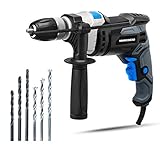
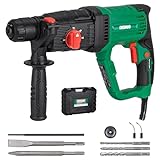


Shortlist by situation
- Best low-cost cordless kit: Ryobi ONE+ 18V PBLHM101 hammer drill kit. A practical choice for homeowners who need a battery, charger, and tool together, particularly if they may add other ONE+ tools. Check current kit contents, since bundles vary.
- Best battery value: Makita 18V LXT XPH12Z, if you already have compatible LXT batteries. It has a metal keyless chuck and a three-mode design. As a bare tool, it avoids paying for batteries you don’t need.
- Best for a compact setup: Bosch 18V Compact Tough GSB18V-490B12 kit. Its 1/2-inch chuck is useful for general drilling, while the kit format makes it a reasonable starting point for a small cordless collection.
- Best corded hammer drill: DEWALT DWD520K. It offers a 1/2-inch chuck and two speed ranges, with no battery to age or run down. It is heavier and less convenient than a compact cordless drill, but can make sense for repeated, stationary DIY jobs.
Models and bundles can change, so confirm the exact model number, included battery capacity, and warranty before buying. The picks above are examples of established product lines, not a claim that one configuration is always the cheapest in every region.
What matters more than the lowest price?
| Feature | What to look for | Why it matters for occasional DIY |
|---|---|---|
| Chuck | 1/2 in (13 mm), preferably metal for frequent bit changes | Accepts common larger drill bits; a solid chuck is less prone to slipping when properly tightened. |
| Masonry capacity | Manufacturer rating around 1/2 in (13 mm) in masonry for typical compact drills | Use the rating as a limit, not a promise of fast drilling in hard concrete. |
| Battery | 18V/20V-max platform; 2.0–5.0 Ah kit battery | A 2.0 Ah battery keeps the kit lighter; 4.0–5.0 Ah offers more work between charges but adds weight. |
| Weight | Compare tool-only weight with battery attached | Published weights may exclude the battery. Added battery weight matters when drilling overhead. |
| Speed and clutch | Two speed ranges and an adjustable clutch | Low speed helps with larger bits and driving screws; the clutch helps avoid stripping fasteners. |
Chuck size is not the same as masonry capacity: a 1/2-inch chuck does not mean the drill can comfortably bore 1/2-inch holes in every material. Also check whether the stated capacity is for wood, steel, or masonry. Concrete hardness, aggregate, bit quality, and operator pressure all affect real progress.
Choose by budget, space, and frequency
| Your situation | Better fit | Trade-off |
|---|---|---|
| Already own batteries from a tool platform | Bare-tool cordless drill on that platform | Lowest added cost, but only a bargain if the battery is compatible and healthy. |
| Starting from zero; a few household jobs a year | 18V kit with one battery and charger | Higher initial cost than a bare tool, but ready to use and expandable. |
| Long sessions near an outlet; storage space is available | Corded hammer drill | No battery cost or charging, but the cord limits reach and adds setup hassle. |
| Many large holes in concrete or repeated masonry work | Rotary hammer with an SDS bit system | Costs more and is less versatile for everyday screwdriving, but is designed for demanding masonry work. |
For the best battery hammer drill, the sensible choice is often the one that shares batteries with tools you already own. A bare-tool price can look very low but becomes poor value if you must buy a charger and battery separately. For the best battery operated hammer drill as a first purchase, compare complete kits by battery capacity and warranty, not just voltage printed on the box. “Electric hammer drill” can mean either corded or cordless, so confirm the power source in the listing.
When a cheap drill is enough—and when it isn’t
A basic hammer drill is made for occasional holes in brick, mortar, and softer masonry. Its hammering action helps a rotating masonry bit chip material as it turns. It works best with moderate pressure and a sharp carbide-tipped bit. In hard concrete, the same job can become slow, hot, and tiring; forcing the tool can wear the chuck, overload the motor, or drain a battery quickly.
If you are mounting a few light shelves in brick, a budget combi drill can be adequate. For repeated holes for anchors in poured concrete, a small rotary hammer is usually the better tool. It uses a different mechanism and SDS bits, and generally makes the work quicker with less pressure. Don’t buy a cheap drill based on its maximum torque figure alone: torque mainly describes twisting force, not how quickly it drills masonry.
Make the drill and battery last
- Use the right bit. Fit a masonry bit for brick or concrete and a sharp wood or metal bit for those materials. A worn bit makes the motor work harder.
- Set the mode and speed. Select hammer mode for masonry, ordinary drilling mode for wood and metal, and a low speed for larger bits or screwdriving. Hammer mode is not for driving screws.
- Start gently and clear dust. Keep the drill aligned, use steady pressure, and withdraw the bit occasionally to clear debris. Excessive force can overheat the bit and stall the drill.
- Keep the chuck clean and tight. Brush away dust before changing bits and tighten a keyless chuck firmly. A slipping bit can damage both the bit shank and chuck jaws.
- Store batteries sensibly. Keep them dry and away from extreme heat. Follow the maker’s charging and storage guidance; don’t leave a battery on a hot vehicle dashboard or in a damp shed.
In low-cost drills, common wear points are the chuck jaws, battery contacts, trigger, and gearbox. Avoid using the drill as a mixing tool or pushing it through long concrete bores. If the housing becomes unusually hot, the motor slows sharply, or the battery repeatedly cuts out, pause and let the tool cool. For a homeowner who drills masonry only a few times a year, a well-chosen kit or a compatible bare tool is usually the best value; for substantial concrete work, renting or buying a rotary hammer can cost less in time and wear.