What's inside
As an Amazon Associate I earn from qualifying purchases. This post may contain affiliate links at no extra cost to you.
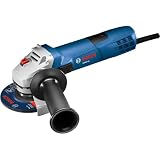
The best angle grinders for metalwork are a 4-1/2-inch variable-speed corded model for sustained shop cutting and grinding, a 5-inch grinder when heavier stock and larger discs matter, or a brushless cordless grinder when portability outweighs runtime.
As an Amazon Associate we earn from qualifying purchases at no extra cost to you.


What we cover
Quick picks by metalworking situation
| Situation | Best choice | Why | Typical specification |
|---|---|---|---|
| Frequent shop fabrication | 4-1/2-inch or 5-inch corded grinder | Continuous power, lower running cost, no batteries to manage | 11–13 amps, 10,000–12,000 rpm |
| Portable repair and installation | 18V or 20V brushless cordless grinder | No extension cord and quick setup in awkward locations | 4-1/2- or 5-inch disc, 5.0Ah battery, roughly 10–25 minutes of heavy intermittent work |
| Thin sheet, stainless steel, and finishing | Variable-speed 4-1/2-inch grinder | Lower speeds reduce discoloration and make flap-disc control easier | 2,800–10,500 rpm, electronic speed control |
| Heavy plate and repeated weld removal | 5-inch corded grinder | Larger abrasive area and strong sustained output | 12–13 amps, up to 5-inch wheels, approximately 8–11 lb |
| Occasional household metalwork | Compact 7–9 amp corded grinder | Lower purchase cost and no battery investment | 4-1/2-inch disc, about 10,000–11,000 rpm |
Our top choices
Best overall: Makita 9564CV
The Makita 9564CV is a strong all-rounder for fabricators who cut, grind, and finish different metals. Its 4-1/2-inch format is easy to control, while the 13-amp motor supplies enough reserve for beveling edges and removing welds. Variable speed is the important advantage: a lower setting suits flap discs, wire wheels, and stainless steel finishing, while higher speed is appropriate for many abrasive cutting and grinding wheels.
It is a corded tool, so it is less convenient outdoors than a battery grinder, but it avoids thermal and runtime limits during long sessions. Expect this class of grinder to cost roughly $130–$190, depending on included accessories and regional pricing.
Best for sustained cutting: Bosch GWS13-50
The Bosch GWS13-50 is a sensible choice when maximum productivity matters more than speed adjustment. Its 13-amp motor and 5-inch wheel capacity make it well suited to angle iron, threaded rod, tube, and plate work. The larger disc can make fewer passes on thicker material, although it also adds weight and can feel less nimble in tight corners.
This is a conventional high-speed grinder, so choose abrasive products that match the material rather than trying to use speed as the main control. Its approximate market range is $100–$160.
Best economical corded option: DEWALT DWE402
The DEWALT DWE402 is a practical 4-1/2-inch grinder for occasional cutting, deburring, and weld cleanup. Its 11-amp motor gives it useful capacity without moving into the bulk of a large 5-inch machine. It is a good fit for a home metal shop that needs reliable corded power but does not need variable-speed finishing.
A basic grinder such as this is often available in the general $70–$110 range. Put some of the savings toward quality cutting wheels, a face shield, and a properly fitted guard; those affect results and safety more than small differences in peak rpm.
Best cordless platform: DEWALT DCG413B
The DEWALT DCG413B is a brushless 20V grinder for users already invested in DEWALT batteries. Its tool-free guard adjustment and electronic braking make it convenient for repeated repositioning and accessory changes. As with most cordless grinders, performance depends heavily on battery capacity and temperature. A compact 2.0Ah pack keeps the tool light, while a 5.0Ah or larger pack is more suitable for cutting and heavy grinding.
Tool-only pricing commonly falls around $130–$190, with a battery and charger adding substantially to the system cost. A comparable brushless 18V grinder from Milwaukee, Makita, or another established platform can be the better purchase if you already own that brand’s high-output batteries.
What matters most when comparing grinders
Motor power and real cutting capacity
Amperage is useful for corded tools, but it is not a complete performance measure. An 8-amp grinder can handle light sheet, small tubing, and occasional deburring; an 11–13 amp grinder is better for repeated weld removal and thick stock. Motor cooling, gearing, and overload electronics also determine whether the tool maintains speed under pressure.
For cordless models, compare the manufacturer’s battery recommendations and use a high-capacity pack for demanding work. Do not expect a small battery to deliver the same sustained output as a corded 12-amp grinder. If a cut repeatedly stalls, forcing the wheel harder will increase heat and wear rather than solve the capacity problem.
Disc size: 4-1/2, 5, or 6 inches
A 4-1/2-inch grinder is usually the best balance of reach, control, and accessory availability. It is easier to hold at the correct angle when beveling or blending a weld. A 5-inch grinder accepts larger wheels and can remove material faster, but it is heavier and requires more clearance. Six-inch machines are specialist choices for larger fabrication work, not automatic upgrades for general use.
Never fit a wheel larger than the grinder’s rated size, and check both the maximum rpm printed on the wheel and the grinder’s no-load speed. The wheel’s rated speed must meet or exceed the tool’s maximum speed.
Speed control and soft start
Variable speed is valuable for flap discs, polishing accessories, wire wheels, and stainless steel. Lower speed reduces the chance of overheating thin material and gives better control near finished edges. It does not make every accessory safe at every setting: follow the accessory maker’s speed limits.
Soft start reduces the initial twist when the motor begins, which is especially helpful with larger grinders. Electronic overload protection can prevent repeated stalls from damaging the motor, but it should supplement—not replace—light, controlled pressure.
Guard adjustment and vibration
A tool-free guard is worth prioritizing if you change between cutting and grinding often. A guard that locks firmly without a wrench saves time, but it must not move when the tool is loaded. For cutting wheels, use a guard designed for cutting and orient it to contain fragments away from your body.
Vibration becomes important during long grinding sessions. A grinder with a comfortable side handle, balanced spindle, and low-vibration gearing is easier to control and less fatiguing. Flap discs and wire wheels can vibrate badly when worn, bent, clogged, or mounted off-center, so changing the accessory may fix the problem faster than changing the grinder.
Corded versus cordless: a simple runtime calculation
Suppose a cordless grinder draws an average of 18 amps from an 18V battery during demanding intermittent work. A 5.0Ah pack contains approximately 90 watt-hours before conversion losses: 18V × 5.0Ah = 90Wh. At an average tool demand of about 900 watts, the theoretical full-load runtime is only six minutes. In real cutting, repositioning, and cooling cycles, that same battery may provide roughly 10–25 minutes of useful intermittent work.
This explains why cordless grinders feel excellent for short repairs but expensive for continuous fabrication. Two 5.0Ah batteries and a rapid charger may cost more than a capable corded grinder, while a corded model can run as long as the extension cord and motor cooling allow. Choose cordless for access and convenience; choose corded for predictable output and high weekly usage.
Ownership costs and common mistakes
- Budget for consumables: Cutting wheels, grinding wheels, flap discs, and wire wheels wear faster than the grinder. Keep separate wheels for carbon steel and stainless steel to reduce contamination.
- Replace damaged accessories immediately: Do not use a wheel with cracks, missing segments, excessive wear, or a bent backing plate.
- Clean the air vents: Blow dust out of the housing with dry, clean air according to the manufacturer’s guidance. Metal dust can restrict cooling and contribute to switch or electronic failures.
- Do not lean into a cutting wheel: Let the abrasive remove material while keeping the wheel aligned with the cut. Twisting a thin wheel creates a major breakage risk.
- Use the side handle and guard: Two-handed control is especially important when a disc catches at the end of a cut.
- Inspect the spindle and flange: Remove packed abrasive and confirm that the flange seats flat. An uneven mount can cause runout and vibration.
Bottom line
For most metalworkers, a 4-1/2-inch grinder is the best starting size. Select a 13-amp variable-speed corded model for a shop that regularly grinds and finishes metal, a 5-inch corded model for heavier plate and sustained removal, or a brushless cordless grinder when mobility saves more time than batteries cost. Whichever format you choose, prioritize a rigid guard, manageable vibration, overload protection, and readily available discs over a small difference in advertised maximum rpm.