What's inside
As an Amazon Associate I earn from qualifying purchases. This post may contain affiliate links at no extra cost to you.
What we cover
Our Top Picks
 DEWALT FLEXTORQ Lighted Modular Right Angle Attachment forOne Size7 x 4.2 x 1.4 inches0.53 PoundsCheck on Amazon
 Milwaukee 2415-20 M12 12-Volt Lithium-Ion Cordless Right AngleMedium0 x 0 x 0 inches2.23 poundsCheck on Amazon


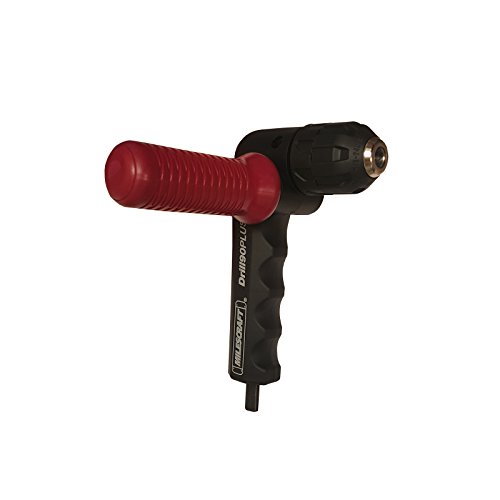
Why right-angle attachments help in joist spaces
Drilling through a joist is awkward when a wall, duct, or neighboring joist leaves too little room to line up a full-size drill. A right-angle attachment turns the drive direction 90 degrees, so the drill can sit alongside the work instead of directly behind the bit. It can make a cramped pass-through hole practical, but it does not make a large hole easy or safe by itself.
These attachments vary in capacity, length, and build quality. Before buying, check the tool’s stated torque and speed limits, the attachment’s rated capacity, and the clearance available for both its head and the drill body. A compact head is useful only if the drill still fits where you need to hold it.
As an Amazon Associate we earn from qualifying purchases at no extra cost to you.


Quick comparison
| Option | Best for | Main trade-off |
|---|---|---|
| Compact right-angle attachment | Occasional holes in tight spaces | Less robust for large bits or repeated heavy work |
| Heavy-duty right-angle attachment | Frequent drilling with larger bits | Bulkier and usually more expensive |
| Dedicated right-angle drill | Regular rough-in and larger-hole work | Higher cost; another tool to store and maintain |
Choosing an attachment
For occasional holes with a small twist bit, a basic attachment can be a reasonable low-cost fix. Look for a metal housing, a positive chuck or bit interface, and a clear capacity rating. The attachment should lock securely onto the drill; wobble at the connection can turn into a wandering bit and a damaged workpiece.
If you expect repeated drilling or use self-feed, spade, or hole-saw bits, choose a heavy-duty attachment with a stated torque rating and a handle or reaction-control feature. The attachment’s gears take extra load, and a bit that binds can twist the drill and your wrist suddenly. A side handle helps, but it cannot prevent every kickback. Keep a firm stance, use low speed, and stop if the bit catches.
Browse heavy-duty right-angle drill attachments if you need a unit for more than occasional light drilling. Compare the manufacturer’s maximum bit size and torque guidance rather than choosing by appearance alone.
Attachment or dedicated right-angle drill?
An attachment is compact and often works with a drill you already own. It is a sensible choice for a short project or infrequent work, provided the attachment is rated for the task. A dedicated right-angle drill generally has a more substantial gear train, better handling, and a head designed for repeated use. It costs more, but can be the better buy for regular electrical, plumbing, or framing work.
Do not use an impact driver as the default power source unless the attachment is explicitly designed for impact use. Impact pulses can stress gears and couplings that were intended for a drill’s steady rotation. A standard cordless drill in low gear is usually easier to control. For larger holes, favor a tool with a side handle and an appropriate low-speed range.
Search for a dedicated cordless right-angle drill if you make these holes often or regularly work with larger bits. Check the tool’s head dimensions and the clearance needed for its battery and handle; compact is relative, and some bodies still cannot fit between closely spaced framing.
Match the bit and speed to the job
Bit choice changes the load dramatically. A 1/4-inch twist bit is far less demanding than a 1-1/2-inch self-feed bit. Larger holes remove more material, create more friction, and are more likely to catch on knots or the far edge of a hole. Follow the bit and attachment limits, and use the drill’s low gear for large bits. If the drill bogs down, stop rather than leaning harder; forcing it can overheat the motor, strip attachment gears, or wrench the tool out of your hands.
For clean framing holes, use a sharp bit suited to wood and keep the drill square to the joist. Clear chips periodically, especially in a deep hole, where packed shavings can raise heat and slow cutting. If a bit binds, release the trigger and back it out carefully. Do not grab a spinning bit or try to free it while the trigger is held.
Check the framing before drilling
Confirm what is inside the joist before making a hole. Wiring and pipes can run through framing, and an attachment does not improve visibility. Use suitable inspection methods, and follow local building rules and the framing manufacturer’s instructions for allowable hole locations and sizes. Do not notch or drill an engineered joist unless its instructions specifically permit it.
For solid-sawn lumber, permitted hole size and placement depend on joist depth, hole location, and applicable code. Do not assume a familiar-looking rule applies to every floor system. If the route or structure is uncertain, stop and check the plans or ask a qualified professional. A convenient hole is not worth weakening a joist or striking a hidden service.
A practical buying checklist
Measure the gap between the joist and obstruction, then compare it with the attachment head, drill body, and hand clearance. Check the chuck size, maximum bit capacity, speed limits, and whether the tool’s manufacturer allows the intended use. For one small, occasional hole, an inexpensive attachment may be enough. For repeated large-hole work, choose a rated heavy-duty attachment or a dedicated right-angle drill, and prioritize control over the lowest price.
FAQ
Attachment or dedicated right-angle drill?
Related guides
More from Amazon
Programs that pair well with the guide above. Offers and eligibility are set by Amazon and may change.
A free business account with business pricing and bulk-buying tools for work, shop or home office.
Create a business accountFree shipping on eligible items, Prime Video and more. Eligible new members can start with a free trial.
Start a Prime free trialAudiobooks and podcasts to listen to on the go. Eligible new members can start with a free trial.
Try Audible freeAd-free music streaming. Eligible new subscribers can start with a free trial.
Try Music Unlimited freeAs an Amazon Associate we earn from qualifying purchases.