What's inside
- What Makes a Gate Opener “Heavy-Duty” for Residential Use
- Heavy-Duty Swing vs. Sliding: Which Fits Your Driveway
- Spec Comparison: Heavy-Duty Residential Operators
- Battery Backup, Power, and What Happens in an Outage
- Safety Sensors and UL 325 Requirements
- Duty Cycle, Speed, and Installation Needs
- Choosing by Situation: Decision Matrix
- Durability and Ownership Realities
- Maintenance Checklist for Long Service Life
- Frequently Asked Questions
- Related Guides
- What Makes a Gate Opener “Heavy-Duty” for Residential Use
- Heavy-Duty Swing vs. Sliding: Which Fits Your Driveway
- Spec Comparison: Heavy-Duty Residential Operators
- Battery Backup, Power, and What Happens in an Outage
- Safety Sensors and UL 325 Requirements
- Duty Cycle, Speed, and Installation Needs
- Choosing by Situation: Decision Matrix
- Durability and Ownership Realities
- Maintenance Checklist for Long Service Life
- Frequently Asked Questions
- Related Guides
As an Amazon Associate I earn from qualifying purchases. This post may contain affiliate links at no extra cost to you.
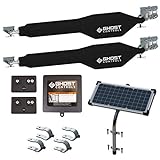
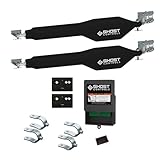
The best automatic gate openers for heavy duty residential driveway gates are LiftMaster LA400-series and HDA1-style DC swing operators for gates up to 850 lbs and 16-18 feet, Viking Access slide and swing operators for continuous-use estates, and Ghost Controls TSS1XP / Mighty Mule MM572W heavy-duty kits for dual-gate or single-gate setups where you need 24V battery backup without running 110V to the gate. Your choice comes down to gate weight and length, swing vs. slide clearance, and whether you need true continuous duty cycle or just reliable battery backup for power outages.
As an Amazon Associate we earn from qualifying purchases at no extra cost to you.


What we cover
- What Makes a Gate Opener “Heavy-Duty” for Residential Use
- Heavy-Duty Swing vs. Sliding: Which Fits Your Driveway
- Spec Comparison: Heavy-Duty Residential Operators
- Battery Backup, Power, and What Happens in an Outage
- Safety Sensors and UL 325 Requirements
- Duty Cycle, Speed, and Installation Needs
- Choosing by Situation: Decision Matrix
- Durability and Ownership Realities
- Maintenance Checklist for Long Service Life
- Frequently Asked Questions
- Related Guides
What Makes a Gate Opener “Heavy-Duty” for Residential Use
For residential driveways, heavy-duty does not just mean a powerful motor. It means the operator is rated to move a high-mass gate (typically 600 to 1,500 lbs), handle wind load and gate length up to 16-20 feet per leaf, and survive hundreds of cycles per day without thermal shutdown. Most light-duty residential kits top out at 300-500 lbs and 12 feet. Once you have steel frame, hardwood cladding, or fully boarded privacy gates, you exceed those limits quickly.
Three ratings matter together, not in isolation:
- Maximum gate weight: The dead weight the operator can push/pull. Always derate by 20-30% if your gate is solid privacy vs. open picket.
- Maximum gate length: Longer gates create more leverage and wind resistance. An 800 lb, 18-foot gate stresses an operator far more than an 800 lb, 10-foot gate.
- Duty cycle and operating temperature: Expressed as cycles per hour or continuous duty. Light kits are often 10-20 cycles/hour with auto thermal cutoff. Heavy-duty DC operators with battery backup are often rated 100+ cycles/day or continuous duty without overheating.
Weight and Length Ratings: Why You Must Check Both
Manufacturers list both numbers because wind load acts like added weight. A solid 16-foot gate in a 25 mph crosswind can exert over 300 lbs of additional lateral force on the hinges and actuator. That is why a kit rated for “up to 900 lbs and up to 16 feet” may be inadequate for a 700 lb solid-panel gate that is 18 feet long in an exposed, windy location. If you have a solid gate over 14 feet or live in a high-wind corridor, move up one class or switch from swing to sliding, which handles wind far better.
Heavy-Duty Swing vs. Sliding: Which Fits Your Driveway
Swing and sliding operators are not interchangeable. The gate type decides the hardware.
Swing operators are the most common for residential estates. They mount between a post/pillar and the gate leaf. Types include linear actuator arms (Mighty Mule, Ghost Controls) and articulated arm or underground operators (LiftMaster LA400, US Automatic, Viking). Swing needs flat, clear arc clearance equal to gate length plus 2 feet, and hinges must be perfectly plumb. Dual swing gates (two 8-10 foot leaves) cut the load per operator and are often more reliable than one massive 18-foot single leaf.
Sliding operators (also called slide or rolling gate operators) pull a single gate panel sideways along a track or cantilever system. Brands like LiftMaster SL3000UL, Viking G-5 and H-10, and US Automatic Patriot RSL series dominate this category. Sliding is better for heavy, long gates (up to 1,500-2,000 lbs and 30-50 feet opening), steep driveways where a swing gate would hit grade, and windy sites. The trade-off is you need side yard clearance equal to the gate length plus 3-4 feet for the tail section, and a level, clean track or properly engineered cantilever rollers.
Spec Comparison: Heavy-Duty Residential Operators
Use this table to match your actual gate, not just its weight. All capacities are per leaf for swing, per gate for slide, and assume proper installation on level hinges/track.
| Operator Type / Example Series | Gate Compatibility | Max Weight (per leaf/gate) | Max Length (per leaf/gate) | Power / Battery Backup | Duty Cycle | Safety Standard |
|---|---|---|---|---|---|---|
| Light-Heavy Linear Arm (Ghost Controls TSS1XP, Mighty Mule MM572W) | Single/Dual Swing | 900 lbs | 20 ft | 12V DC, 1x 12V battery included | ~100 cycles/day, intermittent | UL 325 Class I |
| Heavy Articulated Arm (LiftMaster LA400PKGUL) | Single/Dual Swing | 850 lbs | 16 ft | 24V DC, 2x 12V 7Ah batteries | Continuous* (heat-compensated) | UL 325 Class I, monitored entrapment |
| Estate Swing (Viking L-3, K-2) | Single/Dual Swing | 1,200 lbs | 18-20 ft | 24V DC, 2x 12V batteries | Continuous duty, 300+ cycles/day | UL 325 Class I |
| Residential Slide – Mid Capacity (US Automatic Patriot RSL, LiftMaster CSL24UL) | Slide (track/cantilever) | 1,000 lbs | 30 ft opening | 24V DC, 2x 12V batteries | Continuous duty | UL 325 Class I, requires photo eyes + edge |
| Heavy Residential Slide (LiftMaster SL3000UL, Viking G-5/H-10) | Slide (V-track or cantilever) | 1,500 – 2,000 lbs | 40 – 50 ft opening | 115V AC with DC battery backup board / 24V DC | Continuous duty | UL 325 Class I |
*Continuous on 24V DC heavy operators means no thermal shutdown under normal residential use if voltage and gate balance are correct. Concrete performance still depends on wind load and hinge friction.
Battery Backup, Power, and What Happens in an Outage
Almost all modern heavy-duty residential operators are low-voltage DC with battery backup, even if they charge from 115V AC or solar. That matters for three reasons: safety, duty cycle, and outage operation.
- AC vs. DC motor: AC slide operators (older 1/2 to 1 HP models) have strong push force but stop dead in a power outage. DC operators run off batteries that float-charge from AC or solar, so they continue to operate 50-150 cycles when power is out, depending on battery Ah, temperature, and gate weight.
- Solar capability: 24V DC systems from Ghost Controls, Mighty Mule, LiftMaster and US Automatic can run on solar alone with a 30-60W panel in sunny zones (4+ hours direct sun). For heavy solid gates, solar needs a larger panel and two 12V 8Ah+ batteries. Shaded or northern locations should keep AC trickle charge.
- Battery life reality: Sealed lead-acid batteries last 2-4 years. Cold cuts capacity by 30-40%. If your control board beeps or shows LO BAT, replace both batteries as a matched pair. Undersized wiring (using 16-gauge for a 100-foot AC run) is the most common cause of chronic low-battery faults.
Safety Sensors and UL 325 Requirements
Any operator sold in the US after 2018 must comply with UL 325. For Class I (residential), that requires monitored entrapment protection on both open and close directions. Practically, this means:
- Photoelectric eyes: At least one set across the gate opening, 15-21 inches high, to reverse the gate if a car, child, or pet breaks the beam while closing.
- Contact edge or secondary photo eye: For swing gates, a contact edge on the leading edge or hinge-side safety is strongly recommended. For slide gates, an edge on the leading post and an edge or photo eye protecting the back side are required by most inspectors.
- Inherent force reversal: The operator must reverse on contact. You must set the force correctly during setup – too high and it will not reverse on a person, too low and wind will false-trip it.
- Vehicle detection: A free-exit loop or DKS loop detector buried in the driveway is far more reliable than a motion sensor for letting cars out without remotes.
Do not reuse old non-monitored photo eyes with a new UL 325 board. The system will fault and refuse to run. LiftMaster, Viking and current US Automatic boards supervise sensors continuously and will go into entrapment alarm if a sensor is disconnected or misaligned.
Duty Cycle, Speed, and Installation Needs
Duty cycle is how often the gate can run without overheating. For a family that uses a gate 10-20 times per day, any intermittent-rated linear arm kit is sufficient. For a multi-family compound, home business with deliveries, or a ranch gate opened 50+ times daily, you need continuous-duty rated swing or slide.
Installation differences that determine long-term reliability:
- Pad and post: Swing operators need a 6×6 steel post or 8-inch masonry pillar with proper footing (36-42 inches deep in freeze zones). Slide operators need a level concrete pad 4 inches thick, with conduit for power and loops swept below frost line. A wobbling post will destroy actuator seals within one season.
- Wiring: Heavy DC swing kits need 14-gauge low-voltage wire if the transformer is more than 50 feet away, or you will get voltage drop and slow operation. Always run separate conduit for high-voltage AC and low-voltage control/loop wires.
- Hinges and rollers: The operator is only as good as the hardware. For any gate over 500 lbs, use adjustable ball-bearing hinges or cantilever trucks rated to twice the gate weight. Three hinges per leaf, not two, prevents sag.
Worked Example: Sizing for Wind Load
To estimate if your gate is actually heavy-duty, calculate wind force before you buy. A simple method for a solid panel gate:
Wind force (lbs) = Wind pressure (psf) x Gate area (sq ft). At 25 mph, pressure is about 1.6 psf. At 50 mph, about 6.4 psf.
Example: A 16 ft long x 6 ft tall solid steel-frame gate = 96 sq ft. At 25 mph: 96 x 1.6 = 154 lbs of lateral force. At 50 mph gust: 96 x 6.4 = 614 lbs. That force acts at the center of the gate, roughly 8 feet from the hinge, creating a massive torque the actuator must overcome. This is why manufacturers often list a reduced weight rating for solid gates – subtract 25-40% from the published max weight if your gate is not at least 50% open. In this example, a nominally 800 lb rated operator is marginal for a 600 lb solid gate in an exposed windy driveway; a 1,000+ lb rated slide or estate swing is the safer choice.
Choosing by Situation: Decision Matrix
| Your Situation | Best Match | Why | Budget Range (Operator Kit Only) |
|---|---|---|---|
| Single 12-16 ft steel tube gate, 400-700 lbs, flat driveway, occasional wind | Heavy linear arm kit (Ghost Controls TSS1XP or Mighty Mule MM572W) | Lowest install complexity, 12V battery backup, good for 14-20 ft single gates if properly braced | $800 – $1,400 |
| Dual 8-10 ft wood-clad privacy gates, 600-850 lbs per leaf, HOA estate | Articulated arm DC (LiftMaster LA400 dual) or US Automatic 020320 dual | Clean look, hidden arm geometry, continuous duty, handles solid wind load better per leaf | $1,500 – $2,800 |
| Long single gate 20-35 ft or steep driveway, 800-1,500 lbs | Residential slide (LiftMaster CSL24UL / SL3000UL, Viking G-5) | No swing arc, best wind resistance, continuous duty for deliveries | $1,800 – $3,800 |
| Off-grid or no AC at gate, 100+ ft from house | 24V DC solar-capable swing or slide + 60W panel + 2x 35Ah batteries | Avoids trenching 110V; requires sun and larger battery bank for heavy gates | $1,400 – $3,000 plus solar |
| Maximum use: ranch, farm, multi-tenant, 100+ cycles/day | Estate continuous-duty swing (Viking L-3 / K-2) or commercial-grade slide (Viking H-10) | Industrial gearboxes, 1M+ cycle components, serviceable limit switches | $2,500 – $5,000+ |
General market ranges in 2026 for complete single-gate heavy-duty kits including control board, batteries, and one set of photo eyes run about $900 to $2,200 for linear arm systems, $1,600 to $3,200 for articulated estate swing systems, and $2,000 to $5,000 for heavy slide systems before posts, concrete, loops, and labor. Installation labor typically adds $800 to $2,500 depending on trenching, pad, and welding.
Durability and Ownership Realities
The motor rarely fails first. In heavy residential service, these parts wear first:
- Hinges, rollers, and end stops: Grit and lack of grease cause 70% of service calls. Grease hinges every 6 months, clean V-track weekly if you have a tracked slide, and adjust positive stops so the gate does not slam the operator at full open/close.
- Actuator screw and seals: Linear actuators ingest dust and water if the boot is torn or the gate drags. Keep the arm level, never angled down to hold a sagging gate, and replace a cracked boot immediately.
- Batteries and charging: The most common hidden cost. Test batteries annually with a load tester. If backup cycles drop below 20, replace both. Use only sealed lead-acid or manufacturer approved lithium replacements with the same voltage and Ah rating.
- Control boards and surge: Lightning and gate-induced surges kill boards. Install a surge suppressor on the AC side and use direct-burial, UV-rated low-voltage wire with drip loops. Do not coil excess wire inside the operator box where it traps moisture.
Common mistakes to avoid: mounting the operator to a gate cross-member that flexes instead of the main frame, skipping secondary entrapment protection to save money (the gate will not pass inspection and will not auto-close reliably), setting auto-close to under 15 seconds on a long heavy gate, and sizing purely on weight while ignoring length and solid-panel wind load.
Maintenance Checklist for Long Service Life
- Monthly: Test photo eyes by breaking the beam while closing, listen for reverse. Clear debris from slide track or swing arc. Check that gate swings/rolls by hand without binding when disconnected.
- Quarterly: Check hinge bolts and operator mounting hardware torque. Inspect actuator for play. Clean solar panel if equipped.
- Annually: Load-test batteries, check force and limit settings after seasonal ground movement, lubricate hinges/rollers with lithium grease, inspect contact edges for cracks.
Frequently Asked Questions
Can I put a heavy-duty operator on an old gate?
Only if the gate is rigid and balanced. Reinforce any gate over 12 feet with a diagonal truss or internal steel frame so it does not rack. Replace worn hinges first. An operator will magnify, not fix, a sagging or twisted gate.
Do I need a professional installer?
For any gate over 600 lbs, over 14 feet, or any slide gate, yes. Heavy gates store dangerous energy. Proper welding, footing depth, UL 325 entrapment setup, and loop installation require tools and codes knowledge most DIYers do not have. Linear arm kits on a single 10-12 foot tube gate are the only heavy-duty scenario suitable for an experienced DIYer.
How long does battery backup actually last?
In good condition, two 7-8Ah batteries will operate a well-balanced 500-700 lb swing gate about 60-80 cycles in mild weather, fewer in freezing temperatures or with heavy wind. Larger 35Ah battery banks can exceed 150 cycles but need a larger solar panel or AC charger to recover fully.
Is a swing or slide gate safer?
Both are safe when installed to UL 325 with monitored photo eyes and edges. Swing gates need protection in the swing path and at the hinge pinch point. Slide gates need protection across the opening and where the gate meets the end post to prevent shearing. Never install any automatic gate without both types of entrapment protection.