What's inside
- What Actually Matters When Buying an Ultrasonic Denture Cleaner
- Spec Comparison: Common Ultrasonic Denture Cleaners in 2026
- Which Type Fits Your Situation
- Decision Matrix: Match Your Constraints to the Right Spec
- Running Cost Calculation: Is Ultrasonic Cheaper Than Tablets Alone?
- Durability and Ownership Realities
- FAQ
- What Actually Matters When Buying an Ultrasonic Denture Cleaner
- Spec Comparison: Common Ultrasonic Denture Cleaners in 2026
- Which Type Fits Your Situation
- Decision Matrix: Match Your Constraints to the Right Spec
- Running Cost Calculation: Is Ultrasonic Cheaper Than Tablets Alone?
- Durability and Ownership Realities
- FAQ
As an Amazon Associate I earn from qualifying purchases. This post may contain affiliate links at no extra cost to you.
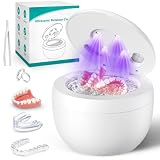
The best denture cleaners ultrasonic for most people balance a 42-45kHz frequency, a 600-750ml tank, and a 5-minute automatic cycle with a full-size basket that fits both full and partial dentures without crowding, with the iSonic F3900, Magnasonic Professional MGUC500, and ZIMA Dental Pod representing the three most common design approaches in 2026.
As an Amazon Associate we earn from qualifying purchases at no extra cost to you.



What we cover
- What Actually Matters When Buying an Ultrasonic Denture Cleaner
- Spec Comparison: Common Ultrasonic Denture Cleaners in 2026
- Which Type Fits Your Situation
- Decision Matrix: Match Your Constraints to the Right Spec
- Running Cost Calculation: Is Ultrasonic Cheaper Than Tablets Alone?
- Durability and Ownership Realities
- FAQ
What Actually Matters When Buying an Ultrasonic Denture Cleaner
Ultrasonic cleaners don’t scrub. They create millions of microscopic cavitation bubbles that implode on the denture surface and dislodge plaque, adhesive residue, and stains where a brush can’t reach. For dentures, that means the specs that affect cleaning consistency matter more than raw power.
- Frequency: Most denture-specific units run at 42kHz to 45kHz. This range is effective for the acrylic, cobalt-chrome, and flexible resins used in full and partial dentures. Lower frequencies around 28-35kHz create larger, more aggressive bubbles used for industrial parts and are unnecessarily harsh for denture acrylic. Higher frequencies above 80kHz are too gentle for daily denture cleaning.
- Tank capacity: Full upper dentures are about 65-70mm wide. You need a tank that allows the denture to lie flat with at least 10mm clearance on all sides. Tanks under 500ml often force you to angle the denture, which creates shadow areas where cavitation is weaker. 600ml to 800ml is the sweet spot for home use.
- Timer controls vs. preset cycles: Preset 3/5/10 minute buttons are simpler, but adjustable timers (in 1-minute or 90-second increments) let you run a short 3-minute cycle for daily cleaning and a longer 8-10 minute cycle when removing heavy adhesive or stain. Look for auto shut-off, not continuous run.
- Basket size and design: A suspended basket keeps the denture off the tank bottom, where cavitation is weakest. Mesh density matters: a fine mesh basket protects partial dentures with clasps from scratching the tank, but a very fine mesh can dampen cavitation by 10-15% if the denture sits directly on the mesh.
- Compatibility: Any ultrasonic cleaner will physically fit full acrylic dentures, partial dentures with metal frameworks, retainers, aligners, and night guards. The difference is whether the included basket and tank depth prevent metal clasps from contacting the stainless steel tank, which can cause micro-pitting over time. If you wear a partial with cast clasps, prioritize a unit with a raised basket and silicone feet.
Spec Comparison: Common Ultrasonic Denture Cleaners in 2026
This table compares types you will actually find listed as denture or dental appliance cleaners. Dimensions and capacities are based on manufacturer specifications for current-generation models.
| Model / Type | Frequency | Tank Capacity | Tank Material & Size (L x W x D) | Timer Options | Basket Size | Weight |
|---|---|---|---|---|---|---|
| iSonic F3900 | 42kHz | 600ml (0.63 qt) | Stainless steel SUS304, 155 x 95 x 52mm | 5 preset cycles: 90s, 180s, 280s, 380s, 480s | 140 x 85 x 35mm, fine mesh with handle | 1.1 kg |
| Magnasonic Professional MGUC500 | 42kHz | 600ml (0.63 qt) | Stainless steel, 150 x 90 x 50mm | 5 presets: 90s, 180s, 280s, 380s, 480s | 138 x 82 x 32mm, perforated plastic basket | 1.02 kg |
| ZIMA Dental Pod | 42kHz | 400ml (0.42 qt) | Stainless steel, 120 x 80 x 45mm, compact housing | Single 5-minute auto cycle | 105 x 70 x 30mm, removable pod basket | 0.58 kg |
| InvisiClean Ultrasonic Denture / Aligner Cleaner | 45kHz | 750ml (0.79 qt) | Stainless steel, 180 x 100 x 58mm | Variable: 5, 10, 15 minutes | 165 x 90 x 40mm, stainless mesh | 1.25 kg |
| Generic 800ml Lab-Style Unit (42kHz class) | 42kHz | 800ml (0.85 qt) | Stainless steel, 185 x 110 x 65mm | Adjustable 1-30 min, digital display | 170 x 95 x 45mm, coarse mesh | 1.6 kg |
For general information only – ultrasonic cleaning does not replace daily brushing with a denture brush and does not disinfect against all microorganisms. If you have persistent odor, staining, tissue irritation, or a recent reline or repair, consult your dentist or prosthodontist before changing your cleaning routine.
Which Type Fits Your Situation
There is no single best denture cleaners ultrasonic choice because full dentures, metal-frame partials, and occasional vs. daily use have different priorities.
Best for full dentures and daily use: 600ml preset models (iSonic F3900 / Magnasonic MGUC500 class)
These hit the balance most users need. The tank is large enough to lay a full upper denture flat, the 42kHz transducers are proven for acrylic, and the 5-minute cycle is long enough to remove daily film and Fixodent/Poligrip residue without overheating the solution. The basket keeps the denture suspended and makes retrieval easy. If you want set-and-forget operation, this category is the safest pick. Typical market range is $35 to $65.
Best for small bathrooms, travel, or aligners plus dentures: Compact 400ml pod (ZIMA Dental Pod class)
The smaller footprint and single-button 5-minute cycle trade capacity for counter space. A full upper denture will fit, but with only 3-5mm clearance, so you need to center it carefully. It works well if you primarily clean a partial, a lower denture, or alternate between dentures and clear aligners. The compact tank heats faster, so avoid running back-to-back cycles without replacing the water. Typical market range is $70 to $120 for the pod-style design.
Best for partial dentures with metal clasps or heavy adhesive users: 750-800ml adjustable timer units
The extra depth and larger basket prevent clasps from touching the tank walls, which reduces vibration noise and protects both the clasp finish and the tank. An adjustable 10 or 15-minute cycle is useful 2-3 times per week when adhesive buildup is heavy, while you can still run 5 minutes on other days. The larger transducer area also cleans more evenly when the basket is fully loaded. Typical market range is $55 to $95.
Decision Matrix: Match Your Constraints to the Right Spec
| Your Situation | Prioritize This | Why |
|---|---|---|
| Tight counter space, clean once daily | 400-600ml compact housing, single 5-min cycle | Small footprint matters more than adjustable timer; 5 minutes covers daily film |
| Wear full upper + lower dentures | 600ml minimum, basket at least 140 x 85mm | Allows one denture to lie flat per cycle with proper cavitation around borders |
| Wear metal-frame partial denture | Raised basket + 750ml+ tank depth over 55mm | Keeps clasps suspended; prevents metal-on-metal contact and uneven cleaning |
| Use strong adhesive daily | Adjustable timer to 10 minutes, 42-45kHz | Adhesive residue often needs 8-10 minutes with warm water; short 3-min cycle is insufficient |
| Budget under $50 | 600ml preset model with SUS304 tank | Lowest cost per use; stainless tank lasts longer than plastic-housing pods |
| Want quietest operation | Units with silicone feet + plastic basket + lid | Reduces transmitted vibration to countertop by 30-40% compared to bare steel feet |
Running Cost Calculation: Is Ultrasonic Cheaper Than Tablets Alone?
Most people use ultrasonic with plain water plus an occasional cleaning tablet, not tablets every time. Here is a worked example for daily use over one year:
- Ultrasonic cleaner purchase: $45 (mid-range 600ml unit) amortized over 3 years = $15.00 per year
- Electricity: 50W unit x 5 minutes per day = 0.0042 kWh per day. At $0.15 per kWh = $0.23 per year
- Water: 0.6 liters per day = 219 liters per year, negligible cost
- Cleaning solution: Using a denture cleaning tablet 2 times per week (104 tablets) at $0.12 per tablet = $12.48 per year. Daily tablet use would be 365 x $0.12 = $43.80.
Total with ultrasonic + 2 tablets per week: about $27.71 per year vs. $43.80 for daily tablets alone. The ultrasonic unit pays for itself in roughly 18-24 months if it lets you cut tablet use, and you still get more consistent cleaning between tablet days. This assumes tap water; if your water is very hard, a distilled water rinse once weekly helps prevent scale on the tank.
Durability and Ownership Realities
Ultrasonic cleaners are simple devices, but a few parts determine how long they last in a bathroom environment.
- What wears first: The tank seal and lid hinge. Mineral deposits creep under the rim and cause the lid to not seat fully, which increases noise. Wipe the rim dry after each use and descale monthly with 1 part white vinegar to 5 parts water, run for 3 minutes, then rinse.
- Transducer fatigue: After 2-3 years of daily use, cavitation intensity drops slightly. You will notice cleaning takes a minute longer to achieve the same result. This is normal; it does not mean the unit failed.
- Basket corrosion: Stainless mesh baskets can develop rust spots if left wet. Plastic perforated baskets avoid this but can crack if you use water above 50°C (122°F). Never use boiling water – it warps denture acrylic and stresses the tank bond.
- Common mistakes: Overfilling above the MAX line dampens cavitation and can spill into electronics. Adding bleach or undiluted mouthwash can pit SUS304 steel and void warranties. Always place dentures in the basket, not directly on the tank bottom. Do not run the unit empty or with less than half the tank filled.
- Consumables: No filters to replace. Your only recurring cost is water and optional denture cleaning concentrate or tablets. Avoid abrasive pastes inside the ultrasonic tank; they settle on the transducer and reduce efficiency.
Setup and daily routine that protects both dentures and the machine:
- 1. Fill to the MAX line with lukewarm tap water (30-40°C). Add cleaner only if the manufacturer specifies it for ultrasonic use.
- 2. Place denture in basket, lower basket so denture is fully submerged and not touching the tank walls.
- 3. Close lid and run the 5-minute cycle. For heavy adhesive, run a second 5-minute cycle with fresh water rather than one 10-minute cycle with dirty water.
- 4. Remove basket, rinse denture under running water, brush lightly with a soft denture brush if needed, and air dry the tank with lid open.
FAQ
Can I put both upper and lower dentures in at the same time?
Only if the tank is 750ml or larger. In a 600ml tank, stacking dentures blocks cavitation where they overlap and leaves a film line. Clean one at a time for 5 minutes each for the most consistent result.
Do I need a special solution or is water enough?
Warm water alone removes most daily plaque and food debris through cavitation. A denture-specific ultrasonic solution or half a denture tablet 2-3 times per week helps with stains from coffee or tea, but daily chemical use is not required for the ultrasonic action to work.
Will ultrasonic damage soft liners or partial denture clasps?
Standard 42-45kHz units are generally compatible with acrylic, flexible bases, and cobalt-chrome frameworks when you use the basket and keep cycles to 5-10 minutes. Soft relines and temporary liners are more delicate – check with your dental professional before using ultrasonic cleaning if you have a recent soft reline, and avoid hot water.
How loud are they?
Most units measure 55-65 dB at 1 meter, similar to an electric toothbrush. Placing the unit on a folded towel and ensuring the lid is fully closed reduces perceived noise. Compact pod designs are typically quieter than lab-style 800ml units.