What's inside
As an Amazon Associate I earn from qualifying purchases. This post may contain affiliate links at no extra cost to you.
What we cover
Custom Leather Welding Hoods: Choose by Job, Not Just Appearance
The right custom leather welding hood is one that covers the areas exposed by your work, fits securely over your chosen lens and helmet setup, and uses leather suited to the heat and wear it will face. For overhead welding or tight pipe access, coverage and a stable fit usually matter more than decorative details; for occasional bench work, a lighter, simpler hood may be easier to live with.
Start with the work environment
Leather hoods are often chosen for extra coverage against sparks, spatter, and radiant heat. They do not replace a welding helmet’s required eye and face protection, protective clothing, or the procedures specified for the job. Confirm that the hood works with your welding helmet or lens system, and follow the manufacturer’s instructions and applicable workplace requirements.
As an Amazon Associate we earn from qualifying purchases at no extra cost to you.


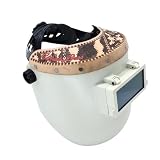

| Situation | Useful design choice | Trade-off to check |
|---|---|---|
| Frequent overhead or out-of-position welding | Longer bib, side coverage, and secure shoulder overlap | More coverage can mean added weight and warmth |
| Pipe work in a confined area | Compact pipeliner-style shape with a well-positioned lens opening | Compact coverage may expose the neck or sides when posture changes |
| Occasional shop welding | Simpler, lighter leather hood with straightforward lens access | Less reinforcement or adjustability may limit service life |
| Work with frequent hood removal | Easy-to-use closures and a fit that stays aligned after repositioning | Loose or bulky closures can snag or shift |
The table is a starting point, not a substitute for checking the hood against the actual work position. Ask the maker for finished dimensions and whether the hood is intended to sit over a helmet, a headgear assembly, or both. Those arrangements change the fit and the coverage that remains once the hood is on.
Leather, coverage, and the weight trade-off
Ask what “leather” means
Custom welding hoods with leather are not automatically made from the same material or construction. Ask whether the hood uses cowhide or another leather, whether it is split or grain leather, and how thickness varies across the shell, bib, and seams. A thicker panel may resist abrasion and hold its shape better, but can also feel stiffer and heavier. Leather thickness alone does not establish heat protection; construction, fit, condition, and the work environment all matter.
Look closely at stitching and reinforcement in high-stress areas: around the lens opening, at folds, and where the bib joins the hood. A panel that is easy to replace can be a practical advantage. Ask whether the maker offers repairs or replacement sections rather than assuming a custom piece can be modified later.
Choose coverage for your posture
A hood that covers well while standing may leave a gap when you lean forward, turn your head, or weld overhead. Check the front, sides, neck, and shoulder overlap in the positions you actually use. A longer bib can improve coverage but may catch on a work surface or restrict movement in a tight space. If possible, provide the maker with the dimensions of your helmet and a description of your common welding positions.
Lens fit and sizing: measure the assembled setup
Lens compatibility is a frequent source of avoidable trouble. Before ordering, confirm the lens opening’s width and height, how the lens is retained, and whether the design accommodates your particular helmet, headgear, and lens assembly. Do not rely on a general label such as “standard”; lens and helmet dimensions can vary.
Measure with the equipment you will wear under the hood. Record the helmet’s outer width and depth, the position of the lens relative to the front edge, and any projections or adjustment knobs that could press against the leather. If the hood is intended to fit over a helmet, ask for the maker’s recommended clearance. Too little room can push the hood out of position; too much can let it shift and compromise consistent coverage.
| Check before ordering | What to record | Why it matters |
|---|---|---|
| Lens opening | Width and height in millimetres | Helps confirm the lens is fully seated and retained |
| Helmet or headgear | Outer width and front-to-back depth in millimetres | Reduces pressure points and unwanted movement |
| Coverage | Desired bib drop from hood edge to lower hem in centimetres | Lets you compare coverage with mobility and clearance needs |
| Fit over clothing | Typical jacket collar and shoulder layers | Prevents a hood that fits bareheaded but binds at work |
These are measurements to supply, not universal target sizes. Have the maker confirm the final dimensions and fit method. Try the hood on with the complete setup before welding: turn your head, look down and up, and check whether the lens remains aligned and the hood stays put.
Custom pipeliner hood or painted design?
A custom pipeliner welding hood is usually the better starting point for pipe work when a compact profile and practical access matter. A pipeliner welding hood custom-built for you can vary in lens placement, leather coverage, fit, and closures, but the maker should explain which changes affect clearance or stability. Ask for a drawing or measurements before production, especially if you work around restricted spaces.
A custom painted welding mask or custom painted welding hoods may appeal if appearance is a priority, but paint and decorative finishes do not improve protective performance. On a leather hood, clarify whether the design is painted, dyed, or applied as a separate panel, and how it will hold up to flexing, abrasion, and cleaning. Keep decoration away from areas where it could interfere with the lens, closures, fit, or inspection of the leather.
Custom made welding hoods can also include practical details—such as a replaceable bib or a closure suited to your setup. Before paying for a one-off feature, ask how it affects weight, movement, repairability, and compatibility with the equipment you already use.
What custom features are worth paying for?
- Prioritize: verified lens compatibility, coverage for your working posture, secure fit, strong seams, and a clear repair plan.
- Consider: adjustable or replaceable sections if you work often and expect wear at predictable points.
- Choose for preference: colour, painted artwork, and decorative stitching after the functional choices are settled.
- Be cautious about: extra-thick leather or oversized bibs without trying the full setup; added material can increase fatigue or interfere with movement.
Custom work often costs more and may have a longer lead time than a standard hood. Get the total price and delivery estimate in writing, along with the measurements, materials, included hardware, and return or alteration terms. General market pricing varies widely with leather, craftsmanship, and personalization, so compare complete specifications rather than a base price alone.
Care that helps the hood last
- Inspect before each use. Check for burned-through spots, deep cracks, loose seams, damaged closures, and distorted lens-retention areas. Stop using a hood that no longer stays secure or provides the intended coverage.
- Remove debris safely. Once the hood is cool, brush off loose dust and spatter without scraping or cutting the leather. Follow the maker’s instructions for any cleaning product; solvents and unapproved treatments may damage the material.
- Dry it naturally. If damp, let the hood dry in a ventilated place away from direct heat. Rapid heating can stiffen or distort leather.
- Store it without crushing it. Keep it dry, away from sparks and chemicals, and in a position that protects the lens opening and preserves the shape.
- Repair early. A small seam failure can spread under repeated flexing. Ask the maker whether repairs are appropriate and whether any damaged area requires replacement rather than stitching.
The parts most likely to show wear are often the lens opening, folds, seams, bib edge, and closure points—not necessarily the largest leather panel. Regular inspection and sensible storage can extend useful life, but no maintenance routine makes burned, cracked, or poorly fitting protective gear safe to keep using. Choose a hood by the fit and coverage you can verify, then treat custom styling as the finishing touch.