What's inside
As an Amazon Associate I earn from qualifying purchases. This post may contain affiliate links at no extra cost to you.
What we cover
Choosing a cordless hammer drill for brick and mortar
A cordless hammer drill can handle many holes for wall plugs, shelves and light fixtures in brick or mortar. The right choice depends less on headline torque than on the material, hole diameter and number of holes. A compact drill may be easier to control for a few 6 mm holes in mortar; repeated 10 mm holes in hard brick call for more power, a good masonry bit and a battery that can keep up.
For occasional home repairs, a standard cordless hammer drill kit is usually the sensible buy. Look for a two-speed gearbox, a hammer-mode switch, a clutch for screwdriving and batteries of at least 2.0 Ah. If you already own batteries in a tool platform, buying a bare tool can save money, provided the battery is in good condition and has enough capacity.
As an Amazon Associate we earn from qualifying purchases at no extra cost to you.


Hammer drill or rotary hammer?
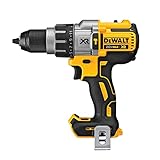
A standard hammer drill combines rotation with a fast, short hammering action. It is versatile for wood, metal, screws and smaller masonry holes. Its hammering is usually less forceful than a rotary hammer’s, and the user has to press steadily against the wall.
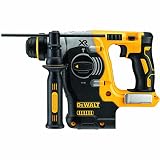
A rotary hammer uses a piston mechanism to deliver harder impacts. It is the better tool for lots of holes, larger diameters, dense concrete or work overhead. Most use SDS-Plus bits rather than the round-shank masonry bits held by a standard drill chuck. For a handful of anchor holes in brick, a rotary hammer can be unnecessary bulk and expense. For repeated 10–12 mm holes in hard masonry, it can save time and wrist fatigue. See cordless SDS-Plus rotary hammers if that describes the job.
| Job | Practical choice | Main trade-off |
|---|---|---|
| Occasional 5–8 mm holes in brick or mortar | Cordless hammer drill | Slower in hard brick, but more versatile |
| Many holes or frequent 10–12 mm holes | Rotary hammer | Heavier and less suited to general screwdriving |
| Soft mortar only, small hole | Drill mode may be enough | Less risk of breaking out the joint |
| Screws, timber and occasional masonry | Hammer drill with clutch | One tool covers more tasks |
Features that matter on the job
Check the stated maximum masonry drilling capacity, but treat it as a limit rather than a promise of comfortable daily use. A drill rated for a 13 mm hole may manage one, while repeated holes at that size can be slow and hard on the tool. For routine household anchors, a useful range is roughly 5–10 mm. Keep the drill’s low gear for larger bits and its high gear for smaller holes where the manual recommends it.
Battery capacity affects how long you can work before swapping packs. A 2.0 Ah battery is lighter and can be adequate for a few holes; 4.0 Ah or larger gives more working time but adds weight. Two batteries are useful if you expect a longer session. Brushless motors can improve efficiency and reduce routine motor wear, but they do not make a weak bit sharp or turn a standard hammer drill into a rotary hammer.
Also consider grip, balance and a side handle. A side handle helps control the drill when a bit catches, especially in larger holes. A metal chuck is not essential for occasional DIY use, but a well-made chuck should hold the bit securely without slipping. Clutch settings are useful for screws; switch back to drill or hammer mode for masonry rather than forcing a screw setting.
Use the right bit and drilling technique
Use a sharp masonry bit intended for the material and chuck type. A worn carbide tip can make the drill seem underpowered, wander and overheat. A set of carbide-tipped masonry drill bits is a practical starting point; choose the diameter specified for your wall anchor, not a larger bit “for easier drilling.” Follow the anchor maker’s instructions, since the required hole size varies.
Mark the hole, check for hidden wires and pipes, and begin at low speed with the bit square to the wall. If the bit wanders, make a small starting mark or begin in drill-only mode before engaging hammer action. Use steady pressure rather than leaning hard on the tool. Excessive force can slow the bit, overheat the motor and chip the brick face. Pull the bit out occasionally to clear dust, and stop if the bit gets very hot.
Mortar is softer than most brick and can be the less damaging place to drill, but only if the anchor’s location and load allow it. Mortar joints vary in quality and may crumble; heavy shelves, gates or safety-critical fixtures should not rely on a weak joint. Drilling into the brick can provide a more solid fixing, though brittle bricks may crack if you drill too close to an edge. Keep holes well away from brick edges and follow the anchor’s spacing guidance.
Common mistakes and buying advice
Too much hammering is a common cause of blown-out holes. If the surface chips or the hole becomes oversized, the anchor may not grip properly. Stop, inspect the hole and use an appropriate repair or a different fixing rather than forcing an undersized anchor to hold. Dust left in the hole can also reduce anchor grip; clear it as directed by the anchor instructions.
For a few light-duty holes each year, an entry-level hammer drill with one battery is often enough. Pay more for a brushless tool, extra battery or rotary hammer only when the work justifies it: frequent drilling, larger holes, harder masonry or long sessions. If you are buying a first tool, a cordless hammer drill with two batteries can be a better-value setup than a bare drill, as long as you are not paying for a battery platform you will never use again.