What's inside
As an Amazon Associate I earn from qualifying purchases. This post may contain affiliate links at no extra cost to you.
Brick and concrete block are within the reach of a good cordless hammer drill, but the drill is only part of the system. The right masonry bit, sensible drilling speed, and a suitable wall anchor matter just as much. For occasional holes in brick or block, a 12V or compact 18V hammer drill is usually enough. For repeated drilling, large holes, or hard concrete block, a cordless rotary hammer is faster and less tiring.
As an Amazon Associate we earn from qualifying purchases at no extra cost to you.


What we cover
What to look for in a cordless hammer drill
A hammer drill combines normal rotation with a rapid, short hammering action. That action chips masonry while the bit cuts. It is useful for small and medium holes, but it is not the same as a rotary hammer. A rotary hammer uses a more forceful piston mechanism and accepts SDS-Plus bits.
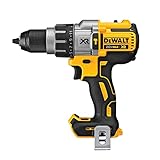
For general wall work, look for an 18V or 20V-max brushless drill with a two-speed gearbox, a mechanical clutch, and a side handle. A 1/2-inch chuck is useful if you also drill wood and metal, although a 3/8-inch chuck is adequate for most masonry bits up to about 3/8 inch. Brushless motors generally run cooler and deliver better runtime, but a brushed drill can still be a sensible low-cost choice for a few holes each year.
Do not choose solely by advertised torque. Masonry drilling depends more on hammer action, gearing, bit quality, and how well you can hold the tool. A compact drill is easier to control near an edge, while a full-size model is less likely to bog down in dense brick.
The best drill type for different jobs
| Job | Best choice | Why | Main limitation |
|---|---|---|---|
| Two to six small holes for pictures or shelves | 12V or compact 18V hammer drill | Light, easy to control, and plenty of power for 1/4-inch holes | Slower in hard brick and poor for large holes |
| Regular home repairs and anchors up to 1/2 inch | 18V/20V brushless hammer drill | Good balance of speed, runtime, and versatility | Can overheat if pushed continuously |
| Many holes, hard block, or holes over 1/2 inch | Cordless SDS-Plus rotary hammer | Much faster impact drilling and less pressure from the user | Heavier, louder, and less useful for ordinary screwdriving |
For a first cordless tool, an 18V brushless cordless hammer drill kit is the most versatile option. It can drill masonry, wood, and metal, and its battery platform can later power an impact driver or light.
When a rotary hammer is the better purchase
A hammer drill is often frustrating in hard brick because its hammer mechanism is designed for light chipping, not aggressive material removal. If a 1/4-inch hole takes more than a minute of steady work, the bit is dull, the drill is underpowered, or the wall material is harder than expected. Continuing to force the tool can overheat the motor, drain the battery quickly, and glaze the bit.
Choose a cordless SDS-Plus rotary hammer if you need several dozen holes, holes larger than 1/2 inch, or fast drilling in dense brick and concrete block. Many models have a hammer-only setting for light chiseling and a rotation-only setting, but they are still a poor replacement for a regular drill when driving screws. If you already own compatible batteries, a cordless SDS-Plus rotary hammer can be the economical upgrade for substantial masonry work.
Use the right masonry bits
Use carbide-tipped masonry bits, not general-purpose twist bits. A standard bit will become blunt quickly and may produce heat without making useful progress. For a hammer drill, use round-shank masonry bits matched to the chuck. For an SDS-Plus rotary hammer, buy SDS-Plus bits; their fluted shank transfers impact more effectively and allows the bit to move slightly in the holder.
Common anchor holes are 1/4, 5/16, and 3/8 inch. A 1/4-inch bit is suitable for many lightweight plastic anchors, while heavier-duty anchors often require 5/16 or 3/8 inch holes. Always follow the anchor manufacturer’s specified bit diameter. A hole that is too large lets the anchor spin or pull out; one that is too small can split the plastic or prevent the screw from entering.
Keep the bit straight and use moderate pressure. The bit should cut rather than merely rub. Withdraw it every few seconds to clear dust, especially in a deep hole. For a hammer drill, start slowly to establish the hole, then increase speed. High speed with excessive pressure creates heat and can destroy the carbide tip.
How to drill the wall without causing damage
Check for wiring and plumbing before drilling. Avoid holes close to electrical outlets, switches, and visible pipes unless you know where the services run. Mark the hole with a pencil and place a piece of masking tape over smooth brick if the bit wanders.
Drill into the face of the brick or the solid web of a concrete block when possible. Avoid the mortar joint for loaded shelves, cabinets, and handrails: mortar is softer and may crumble under the anchor. On hollow block, the thin face shell can break through if you push too hard. Use anchors designed for hollow masonry, and do not assume a standard expansion plug will hold securely in the empty cavity.
Set the drill’s clutch high enough that it does not slip during drilling, but use the hammer setting only for masonry. Do not use hammer mode on tile, metal, or wood. For a clean hole, stop just short of the required depth, clear the dust, and finish to depth without leaning the drill sideways.
Match the anchor to the load
Light picture frames and small accessories can use plastic expansion anchors. Medium loads in solid brick or block are better served by sleeve anchors or quality masonry screws. For a shelf, TV mount, or bracket, use multiple fasteners and calculate the load rather than relying on one large anchor. Hollow-wall conditions may require toggle-style masonry anchors or specialized anchors rated for the block type.
If you only need a handful of 1/4-inch holes, buying the cheapest reasonable 12V cordless hammer drill kit can be perfectly sensible. Spend more for an 18V brushless model when you expect frequent work, longer holes, mixed materials, or a shared battery platform. Buy a rotary hammer when speed and reduced effort matter; otherwise, its extra weight and cost bring little benefit.
A fresh battery, sharp carbide bit, and correctly sized anchor will usually improve results more than another small increase in drill torque.