What's inside
As an Amazon Associate I earn from qualifying purchases. This post may contain affiliate links at no extra cost to you.
Basement and foundation drilling is harder on a cordless drill than hanging shelves indoors. You may be drilling into poured concrete, block, or old mortar, and holes can be deep, dusty, or close to the floor. A good hammer drill helps, but the bit, hole size, battery, and masonry condition matter just as much.
As an Amazon Associate we earn from qualifying purchases at no extra cost to you.


What we cover
Choose the right tool for the hole
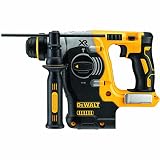
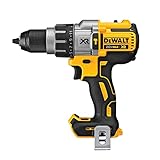
A cordless hammer drill uses a pulsing chuck action to help a masonry bit cut concrete. It is a practical choice for smaller holes, occasional anchor installation, and work where you also need a regular drill. It is not the same as a rotary hammer: a rotary hammer uses a piston mechanism that delivers stronger blows and is usually faster in concrete.
For typical 1/4- to 1/2-inch holes for light-duty anchors, a quality hammer drill can be enough. If you are drilling many holes, making holes larger than about 1/2 inch, or working in hard poured concrete, a cordless SDS-plus rotary hammer is often the better buy. A hammer drill can spend a long time polishing a hole rather than advancing through it. That means more heat, battery drain, and worn bits.
For occasional small holes, a cordless hammer drill is the versatile, lower-cost option. For regular anchor work in concrete, compare it with a cordless SDS-plus rotary hammer before choosing.
Hammer drill or rotary hammer?
| Job | Cordless hammer drill | Cordless SDS-plus rotary hammer |
|---|---|---|
| Small anchor holes, occasional use | Good fit; also drills wood and metal | Works, but may be more tool than needed |
| Several holes in poured concrete | Slower; demands steady pressure and sharp bits | Usually faster and less tiring |
| Holes over about 1/2 inch | Often frustrating, especially in hard concrete | Better suited to the load |
| Driving screws or drilling wood | Useful with hammer mode switched off | Usually needs a separate drill for those tasks |
These are practical guidelines, not hard limits. A small hole in soft block may go quickly with a hammer drill, while dense aggregate can make even a modest hole difficult. Check the tool’s stated masonry capacity and duty guidance rather than relying on maximum torque figures, which don’t tell you how quickly it drills concrete.
What to look for when buying
For a hammer drill, look for a side handle, a hammer mode, and a clutch or selectable speed for ordinary drilling and fastening. The side handle is useful because masonry bits can catch on aggregate; a sudden twist can strain your wrist. A metal chuck is not automatically better than a good plastic-bodied design, but a chuck that grips the bit securely matters. Test for bit wobble if you can.
Battery capacity affects how many holes you can drill, but concrete hardness and bit sharpness affect that number too. A 2.0Ah battery is lighter and can suit a short repair. For repeated drilling, a 4.0Ah or larger pack usually means fewer interruptions, at the cost of more weight. If you already own batteries from a tool platform, buying a bare tool can save money. Otherwise, compare the kit price, battery size, and charger—not just the drill price.
If your work is mainly anchors in concrete, consider a rotary hammer kit with a mid-size battery. If the drill will also handle wood, metal, and occasional masonry, a cordless hammer-drill kit is a sensible all-rounder.
Bits, technique, and common failures
Use a carbide-tipped masonry bit made for hammer drilling. Match the bit diameter to the anchor manufacturer’s instructions; a hole that is too wide can leave an anchor loose, while an undersized hole can prevent it from seating. Keep the drill straight, start slowly to establish the hole, then use steady pressure. Let the bit cut instead of forcing the tool. Pull it out periodically to clear dust, especially in deeper holes.
Dust is not just a nuisance: packed dust slows cutting and can keep an anchor from gripping properly. Vacuum the hole or use the cleaning method specified for the anchor. For adhesive anchors, follow the product’s cleaning steps exactly; residual dust can compromise the bond. Wear eye protection and a suitable respirator, and use dust extraction where practical. Concrete dust contains respirable silica, a serious health hazard.
Common warning signs are a hot bit, a hole that stops advancing, and repeated battery cutouts. Pause and let the bit cool; check for a dull or damaged tip and clear the hole. If the drill is making little progress in sound concrete despite a sharp bit and correct technique, switch to a rotary hammer rather than leaning harder. Excess pressure can overheat the tool, wear the bit, and make the hole crooked.
Foundation and basement cautions
Before drilling, identify what is behind or inside the concrete. Foundation walls may contain reinforcing steel, embedded utilities, waterproofing layers, or post-tensioning components. Do not drill into a post-tensioned slab or structural foundation without confirming the construction and getting qualified guidance. A reinforcing bar can stop a masonry bit abruptly; don’t keep hammering through it. Move the hole only if the location and anchor layout allow, or get advice from a contractor.
Use anchors rated for the base material and the load, and keep holes away from edges and cracks by the distances specified by the anchor maker. For a handful of small holes in block or concrete, the cheaper hammer-drill route is fine. For repeated work, large holes, or hard poured walls, the time saved and cleaner progress from an SDS-plus rotary hammer can justify its higher price.