What's inside
As an Amazon Associate I earn from qualifying purchases. This post may contain affiliate links at no extra cost to you.
What we cover
Choosing a hammer drill for a basement wall
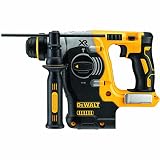
For a few holes to hang shelves, a cordless hammer drill is usually the practical choice. It spins a masonry bit while delivering short blows that help cut concrete. The trade-off is speed: compared with a corded rotary hammer, a hammer drill can be slow and tiring in hard concrete, especially for holes larger than about 1/2 inch.
For typical wall anchors, you’ll usually drill holes around 3/16 to 1/2 inch in diameter and 1 to 3 inches deep. A good 18V or 20V-class drill with a hammer setting can handle that work with a sharp masonry bit. If you need many holes, large holes, or holes deeper than a few inches, consider a rotary hammer instead; its piston-style action is more effective in concrete.
As an Amazon Associate we earn from qualifying purchases at no extra cost to you.



What to look for
Buy a drill with a dedicated hammer mode, a two-speed gearbox, and a clutch for ordinary screwdriving. A side handle matters: it gives you better control if the bit binds and helps keep the hole straight. Check that the chuck accepts the bit size you need. Most cordless hammer drills use a 1/2-inch chuck, while smaller models may have a 3/8-inch chuck that limits bit options.
Battery capacity affects how long you can work, not how much force the drill delivers in every situation. A 2.0Ah pack keeps the tool lighter and is fine for a handful of holes; a 4.0Ah or larger pack is more comfortable for a longer session. If you already own batteries in a tool platform, staying with that platform is often the sensible, cheaper choice.
To compare current options, browse 18V and 20V cordless hammer drills. You don’t need a premium kit for occasional anchor holes. A basic drill with a side handle, suitable battery, and compatible masonry bits can do the job.
Hammer drill or rotary hammer?
| Tool | Best fit | Trade-off |
|---|---|---|
| Cordless hammer drill | A few small anchor holes, roughly 3/16–1/2 inch wide | Slower in hard concrete; more pressure and time required |
| Corded or cordless rotary hammer | Many holes, larger diameters, or deeper drilling | Bulkier, costlier, and more tool than most small jobs require |
| Regular drill | Wood, metal, and other non-masonry work | Usually ineffective in concrete without hammer action |
For one or two small holes in a relatively soft block wall, a regular drill may manage with the right bit, but it is not a dependable choice for poured concrete. If the drill makes little progress after a short test, pushing harder is unlikely to fix the mismatch. Switch to a hammer drill or rent a rotary hammer rather than overheating the motor or wearing out the bit.
Bits, anchors, and hole size
Use a carbide-tipped masonry bit sized to the anchor maker’s instructions. The bit diameter must match the anchor’s specified hole, not just the screw’s diameter. For example, a sleeve or plastic anchor may call for a 1/4-inch hole, but sizes vary, so check the package. A bit that is too small can make the anchor impossible to seat; an oversized hole can leave it loose and unable to hold its rated load.
Choose carbide-tipped masonry bits with shanks that fit your drill’s chuck. SDS-Plus bits are for rotary hammers and will not fit a standard three-jaw chuck unless you use an adapter, which is not a substitute for a proper rotary hammer. A dull or overheated bit drills slowly and can wander; let it cool, clear dust from the hole, and replace it when progress drops.
How to drill without a poor anchor hole
First, check for electrical cables, plumbing, and other services in the wall. Avoid drilling near outlets or switches unless you know where the wiring runs. Use eye protection and hearing protection, and control concrete dust; a vacuum with a suitable dust filter is preferable to blowing dust around the basement.
Mark the hole and hold the drill square to the wall. Start at a low speed until the bit has seated, then use the hammer setting and steady pressure. Don’t lean your full weight on the drill: too much pressure can stall it, overheat the motor, or make the bit bind. Pull the bit out occasionally to clear dust, especially in deeper holes. Stop at the anchor’s required depth; drilling too deep weakens the fit and can hit something behind the wall.
If the bit repeatedly stops on a hard spot, it may have reached aggregate or a reinforcing bar. Don’t force it. Move the hole if the mounting layout allows, and never cut into suspected rebar or hidden services without checking what is behind the surface. After drilling, vacuum the hole and install the anchor as directed. Dust left in the hole can prevent an anchor from seating or reduce its grip.
When a bigger tool is worth it
Choose a cordless SDS-Plus rotary hammer if you expect repeated concrete work, need holes over 1/2 inch, or have a long run of anchors. It usually drills faster and with less pressure than a hammer drill, but it is heavier and its SDS-Plus bit system may mean buying a separate set of bits. For a small shelf or a couple of wall anchors, that extra cost is hard to justify.
For occasional basement projects, the best value is generally a midrange cordless hammer drill on a battery platform you already own, plus sharp bits matched to the anchors. Spend more only when hole count, diameter, or concrete hardness makes the slower tool frustrating.