What's inside
As an Amazon Associate I earn from qualifying purchases. This post may contain affiliate links at no extra cost to you.
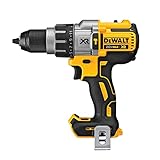
A two-speed gearbox is useful because it lets one cordless hammer drill cover both slow, controlled drilling and faster work in wood or metal. It does not make every drill equally capable: motor output, clutch behavior, battery size, chuck quality and weight matter just as much. For masonry, the hammer mechanism and the right bit matter too.
As an Amazon Associate we earn from qualifying purchases at no extra cost to you.



What we cover
What the two speeds do
Most two-speed drills use a mechanical selector near the top of the tool. Low gear typically tops out around 400–600 rpm and provides more torque; high gear commonly reaches 1,500–2,000 rpm for smaller holes and faster drilling. Exact ranges vary by tool. The gearbox changes the balance between speed and torque—it does not increase the motor’s power.
Use low gear for large bits, hole saws, driving larger screws and starting holes where control matters. Use high gear for smaller twist bits in wood or metal. For masonry, select hammer mode and follow the drill-bit maker’s speed guidance. Pressing harder is not a substitute for choosing the right gear; excessive pressure can stall the motor, overheat the bit or damage the work.
How the main options compare
| Type | Best fit | Trade-off |
|---|---|---|
| Compact 18V/20V-class hammer drill | Occasional anchors, repairs and general drilling | Lighter and easier to handle, but slower in larger holes and less suited to repeated masonry work |
| Full-size two-speed hammer drill | Regular drilling in wood, metal and brick | More capacity and often better cooling, at the cost of added weight and bulk |
| Rotary hammer | Frequent or larger holes in concrete | Much more effective in hard concrete, but heavier and less versatile for everyday screwdriving |
For occasional holes for plastic wall anchors in brick, a cordless hammer drill is usually sufficient. For repeated holes in poured concrete, especially above about 3/8 inch, a rotary hammer with an SDS-plus bit is generally faster and easier on the operator. A hammer drill’s chuck accepts ordinary round-shank bits; an SDS-plus tool uses a different bit system.
What to check before buying
Gear range and controls: Make sure the tool has a physical two-speed selector, a separate drill/driver/hammer mode ring and a clutch for screwdriving. Gear changes should be made with the trigger released. If the selector will not engage, lightly turn the chuck by hand rather than forcing the switch.
Chuck and capacity: A 1/2-inch chuck accepts larger common bits than a 3/8-inch chuck, but chuck size alone does not promise power. Check the manufacturer’s stated maximum drilling capacities in wood, steel and masonry. Those limits describe capability, not necessarily a comfortable pace for continuous work.
Battery and weight: A compact 2.0Ah battery keeps a drill nimble for overhead work and a handful of anchor holes. A 4.0Ah or larger pack can reduce interruptions during longer jobs, but adds weight. Compare the tool’s weight with a battery installed; bare-tool figures can be misleading. If you already own batteries in a tool platform, buying a bare tool may be the sensible saving.
Handling and protection: A side handle is useful when a large bit catches, and an electronic brake helps control the tool after the trigger is released. Some drills include anti-rotation protection that cuts power if the body twists suddenly. This is valuable, but it does not replace a firm two-handed grip or safe work positioning.
Choose by workload
For a homeowner drilling a few small anchor holes each year, a compact drill kit is often enough. A midrange full-size tool makes more sense for frequent shelving, cabinetry, deck repairs and mixed-material work. Compare the compact two-speed cordless hammer drill kits with full-size 1/2-inch cordless hammer drills on weight, included battery and stated drilling capacity—not just the headline torque number.
For routine work in concrete or a long run of masonry anchors, consider whether a rotary hammer is the better purchase. A cordless SDS-plus rotary hammer usually makes hard concrete holes with less time and effort. It is overkill for someone who drills only a few holes in soft brick, and it is not the best all-purpose choice for driving screws.
Use the right gear and bit
For brick or block anchors, fit a carbide masonry bit of the diameter specified by the anchor maker. Mark the required depth on the bit with tape or use a depth stop. Start with the drill held square to the surface and moderate pressure. If the hole is dusty, withdraw the bit periodically to clear debris; packed dust slows cutting and can make the bit run hot. Wear eye protection, and check for wires or pipes before drilling.
Hammer mode is for masonry, not ordinary wood or metal drilling. For tile, use a tile-appropriate bit and keep hammer action off until through the tile—hammering too early can crack it. In metal, use a sharp metal bit, low pressure and cutting lubricant where appropriate. In wood, high gear works for many small bits, but switch to low gear if a large bit or hole saw starts to bind.
Common buying mistakes
Do not choose solely by advertised maximum torque: manufacturers may measure it differently, and a high figure does not tell you how comfortably the drill handles a long hole. Do not expect a two-speed hammer drill to replace a rotary hammer for repeated hard-concrete work. And do not assume the biggest battery is always best; extra runtime is wasted if the tool becomes tiring to hold.
The practical choice is the lightest drill that comfortably covers your largest expected bit and material. Pay more for a stronger full-size tool or rotary hammer when the workload justifies it. For occasional anchors and household repairs, a cheaper compact hammer drill with a working two-speed gearbox is often entirely adequate.