What's inside
As an Amazon Associate I earn from qualifying purchases. This post may contain affiliate links at no extra cost to you.
What we cover
Why bit choice matters
Corrosion-resistant exterior screws are often installed in dense decking, fencing, siding, or treated lumber—jobs that can put real stress on a driver bit. A worn or poorly matched bit may cam out, chew up the screw recess, or slip and scratch the surrounding surface. With stainless-steel screws, a damaged head is especially frustrating: the screw can be difficult to remove, and the metal is softer than many hardened steel fasteners.
For most exterior screw work, buy bits that match the screw’s drive style and size, then choose impact-rated bits if you’re using an impact driver. The coating on the screw does not call for a special bit; fit and control matter more. A bit marketed as “corrosion-resistant” is not automatically better at driving exterior screws.
As an Amazon Associate we earn from qualifying purchases at no extra cost to you.


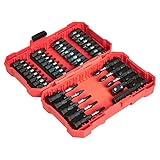
Match the drive and size
Check the screw packaging or head before buying bits. Common exterior screw drives include Torx-style star drives, square drives, and Phillips. Use the exact size specified: a T25 bit in a T20 recess, for example, may seem to engage but can slip under load. A loose fit is a warning, not something to overcome by pressing harder.
Star drives are common on deck and structural screws because they provide good engagement when correctly sized. Square drives are also effective, but the bit must seat fully. Phillips drives are more prone to cam-out under high torque, so keep the bit aligned and use steady pressure. If you’re replacing mixed fasteners, a multi-size impact-rated bit set can cover several drive styles, but a set is useful only if it includes the sizes your screws actually use.
Choose the right bit for the job
Impact-rated bits are made to tolerate the repeated twisting and impacts of an impact driver. They’re the sensible default for frequent driving or long screws, but they are not indestructible. A standard insert bit can be adequate for occasional, light fastening in softwood—especially with a cordless drill set to a low clutch setting. It costs less, and the controlled drive can be gentler on screw heads.
For a high volume of deck screws or work in dense lumber, consider impact-rated bits in the screw’s exact drive size. Longer power bits can make it easier to reach recessed fasteners, but extra length increases leverage and can wobble if you don’t keep the driver straight. A short bit holder with a quality insert bit is often more stable for routine work.
Magnetic holders are convenient, particularly when positioning screws one-handed, but they can collect metal filings. Clean them when the screw no longer seats properly. A magnetic holder does not compensate for a mismatched bit or a screw head packed with debris.
Bit options at a glance
| Option | Best for | Trade-off |
|---|---|---|
| Standard insert bit | Occasional, low-torque work; drill with a clutch | Can wear or twist sooner in an impact driver |
| Impact-rated insert bit | Regular impact-driver use and longer screws | Costs more; still fails if the size or fit is wrong |
| Long power bit | Recessed or hard-to-reach fasteners | More flex and wobble; keep the tool aligned |
| Bit set | Several screw styles or sizes | May include sizes you never use; check the contents |
Drive screws without damaging them
Set the bit fully into the recess before starting, hold the driver in line with the screw, and begin at low speed. Increase speed only after the threads have started. On an impact driver, ease off as the head nears the surface; repeated impacts after the screw seats can strip the recess, break a screw, or drive the head below the surface. If your tool has speed modes, a lower mode is easier to control for delicate finish work.
In hardwood or dense, dry material, predrilling can reduce splitting and driving force. Follow the screw maker’s guidance on pilot-hole size; there isn’t one diameter that suits every screw and wood. A countersink may help a flat-head screw sit flush, but don’t over-cut, particularly near board edges. Stainless screws can gall or break under excessive friction, so avoid forcing them through a tight hole. If a screw binds, back it out, check for an undersized pilot hole or an obstruction, and try again.
Do not use lubricant unless the fastener maker recommends it for that screw and application. Some coatings are designed to work without added lubricant, and an improvised product may affect the finish or the joint. When fastening pressure-treated lumber, select screws rated for that material and exposure; a compatible bit cannot make an unsuitable screw corrosion-resistant.
Know when to replace a bit
Replace a bit when its edges are rounded, chipped, or visibly twisted, or when it repeatedly slips in a clean screw recess that it used to fit. Continuing with a worn tip often turns a replaceable bit into a damaged screw head. Keep a spare of the main size on hand for large jobs. If new bits fail quickly, check that they are genuinely impact-rated, verify the drive size, and reduce the force applied after seating.
For a small repair using a handful of screws, one correctly sized bit may be all you need; buying a large set is unnecessary. For a full deck or several exterior projects, spare impact-rated bits in the common screw size are more useful than a box of rarely used profiles. Choose for the fasteners in front of you, not the biggest set on the shelf.