What's inside
- Quick Comparison
- Best for Build Quality and Runtime: Makita XGT 40V Chain Saw
- Best Value: Ryobi 40V HP Brushless 16-Inch Chainsaw
- Best Budget: Greenworks 40V Chainsaw
- Best for Limbing: A Compact Pruning or Pole Saw
- How to Choose a 40V Chainsaw
- Ownership Realities
- Worked Example: A Firewood Session
- Common Mistakes
- When to Choose a Different Saw
- Frequently Asked Questions
As an Amazon Associate I earn from qualifying purchases. This post may contain affiliate links at no extra cost to you.
The best 40 volt chainsaw for most homeowners and woodworkers is a 16-inch brushless model, with Makita’s XGT 40V max saw as the pro-leaning choice, Ryobi’s 40V HP brushless saw as the value pick, and Greenworks 40V as the entry option. For milling small logs, felling anything wider than the bar, or daily professional cutting, a 40V saw is the wrong class and a gas or higher-voltage saw is the better tool.
A 40V chainsaw is built for limbing, storm cleanup, cutting firewood rounds and trimming. As a woodworker you may also use one to break down small logs into rough lumber blanks. This guide is organized by what you will cut and how the battery system affects the choice.
As an Amazon Associate we earn from qualifying purchases at no extra cost to you.


What we cover
- Quick Comparison
- Best for Build Quality and Runtime: Makita XGT 40V Chain Saw
- Best Value: Ryobi 40V HP Brushless 16-Inch Chainsaw
- Best Budget: Greenworks 40V Chainsaw
- Best for Limbing: A Compact Pruning or Pole Saw
- How to Choose a 40V Chainsaw
- Ownership Realities
- Worked Example: A Firewood Session
- Common Mistakes
- When to Choose a Different Saw
- Frequently Asked Questions
Our Top Picks
Quick Comparison
| Pick | Best for | Key specs (per maker listings) | Price range |
|---|---|---|---|
| Makita XGT 40V max brushless chain saw (GCU06 family) | Best for build quality and runtime | 16-inch bar, brushless, XGT 40V max battery, chain brake | Upper mid to premium |
| Ryobi 40V HP brushless 16-inch chainsaw | Best value | 16-inch bar, brushless, automatic chain brake, 40V HP battery | Mid |
| Greenworks 40V chainsaw (14 to 16 inch) | Best budget | Brushed or brushless depending on model, 40V battery, lighter body | Budget |
| Ryobi 40V compact pole saw or 10-inch pruning saw | Best for limbing and overhead | Shorter bar, light, 40V battery | Budget to mid |
Specifications are summarized from manufacturer listings, so confirm bar length and battery inclusion on the current model before you buy.
Best for Build Quality and Runtime: Makita XGT 40V Chain Saw
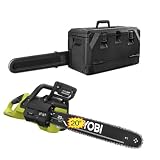
Makita’s XGT chainsaw is designed for people who cut regularly. It uses a brushless motor, a 16-inch bar class, tool-less chain tension adjustment on many models and an electric brake. The XGT battery is shared with Makita’s drills, saws, blowers and trimmers, which is helpful if you already own tools on the platform.
The trade-off is cost: the chainsaw and the batteries are priced above Ryobi and Greenworks, and the platform pays off mainly if you add several XGT tools.
Best Value: Ryobi 40V HP Brushless 16-Inch Chainsaw
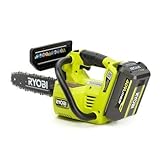
Ryobi’s brushless 40V HP saw is the common homeowner choice. It has a 16-inch bar, an automatic chain brake and works with the same 40V batteries as Ryobi’s mowers, trimmers and blowers. For felling small trees, cutting firewood in short lengths and cleaning up storm damage, it does the job, and one battery covers a modest amount of cutting.
The trade-off is performance under sustained load. In dense hardwood a battery saw bogs sooner than a gas saw, and runtime shrinks quickly. Bring a second battery for a firewood session.
Best Budget: Greenworks 40V Chainsaw
Greenworks sells 40V chainsaws at attractive prices, often in kits with a battery and charger. They are light and easy to start, with no fuel mixing, and suit light yard work and pruning. The trade-off is lower power and shorter life than higher-priced models, so they fit occasional use.
Best for Limbing: A Compact Pruning or Pole Saw
If most of your cutting is branches and overhead limbs, a compact saw or a pole saw is safer and easier than a full chainsaw. Ryobi and Greenworks both offer these on their 40V platforms. You give up bar length but gain reach and control.
How to Choose a 40V Chainsaw
Bar length and cutting capacity
| Bar length | Practical cut diameter | Suits |
|---|---|---|
| 10 to 12 inch | Up to about 8 inches | Pruning, small limbs |
| 14 inch | Up to about 11 inches | Light yard work |
| 16 inch | Up to about 13 inches | Firewood, storm cleanup |
| 18 inch and up | Up to about 15 inches | Larger trees; consider higher voltage or gas |
The practical diameter is roughly two inches less than the bar length, since you need room to start and finish the cut.
Battery runtime math
A 40V pack with a 5.0 Ah capacity stores about 180 watt-hours (36V nominal times 5.0). A chainsaw drawing roughly 600 to 900 watts while cutting can run for 12 to 18 minutes of actual cutting on that pack. Because you only cut for part of each minute, this translates to a few dozen cuts through 6-inch logs per pack. Treat these as planning estimates; chain sharpness, wood type and cut diameter change the numbers a lot.
Chain and bar oil
All chainsaws need bar and chain oil. Battery saws have a small reservoir that you must refill. Running a saw dry destroys a chain and bar quickly.
Safety features
Look for an automatic chain brake, a trigger lock and a chain catcher. Wear chaps, a helmet with face shield, hearing protection and gloves when felling or limbing.
Platform and ecosystem
| Your situation | Better platform |
|---|---|
| Already own Ryobi 40V tools | Ryobi 40V HP chainsaw |
| Already own Makita XGT tools or want pro-grade | Makita XGT chainsaw |
| Rare use, tight budget | Greenworks 40V |
| Cut firewood weekly or fell mid-size trees | Gas, or a higher voltage platform |
Ownership Realities
- Chains dull fast in dirt. Keep a spare chain and learn to sharpen or have one sharpened.
- Check chain tension before every use, since new chains stretch.
- Refill bar oil regularly; check the reservoir when you change batteries.
- Store the saw with the bar cover on and the battery removed.
Worked Example: A Firewood Session
A cord of firewood cut to 16-inch lengths needs roughly 100 to 150 cuts depending on log diameter. A 5.0 Ah 40V pack stores about 180 watt-hours. If each 6-inch log cut draws about 700 watts for about eight seconds, that is roughly 1.5 watt-hours per cut, so one pack might make 80 to 100 cuts in dry softwood. Hardwoods and larger rounds cut that number sharply. For a full cord, plan on two or three packs and a sharp spare chain.
Common Mistakes
- Letting the chain run dry. Check bar oil before every battery swap.
- Cutting with the tip of the bar, which raises kickback risk.
- Pushing the saw. A sharp chain pulls itself through the wood; pressure just slows it and heats the bar.
- Cutting dirty logs. Soil dulls a chain in a few cuts; brush logs first.
When to Choose a Different Saw
If you fell trees wider than 12 inches, cut every weekend or work in remote areas without charging, a gas saw or a higher-voltage battery system is a better fit. A 40V saw suits people who value quiet starts, low maintenance and storage convenience.
Frequently Asked Questions
Is a 40V battery chainsaw powerful enough?
For limbing, storm cleanup and cutting small firewood, yes. For felling large trees or all-day cutting, a gas saw or a higher-voltage battery saw is a better match.
How long does a 40V chainsaw battery last?
Plan for roughly 10 to 20 minutes of actual cutting on a larger battery, depending on wood and cut size. Having a second battery doubles that.
What bar length do I need?
A 16-inch bar covers most home needs. A 12-inch or shorter bar is easier for pruning, while 18 inches and above is better handled by higher-power saws.
Can I use a chainsaw to mill lumber?
Battery saws are not designed for ripping long boards. Occasional rough cuts on small logs are possible, but a dedicated mill or band saw is better for lumber.
Are Ryobi and Makita 40V batteries compatible?
No. They use different connectors and electronics, so each brand’s batteries work only with its own tools.
Do battery chainsaws need maintenance?
Yes, less than gas saws but still: oil the chain, tension it, sharpen or replace it and clean the bar groove. There is no carburetor or fuel to manage.