What's inside
As an Amazon Associate I earn from qualifying purchases. This post may contain affiliate links at no extra cost to you.
Mortar-free brick—often called dry-stacked, mortarless or interlocking brick—can be less forgiving to drill than a conventional brick wall. The blocks may be hollow, thin-walled or held together by a mechanical profile, so a hole in the wrong place can crack a face or hit a void. A hammer drill helps with hard material, but it is not a license to use maximum force.
As an Amazon Associate we earn from qualifying purchases at no extra cost to you.


What we cover
Choose the drill for the hole, not the label
For a few small holes for lightweight fittings, a standard cordless drill with a sharp masonry bit may be enough, especially in softer brick. A hammer drill adds rapid axial blows and is useful when the brick is hard or drilling is slow. For frequent holes, larger diameters or stubborn masonry, an SDS-plus rotary hammer is usually faster and puts less pressure on your hands. Its hammer action is different from a conventional hammer drill’s, so check that the bit and tool system match.
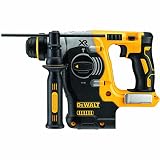
For occasional work, a cordless hammer drill kit is a flexible choice for both masonry and general drilling. If the work is mainly brick, compare it with a cordless SDS-plus rotary hammer. The rotary hammer often costs more and may be awkward for small, delicate holes, but it is the better tool for repeated masonry drilling.
Which setup fits the job?
| Setup | Best suited to | Trade-off |
|---|---|---|
| Standard cordless drill and masonry bit | Small holes in softer brick; occasional light-duty work | Slow in hard brick; pushing harder can overheat the bit |
| Cordless hammer drill and masonry bit | Several small or medium holes; mixed drilling tasks | More vibration than a standard drill; hammer action can damage fragile brick |
| SDS-plus rotary hammer and compatible bit | Repeated or larger masonry holes | Higher cost and more tool than a few small holes require |
Use the right bit and settings
Use a masonry bit of the diameter specified by the anchor or fitting. For a typical plastic wall plug, that is often 6 or 8 mm, but follow the plug maker’s instructions rather than guessing. A carbide-tipped masonry bit is a sensible starting point; a good-quality bit that stays sharp is more useful than a high drill speed. For SDS tools, buy an SDS-plus bit, not a straight-shank bit unless you also have the correct chuck.
Start with the drill’s hammer function switched off and drill a shallow pilot or mark the hole with a short, controlled start. This helps keep the bit from skating across a hard glazed face. If the brick is sound and the bit is cutting cleanly, engage hammer mode. Use low or moderate speed, keep the drill square to the wall, and let the bit cut. Excessive pressure can make a small bit bind, bend or overheat; hammering hard against a thin brick face can spall or split it.
Mortar-free systems vary. Some have cavities, interlocking lips or manufacturer-defined zones where drilling is discouraged. Check the wall or block maker’s guidance if available, and avoid edges, corners and visible cracks. If the hole location is flexible, aim for a solid section rather than an apparent joint or hollow area.
Drill without cracking the brick
Before drilling, check for pipes and wiring and wear eye protection; masonry dust is abrasive. Mark the depth on the bit with tape or use a depth stop. For a plug, the hole should be deep enough for the plug and a small amount of clearance for dust, but not so deep that it breaks through a thin wall. A common small-anchor hole may be only 35–50 mm deep; the actual depth depends on the anchor and brick construction.
Keep the drill straight and support it with both hands. If the bit stops advancing, pull it back while it is turning slowly to clear dust, then try again. Don’t rock the tool to widen the hole: that can chip the opening and leave an anchor loose. If the bit wanders into a void, hits a hard inclusion or causes a crack, stop. Move the fixing point if possible rather than forcing the hole.
For a clean hole, withdraw the bit occasionally to clear debris, especially in deeper holes. Let the bit cool if it becomes very hot; dunking a hot bit in water can damage it. Vacuum or brush dust from the finished hole before fitting an anchor, following the anchor instructions. Dust left inside can prevent a plug from seating fully.
Match the anchor to the wall
A drilled hole is only as reliable as the fixing. Standard expansion plugs need solid material around them and may not hold well in a hollow or thin-walled mortar-free block. For heavier loads, use a fixing designed for hollow masonry or the specific block system, and follow its hole diameter, depth and installation instructions. Don’t assume that a bigger plug automatically means a stronger fixing; expanding it near a brick edge can split the face.
Buy a hammer drill if you also need one for wood, metal and occasional masonry, and the holes are modest in size. A corded or cordless SDS-plus tool makes more sense for frequent masonry work, larger holes or a long run of fixings. Whichever you choose, prioritize a controllable clutch, a side handle on heavier tools and a depth stop. A spare battery is convenient for extended jobs, but it will not compensate for a blunt bit or unsuitable anchor.
If you are unsure whether the brick can take the intended load, test a small hole in a discreet spot and inspect the result before drilling the rest. For a railing, overhead load or other safety-critical fixing, get advice from the block manufacturer or a qualified installer rather than relying on a generic wall plug.