What's inside
As an Amazon Associate I earn from qualifying purchases. This post may contain affiliate links at no extra cost to you.
The bit is often the part that overheats first when drilling concrete, but the cause may be a worn cutting edge, too much pressure, a dusty hole, or a drill that is not actually hammering. Choose the bit for the hole size and workload, then let the tool clear dust instead of forcing it through the masonry.
As an Amazon Associate we earn from qualifying purchases at no extra cost to you.

What we cover
Choose the bit for the job
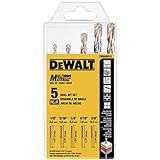
For occasional holes for plastic wall plugs, a standard carbide-tipped masonry bit is usually enough. It costs less than a premium bit and works well in brick, mortar, and ordinary concrete when sharp and used with a hammer drill. If you are drilling many holes, working in hard concrete, or need more consistent progress, a higher-grade carbide bit or a four-cutter bit is worth considering.
Two-cutter bits have a carbide tip with two main cutting edges. They are widely available and economical, but can wander more easily and may bind if the hole fills with dust or the bit hits aggregate. Four-cutter designs spread the cutting work across more edges and are generally a better choice for repeated drilling or harder material. They cost more, so they are poor value for a handful of small anchor holes.
| Bit type | Best use | Trade-off |
|---|---|---|
| Basic carbide-tipped | Occasional small holes in brick or concrete | Low price; wears or wanders sooner in hard aggregate |
| Higher-grade carbide, two-cutter | Regular anchor holes and general masonry work | More durable, but still less robust than four-cutter designs |
| Four-cutter SDS-Plus | Frequent drilling, harder concrete, larger workloads | Costs more and requires an SDS-Plus tool |
For a cordless hammer drill with a conventional three-jaw chuck, buy a round-shank masonry bit rated for hammer drilling. For an SDS-Plus rotary hammer, use an SDS-Plus bit; its grooved shank is made for the tool’s chuck. A round-shank bit will not fit an SDS chuck, and an SDS bit will not fit an ordinary drill chuck unless a compatible adapter is used. Adapters can add wobble, so they are not a good choice for accurate holes.
If you want a better bit for repeated work, compare four-cutter SDS-Plus masonry bits. For occasional DIY anchor holes, a basic carbide-tipped round-shank set is usually the more sensible buy.
Match the drill and bit
Use hammer mode for concrete and most brick, provided the bit is designed for hammer drilling. Rotation-only mode is slower in dense concrete, but it may be preferable in fragile tile, delicate masonry, or near a brittle edge where hammer action could cause cracking. Do not use hammer mode with a bit that is not rated for it.
A cordless hammer drill can handle small and medium anchor holes, but sustained drilling into hard concrete may heat the tool, battery, and bit. An SDS-Plus rotary hammer is more effective for repeated holes, often in the 6–12 mm range, because its hammer mechanism delivers impacts without relying on the user pressing hard. It is bulkier and usually unnecessary for installing a few wall plugs. If the bit stalls repeatedly or progress becomes very slow despite a sharp bit, a rotary hammer may be the right upgrade rather than a more expensive drill bit.
Choose the diameter and depth from the anchor manufacturer’s instructions. For many common plastic plugs, the hole matches the plug diameter, but do not assume this for every anchor. Mark the required depth with a stop or tape; drilling several millimetres deeper than the plug can make installation harder and leaves more dust to remove.
Reduce heat and clear the hole
Let the bit cut at a steady pace. Excessive pressure does not make carbide cut faster; it can make the tool work harder, load the motor, and increase friction. Hold the drill straight, keep the bit moving, and ease off if progress slows. For a typical 6–10 mm anchor hole, use short bursts rather than leaning continuously on the drill for a long stretch.
Every few seconds, withdraw the bit partway while it is still rotating to bring dust out of the hole. For deeper holes, withdraw it more often. Packed dust acts like grinding material, traps heat, and can stop the bit cutting. Clear dust from the hole before fitting the anchor, using a suitable vacuum or the cleaning method specified by the anchor maker. Wear eye protection and a properly fitted dust mask; concrete dust contains respirable silica.
Do not pour water onto a bit while using a cordless drill unless the tool and setup are specifically designed for wet drilling. Water can create an electrical hazard, damage the tool, and turn concrete dust into slurry. If the bit becomes very hot, stop and let it cool naturally. Do not quench a hot bit in water: sudden temperature change can damage carbide or the brazed joint holding it to the steel body.
Know when the bit is the problem
A sharp bit produces dust and advances with moderate pressure. A blunt bit squeals, polishes the hole instead of cutting it, or needs steadily more force. Replace it rather than pressing harder. If the bit suddenly stops advancing at one point, it may have hit hard aggregate or rebar. Back out, clear the hole, and check the location. Do not keep hammering against steel with a masonry bit; the carbide edge can chip. Use a suitable metal-drilling method only if the location and project allow it, and avoid cutting reinforcing steel without confirming it is safe.
For drilling near an edge, begin with a smaller pilot hole only if the anchor instructions permit it, and keep a sensible distance from the edge to reduce cracking. Use a new bit for critical holes rather than trusting a visibly chipped tip. A damaged bit can leave an oversized or ragged hole, which may prevent an anchor from gripping securely.
A practical buying rule
For a few holes in ordinary brick or concrete, buy the correct diameter of standard carbide-tipped bit and use it in a hammer drill at a controlled pace. For regular concrete drilling, choose a better-quality bit in the correct shank system; for frequent work or hard concrete, consider a four-cutter SDS-Plus bit and rotary hammer. In every case, dust removal, a sharp edge, and the right mode matter more than pushing harder.