We research everything we recommend. When you buy through our links, we may earn a commission. As an Amazon Associate we earn from qualifying purchases.
Best Palm Sanders for Smooth Finishes on Any Budget
Compare the best palm sanders for finish work, from quarter-sheet shop staples to a third-sheet value pick, with motor, orbit, and dust specs.
A palm sander, usually a quarter-sheet finishing sander, is the tool that takes a project from rough lumber to a surface ready for stain or paint. Its flat pad rides into corners a round random-orbit sander cannot reach, it uses inexpensive paper cut from standard sheets, and its small orbital motion leaves a fine, even scratch pattern that shows far less under a finish than belt or disc sanding does.
The five sanders below are all corded finishing sanders, but they differ in motor strength, orbit speed, dust handling, and pad size. One of them steps up to a larger third-sheet pad for big flat panels. All of them cost less to feed than disc sanders because plain sheet paper is cheap and sold everywhere.
As an Amazon Associate, we earn from qualifying purchases.
The DEWALT DWE6411K is the best palm sander for most woodworkers, with a strong 2.3-amp motor, fast 14,000 OPM pad speed, and a proper dust port. The Makita BO4556 is the smoother, quieter alternative, the Bosch GSS20-40 suits fine finish work, and the WEN 6313 covers large panels cheaply with its third-sheet pad.
How to Choose
Pad size is the first decision. A quarter-sheet sander uses one quarter of a standard 9-by-11-inch sheet, which keeps paper costs low and the tool small enough for one-handed control. A third-sheet model like the WEN 6313 covers tabletops and doors noticeably faster per pass but feels bulkier in tight spots. If most of your work is furniture and cabinets, quarter sheet is the right default.
Motor power and orbit speed shape the finish. Finishing sanders in the 2-amp class running 12,000 to 16,000 orbits per minute remove material at a useful pace while keeping the scratch pattern fine. A separate counterweight or counterbalance design, found on the DEWALT and the SKIL-style designs in this class, cuts the vibration that makes hands tingle during long sessions.
Dust handling separates pleasant sanders from messy ones. A sealed dust bag is the minimum; a round dust port that locks onto a shop vacuum hose is better, especially for indoor work. Also check how paper attaches. Spring clamps accept any cut sheet, including the good silicon-carbide paper sold for finishing, while hook-and-loop pads are faster to change but need specific pre-cut sheets.
The DEWALT DWE6411K is the quarter-sheet sander most often found in working shops, and the spec sheet explains why. A 2.3-amp motor drives the pad at 14,000 orbits per minute, the fastest pace in this group, so it levels and smooths without feeling lazy. A separate counterweight reduces vibration, and the rubber overmold grip keeps the tool planted in one hand during long finishing sessions.
The dust port uses a locking system that holds a vacuum hose securely instead of letting it pop off mid-pass, a small detail that anyone who has chased a loose hose will appreciate. Paper loads with improved clamps that grip plain quarter sheets firmly. The kit version includes a contractor bag for transport and storage. For a buy-it-once finishing sander, this is the one to beat.
The Makita BO4556 takes a different route to a good finish: less brute speed sensation, more refinement. Its 2.0-amp motor also runs at 14,000 OPM, but the all-ball-bearing construction keeps noise and vibration noticeably low, and the contoured rubberized palm grip is shaped for control rather than just comfort. At about 2.4 pounds it is the lightest sander here, which matters when you are sanding vertical cabinet faces or working overhead.
The pad measures 4-3/8 by 4 inches with a tight 1.5 mm orbit, a combination that leaves a fine, uniform scratch pattern under stain. Dust goes to a through-the-pad system with a large dust bag, and Makita includes a punch plate so plain sheets get the correct dust holes every time. If your finishing work is delicate and your sessions are long, the Makita is the calm choice.
The BLACK+DECKER BDEQS300 is the straightforward homeowner option. A 2.0-amp motor spins the pad at 16,000 orbits per minute on paper, the highest figure in this roundup, and the paddle switch on top is easy to bump on and off with the palm of your hand, even wearing gloves. At 3.2 pounds it is light enough for a full afternoon of furniture prep without wearing out your arm.
Dust collects in a rear bag, and the sander ships with a sheet of paper and a paper punch so the dust holes line up with the pad. The clamps take standard quarter sheets cut from any full sheet you have on hand. It lacks the counterweight refinement of the DEWALT, so long sessions buzz a little more, but for repainting furniture, prepping trim, and occasional project work, it covers the essentials at a friendly price.
The Bosch GSS20-40 is built around precision rather than pace. Its 2.0-amp motor runs at 12,000 OPM, a touch slower than the DEWALT and Makita, and Bosch machines the sanding plate from aluminum so it stays flat and true over years of use. A flat plate is the quiet secret behind an even finish: stamped plates can rock slightly, while this one keeps the whole sheet working.
The micro-filter dust collector traps fine particles better than a simple cloth bag, which helps when sanding indoors or working with hardwoods whose dust you do not want to breathe. Paper clamps accept regular quarter sheets, and the compact body with a soft grip keeps the sander easy to steer along edges and into corners. Woodworkers who prioritize the quality of the final surface over raw removal speed will feel at home with the Bosch.
The WEN 6313 breaks the quarter-sheet pattern with a third-sheet pad, and that bigger footprint is its whole argument. On tabletops, door slabs, and cabinet sides, the larger pad bridges low spots better and finishes a panel in fewer passes. The 1.2-amp motor delivers up to 12,000 OPM, which is modest power, but the tool weighs only about 3 pounds and the dual-handle layout, a pommel grip plus a rear handle, keeps it comfortable for two-handed panel work.
Paper attaches with clamps for standard third sheets or with hook-and-loop sheets, and a dust bag plus vacuum adapter handle cleanup. There is no paper punch included, so budget a moment to poke dust holes in plain sheets. As a second sander dedicated to big flat work, or a first sander for a homeowner refinishing doors and tables, the WEN delivers a lot of coverage for very little money.
Specs
Spec
Detail
Motor
1.2 amp
Speed
12,000 OPM
Paper size
1/3 sheet, clamp or hook-and-loop
Pad size
3-5/8 in by 7-3/8 in
Weight
About 3 lb
Handles
Dual handle, pommel plus rear grip
Dust
Dust bag and vacuum adapter
Who Should Skip It
Skip a palm sander if your main job is fast stock removal, stripping thick paint, or flattening rough boards. A belt sander or a 5-inch random-orbit sander with coarse discs will do that work several times faster, and the palm sander can take over for the final passes. You should also skip sheet sanders if you mostly sand curves, spindles, and shaped parts, where a detail sander or sanding by hand with a shaped block works better. Finally, if you already own a good random-orbit sander and rarely sand into square corners, a palm sander adds little beyond slightly cheaper paper.
FAQ
Is a palm sander the same as a random orbit sander?
No. A palm or sheet sander moves its flat pad in tiny straight orbits and excels at flat surfaces and inside corners. A random-orbit sander spins a round disc in a random pattern, removes material faster, and resists swirl marks on large flat areas, but the round pad cannot reach into a square corner.
What paper grits should I use with a finishing sander?
Work through the grits instead of jumping. Start at 120 grit for leveling and removing old finish marks, move to 180 for smoothing, and finish at 220 before staining or painting. Skipping grits leaves scratches from the coarse paper that finer paper takes very long to erase.
Can I use a palm sander to remove paint?
Light paint and varnish on flat furniture, yes, with coarse paper and patience. Thick or layered paint gums up sheet paper quickly and goes much faster with a random-orbit sander, a belt sander, or a chemical stripper first. Use the palm sander afterward to refine the bare wood.
Why does my sander leave swirl or pigtail marks?
Usually because of trapped grit or debris under the pad, pressing down too hard, or skipping grit steps. Keep the surface and paper clean, let the sander’s weight do the work, move slowly in overlapping passes, and vacuum dust between grits. A flat, true pad like the machined plate on the Bosch also helps.
Final Verdict
For most workshops, the DEWALT DWE6411K is the palm sander to buy first, thanks to its strong motor, controlled vibration, and vacuum-ready dust port. The Makita BO4556 is the pick for long, delicate finishing sessions, the Bosch GSS20-40 for the flattest, finest final surface, and the BLACK+DECKER BDEQS300 for simple home projects on a budget. Add the WEN 6313 when big panels dominate your work. All five use cheap sheet paper and will leave a finish-ready surface; choose by pad size, dust handling, and how the tool feels in your hand.
M
Miller the Driller Editorial Team
We compare specs, warranty terms, long-term owner feedback and street pricing before anything earns a spot. Rankings are never paid.
Affiliate disclosure. As an Amazon Associate we earn from qualifying purchases at no extra cost to you. Prices accurate as of the date shown.
Three wireless routers for small offices compared on device capacity, network separation, wired speed, and coverage, with specs taken from their Amazon listings.
Compare 5 mechanic tool sets for car repairs: a 247-piece DEWALT kit, a 450-piece CRAFTSMAN set, a drawer-box GEARWRENCH set, a 170-piece Crescent set and a 450-piece WORKPRO set.
Four splitting axes and mauls that actually split firewood: a long 36-inch axe for tall users, a shorter 28-inch option, and two 8 lb mauls for knotty rounds.
Learn whether a 20V rechargeable drill battery can be repaired, which faults you can check safely at home, and when replacing the pack is the safer choice.
A specs-based review of the officially licensed Retro-Bit Sega Saturn 2.4 GHz wireless controller: dual receivers, Genesis Mini and Switch support, battery, layout, limits, and FAQs.
Find the best drill battery for Power Wheels ride-on toys for families, with DeWalt, Milwaukee and Ryobi adapters, voltage and safety guidance in this guide.
Find the best hole saw for noching dom pipe: bi-metal saws, deep cups, and the right sizes for clean, tight notches in DOM tube for fabrication shops today.
Find the best diy tile saws for home tiling projects. Compare wet tile saws by blade size, cutting capacity, and features for ceramic and porcelain tile.

 DEWALT DWE6411K 1/4 Sheet Palm Grip Sander
 Makita BO4556 1/4 Sheet Finishing Sander
 BLACK+DECKER BDEQS300 2.0 Amp 1/4 Sheet Orbit Sander
 Bosch GSS20-40 Orbital Finishing Sander
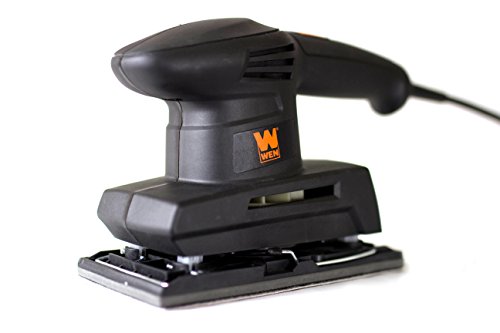 WEN 6313 Electric 1/3 Sheet Sander









