We research everything we recommend. When you buy through our links, we may earn a commission. As an Amazon Associate we earn from qualifying purchases.
5 Best Hole Saws for Steel Cutting (November 2026)
The best hole saws for steel compared: bi-metal kits for sheet and mild steel, a deep-cut set, and a carbide kit for stainless, with sizes and arbors.
As an Amazon Associate I earn from qualifying purchases. This post may contain affiliate links at no extra cost to you.
Choosing a hole saw for steel is really a decision about teeth. A cup that glides through pine will skate, overheat and strip its edge in sheet steel, and stainless punishes the wrong choice even faster. The real questions are how thick and how hard your steel is, how many holes you cut in a week, and whether one diameter or twenty will cover the work. Answer those, and the field narrows to a few honest kits.
This guide serves fabricators, electricians, HVAC installers and home metalworkers who cut steel regularly. Every kit below earned its place from its own listing: each one names steel or metal among its materials and carries bi-metal, cobalt-alloy or carbide teeth suited to that work. Sizes, cutting depths, arbors and case details all come from those listings, so you can match a kit to your stock and your drill before ordering.
Bi-metal is the workhorse for steel. A high-speed steel edge bonded to a flexible body shrugs off the wobble of a handheld drill, and cobalt blends such as M42 with 8 percent cobalt hold that edge longer in sheet and mild steel. Carbon steel teeth, common in low-end kits, belong in wood and drywall only. Carbide sits a step above: tungsten carbide tips are harder than any bi-metal edge and keep cutting in stainless and cast iron, but they chip if the drill chatters. Match the tooth to the hardest steel you cut often, not the softest.
Size Range and the Gaps Between Sizes
Count the holes you actually cut. Conduit knockouts, locksets and panel gauges cluster between 3/4 inch and 2-1/2 inches, while vents and large fittings push past 4 inches. A wide kit like the EZARC set, with 24 saws, shrinks the odds of a missing size stalling the job. A compact kit covers the common cluster with less bulk to carry. Check the steps between sizes too: a kit can span a wide range yet skip the one diameter your fitting needs, so read the full size list, not just the smallest and largest numbers on the box.
Cutting Depth Versus Stock Thickness
Cup depth sets the thickest stock you can finish in one pass. Sheet steel and electrical enclosures sit far below the depth of any kit here, so depth rarely limits true steel work. It matters when the hole passes through layered material, such as a steel skin over plywood or a doubled door, where a shallow cup leaves an unfinished wall and a second setup. The Diablo set cuts 2-3/8 inches deep, the deepest in this group. For plate thicker than the cup, cut partway, clear the chips, and complete the hole with the groove as your guide.
Arbor Fit, Changes and Plug Removal
The arbor decides how a kit feels across a row of holes. Threaded arbors with a hex key, like the EZARC setup, hold firm but slow each size change. Quick-change systems, such as Diablo’s Snap-Lock Plus and Bosch’s SpinLOCK, swap cups without tools and speed up plug removal, which adds up on repetitive panel work. Fit matters as much as speed: confirm the arbor shank suits your chuck, and check whether the mandrel accepts cups from other brands or locks you into one system before you build a collection around it.
Panel builders, electricians and maintenance techs who punch repeated holes in steel enclosures will feel at home with this kit. Its 3.5 TPI bi-metal teeth are shaped for metal work, and the listing pairs them with an 8 percent cobalt blend for wear resistance. Nine sizes span the common knockout and conduit diameters, and the Plug Jack slots give a pry point for the steel disc left inside the cup. Two arbors and spare pilot bits in the case mean a dull pilot does not end the workday.
EZARC 30-Piece M42 Bi-Metal Hole Saw Kit
Runner-Up
EZARC 30-Piece M42 Bi-Metal Hole Saw Kit
Best for: One kit that covers many diameters in sheet steel and thin metal.
If your steel work jumps between small conduit holes and wide vent openings, this is the broad net. Twenty-four saws run from 3/4 inch to 4-1/2 inches, the widest spread in this roundup, and the M42 bi-metal edge carries 8 percent cobalt for thin metal duty. The 1.89 inch depth handles sheet and shallow boxes in one pass. One arbor and a hex key handle changes, so swaps take a moment longer than quick-change systems, but the labeled clear lid keeps the right size easy to find.
Diablo 14-Piece Bi-Metal Hole Saw Set
Diablo 14-Piece Bi-Metal Hole Saw Set
Best for: Deep holes through thick or doubled stock in a single pass.
Tooth material: bi-metal
Cups included: 10, from 7/8 in to 2-9/16 in
Cutting depth: 2-3/8 in (60 mm)
Mandrel: Snap-Lock Plus, fits Diablo cups from 5/8 in to 6 in
Doubled doors, thick junction boxes and laminated panels punish shallow cups, and that is where this set earns its place. The cups cut 2-3/8 inches deep, the deepest here, so a hole through layered stock finishes in a single pass. Ten bi-metal cups ride on one Snap-Lock Plus mandrel that swaps sizes without tools and also fits the wider Diablo cup range up to 6 inches. Tool-free plug ejection keeps the rhythm going when you have a row of holes to finish.
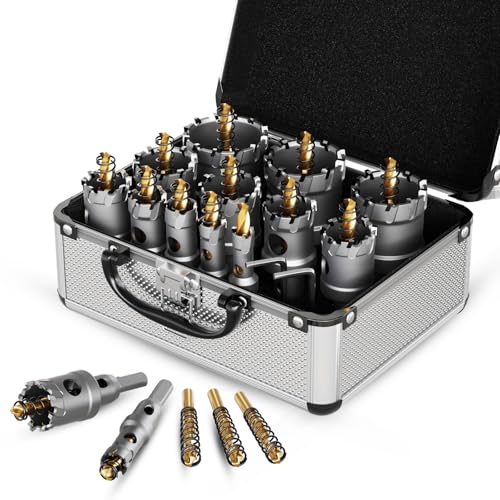
GSTK 14-Piece TCT Carbide Hole Saw Set
GSTK 14-Piece TCT Carbide Hole Saw Set
Best for: Stainless steel, iron plate and other hard metals that dull bi-metal.
Tooth material: TCT tungsten carbide tipped
Saws included: 12 sizes, 14 mm (9/16 in) to 54 mm (2-1/8 in)
Pilot drills: two extra titanium-plated center drills
Stainless changes the rules, and this is the set built for it. Tungsten carbide tips replace the bi-metal edge, giving a harder tooth for stainless steel, iron plate and aluminum, all named in the listing. Twelve sizes run from 9/16 inch to 2-1/8 inch, a metric-leaning spread that suits machine panels and sink work. Two spare titanium-plated pilot drills ride along, which matters because a snapped pilot in stainless can strand the whole job. This is the pick when the material fights back.
Bosch SpinLOCK 9-Piece Bi-Metal Hole Saw Kit
Bosch SpinLOCK 9-Piece Bi-Metal Hole Saw Kit
Best for: Small panel holes and mixed-brand saw collections needing one arbor.
Tooth material: bi-metal with 8% cobalt alloy
Saws included: 6, from 3/4 in to 2 in
Tooth design: Progressor, alternating tooth sizes
Arbors: two SpinLOCK universal arbors (1/4 in and 7/16 in)
Not every shop needs a giant case. This compact kit covers the small end, six saws from 3/4 inch to 2 inches, which is where most steel panel, lockset and junction box holes live. The draw is the SpinLOCK universal arbor: the listing says it fits all brands and sizes, so the orphan saws already in your drawer gain a modern hub with tool-free changes and fast plug removal. The 8 percent cobalt bi-metal teeth use an alternating Progressor pattern for metal, wood and plastic.
Which One Fits Your Situation
Your Week Is Steel Panels and Knockouts
If your days are knockout punches in steel enclosures, junction boxes and conduit runs, take the Milwaukee Hole Dozer kit. Its 3.5 TPI teeth are shaped for metal, the nine sizes cover the standard electrical diameters, and the Plug Jack slots clear the steel disc quickly so the next hole begins sooner.
You Cut Many Diameters in Sheet Steel
When the work jumps from a 7/8 inch cable hole to a 4 inch vent in the same afternoon, the EZARC kit is the one to own. Twenty-four saws give it the widest spread here, and the M42 cobalt edge handles thin steel without the fragility of carbide. The labeled case keeps that many sizes findable.
Your Holes Go Through Thick, Layered Stock
For holes that pass through doubled doors, laminated panels or a steel skin over framing, choose the Diablo set. Its 2-3/8 inch depth finishes in one pass where shallower cups stall, and the single Snap-Lock Plus mandrel keeps all ten cups on one tool-free hub as you move down the row.
Stainless and Iron Plate Are the Job
If stainless sheet, iron plate or machine panels are your normal material, go straight to the GSTK carbide set. Tungsten carbide tips hold an edge where bi-metal dulls, the metric-leaning sizes suit machine work, and the spare titanium-plated pilots keep you cutting after a pilot snaps in hard stock on a long shift.
Common Mistakes
Running a big cup at full drill speed in steel; heat builds fast and dulls bi-metal teeth, so slow down as diameter grows and follow the speed chart packed with the kit.
Cutting steel dry; a little cutting oil keeps the edge cooler, helps the teeth clear chips, and stretches the life of both bi-metal and carbide edges.
Grabbing a carbon steel kit because the box art looks industrial; carbon steel teeth are made for wood and drywall and fold quickly in steel.
Leaning on the drill to force progress; steady, moderate feed lets the teeth bite, while excess pressure chips carbide tips and overheats bi-metal edges.
Leaving a worn pilot bit in the arbor; a dull or bent pilot lets the cup wander and cut an oversized, rough hole in sheet steel.
Frequently Asked Questions
Can a bi-metal hole saw cut stainless steel?
Occasionally, yes, in thin sheet, if you run very slow with cutting oil and steady feed. Stainless hardens as it heats, though, so repeated holes dull a bi-metal edge quickly. If stainless is regular work, a carbide set like the GSTK above is the safer match, used with the same slow, oiled technique.
What speed should I run a hole saw in steel?
Use the speed chart packed with your kit and stay at the low end for steel. Larger cups must turn slower than small ones because the rim travels farther per turn and builds heat faster. If the edge turns blue or the teeth squeal, you are running too fast for that diameter.
Why does the saw wander on sheet steel?
Wobble in the opening seconds is the usual cause: a dull pilot, a loose arbor or unclamped sheet lets the cup skate before the teeth score a full circle. Clamp the sheet flat, fit a sharp pilot, and let the teeth establish their groove before adding feed pressure.
How deep can these kits cut in steel?
Depths here run from about 1-5/8 inches on the Milwaukee kit to 2-3/8 inches on the Diablo set. For plate and sheet, depth is rarely the limit; tooth material and heat control matter more. For thick plate, cut partway, clear the chips, and finish along the marked line.
M
Miller the Driller Editorial Team
We compare specs, warranty terms, long-term owner feedback and street pricing before anything earns a spot. Rankings are never paid.
Affiliate disclosure. As an Amazon Associate we earn from qualifying purchases at no extra cost to you. Prices accurate as of the date shown.
Find the best golf headcovers for woods, driver, fairway wood, and hybrid clubs. Compare knit, nylon, and leather sets that protect clubheads and fit modern woods.
Compare the best Porter-Cable routers for woodworking, from the compact 450 to the 691 D-handle router and the 693LRPK two-base kit, by motor and base.
Compare the best wood spoon sets in teak and sheesham, from 7-piece and 10-piece cooking sets with spatulas and ladles for nonstick pans and daily use.
Compare four tool box sets, from a stackable three-piece tower to steel boxes on wheels, with drawer, latch and capacity checks for home and site work.
Current Windows laptops for photographers chosen by colour-accurate screens, RAM, SSD storage and card readers, with a clear note on Windows 7 support.
Compare four insect repellent sprays for beach days, from picaridin and DEET aerosols to a plant-based pump, with sizes, coverage times and beach-bag fit.


 GSTK 14-Piece TCT Carbide Hole Saw Set
 Bosch SpinLOCK 9-Piece Bi-Metal Hole Saw Kit