We research everything we recommend. When you buy through our links, we may earn a commission. As an Amazon Associate we earn from qualifying purchases.
Best Drill Presses for Metalwork: Benchtop and Floor Models for Metal Shops
Compare the best drill presses for metalwork, from variable-speed benchtop models to floor presses with low RPM ranges built for drilling steel cleanly.
Compare the best drill presses for metalwork, from variable-speed benchtop models to floor presses with low RPM ranges built for drilling steel cleanly.
Best Drill Presses for Metalwork: Benchtop and Floor Models for Metal Shops
Drilling metal is a different job from drilling wood, and a drill press built for metalwork has to reflect that. Steel, cast iron, and aluminum all want slower spindle speeds than timber, especially as bit diameter grows, and they punish any flex in the column, table, or quill with chatter, wandering holes, and snapped bits. A press that feels fine boring pine can struggle badly when a half-inch twist drill bites into mild steel plate. That is why the machines in this guide were chosen on metal-specific criteria: low minimum speeds, rigid cast-iron construction, honest motor power, and chucks and spindle tapers suited to metal cutting tools.
This roundup covers both benchtop and floor-standing formats, because metal shops come in every size. A compact variable-speed bench press can handle brackets, flat bar, and small fabrication work on a crowded bench, while a floor model with a big swing and deep quill travel takes on larger plate, tubing, and repeat production drilling. Every model below is a dedicated drill press, and each one reaches low enough speeds for the larger bits and hole saws that metalwork regularly demands.
Read the picks with your typical work in mind. If most of your drilling is small holes in sheet and angle iron, spindle travel and table size matter less than a low bottom speed and a solid vise setup. If you drill thick plate or run batches of identical parts, quill travel, depth stops, and table rigidity move to the top of the list.
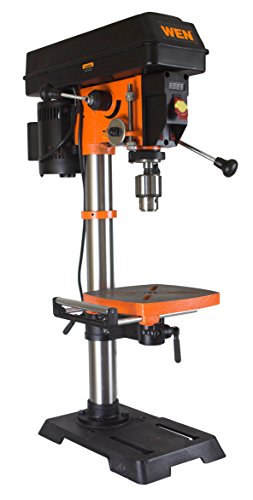
The WEN 4214T is a benchtop press built around a 5-amp induction motor and a mechanical variable-speed drive that adjusts from 580 to 3,200 RPM without moving a belt between pulleys. A digital speed readout on the head shows the current spindle speed, which matters in metalwork because the correct speed changes with every bit size and material. The 12-inch swing puts the spindle six inches from the column, enough to reach the center of a 12-inch plate, and the 5/8-inch keyed chuck accepts the larger twist drills, reduced-shank bits, and small annular-style cutters that metal jobs often call for. Spindle travel is 3-1/8 inches, sufficient for through-holes in plate and bar stock of common thicknesses.
The cast-iron work table measures 9-1/2 by 9-1/2 inches, tilts up to 45 degrees in both directions for angled holes, and includes a roller extension that supports longer stock hanging off the side. A crosshair laser marks the drill point and a built-in work light illuminates the cutting area, both genuinely useful when laying out holes in dark steel. The depth adjustment gauge limits spindle travel for repeatable blind holes, and the cast-iron base can be bolted to a bench to keep the machine planted under feed pressure.
Highlights:
– Variable speed from 580 to 3,200 RPM with a digital readout, changed without opening the belt cover
– 5/8-inch chuck capacity for larger metal-cutting bits
– 3-1/8 inches of spindle travel for through-drilling plate and bar
– Tilting cast-iron table with roller extension for longer stock
– Laser guide, work light, and locking depth stop for repeatable holes
Considerations:
– The 580 RPM minimum is workable for mid-size bits in steel but is not as slow as larger floor presses for very big cutters
– Benchtop format means tall workpieces must be handled with the table swung aside or lowered fully
– The 5-amp motor suits light and medium metalwork rather than continuous heavy production drilling
Shop Fox W1668 13-1/4-Inch Benchtop Oscillating Drill Press (ASIN: B0000DD1BE)
The Shop Fox W1668 pairs a 3/4 HP TEFC capacitor-start induction motor with a 12-speed belt drive running from 250 to 3,050 RPM. That 250 RPM bottom speed is the headline figure for metalwork: it suits larger-diameter bits and hole saws in steel far better than the higher minimums on many benchtop machines. Shop Fox rates the drilling capacity in mild steel at 5/8 inch, and the JT33 keyed chuck matches that capacity. The 13-1/4-inch swing reaches the center of wider plate than most bench models, and spindle travel is 3-1/8 inches.
The round cast-iron table measures 12-3/8 inches in diameter, tilts, and rotates around the column so work can be positioned without unclamping. Unusually, the spindle also oscillates, and the machine converts to an oscillating spindle sander with the included three-piece sanding drum kit, which helps when cleaning up drilled and cut edges on fabricated parts. At 113 pounds the W1668 is heavy for a benchtop unit, and that mass works in its favor in metal, damping vibration during cuts.
Highlights:
– 250 RPM minimum speed for larger bits and hole saws in steel
– 3/4 HP TEFC motor with 12 belt-driven speeds up to 3,050 RPM
– Rated 5/8-inch drilling capacity in mild steel with a matching 5/8-inch chuck
– Oscillating spindle converts to a spindle sander with the included drum kit
– Heavy cast-iron build for a benchtop machine, reducing chatter
Considerations:
– Speed changes require opening the head and moving the belt, which slows down frequent bit changes
– No built-in work light or laser guide for layout work
– The oscillating sander function is a bonus, but the machine’s weight makes it a poor choice if you need to move it often
The JET JDP-17 is a floor-standing press with a 16-7/8-inch swing and a 3/4 HP TEFC motor driving 16 speeds from 210 to 3,500 RPM through a poly-v belt. The 210 RPM low end gives it genuine large-cutter capability in steel, and the one-handed belt tensioning system makes speed changes fast for a belt-drive machine. Spindle travel is a full 5 inches with one revolution of the handle, so thick plate, stacked parts, and deep holes in tubing can be drilled in a single pass without repositioning. The 5/8-inch chuck and 30 inches of spindle-to-table distance handle tall workpieces that no benchtop press can accept.
The precision-ground cast-iron table measures 14 by 19 inches, has twin T-slot grooves and table slots for clamping vises and fixtures, and tilts 90 degrees left and right for drilling into the ends of long stock. An integrated depth stop speeds up repetitive drilling, the Xacta-X laser system marks the drill center, and a built-in LED work light reduces shadows at the cut. The large cast-iron base and 187-pound overall weight keep the machine stable under heavy feed pressure.
Highlights:
– 210 to 3,500 RPM across 16 speeds for everything from large hole saws to small bits
– 5 inches of spindle travel for deep holes in a single pass
– Large 14 by 19-inch ground cast-iron table with T-slots for vise and fixture clamping
– One-handed belt tensioning for quicker speed changes
– Laser guide, LED work light, and integrated depth stop included
Considerations:
– Floor-standing size and 187-pound weight demand dedicated floor space and a two-person assembly
– Belt-drive speed changes, while quick for the type, are still slower than a variable-speed dial
The Powermatic PM2800B is the largest machine in this guide, with an 18-inch swing, a 1 HP motor wired for 115/230V, and a mechanical variable-speed system that adjusts from 250 to 3,000 RPM with a handwheel and no belt changes at all. A digital RPM readout confirms the setting before you start the cut. The spindle carries an MT-2/JT-3 taper, which matters for metalwork because Morse taper tooling such as larger drills and reamers can be mounted directly, and the 5/8-inch keyless chuck speeds up routine bit changes. Spindle travel is 6 inches, the deepest here, with the full stroke delivered in one revolution of the feed handle.
The 20 by 14-inch cast-iron table tilts from 0 to 90 degrees and comes with an adjustable fence system that aligns stock at a true 90 degrees to the spindle, plus an adjustable material stop for accurate repetitive drilling. Twin laser guides mark the tool entry point and two independent LED work lights reduce shadows from both sides. Feed handles can be mounted on either side of the head, and an oversized cast-iron base keeps the 246-pound machine planted. For shops drilling metal all day, this combination of power, travel, and repeatability features is the most complete in the roundup.
Highlights:
– Mechanical variable speed from 250 to 3,000 RPM with no belt changes and a digital readout
– 1 HP motor and MT-2 spindle taper for direct-mount metal tooling
– 6 inches of spindle travel, the deepest in this guide
– Keyless 5/8-inch chuck for fast bit changes
– Fence system, material stop, laser guides, and twin LED work lights for repeat work
Considerations:
– The largest and heaviest machine here at 246 pounds, needing permanent floor space
– Premium feature set is more than a casual home metal shop is likely to use
– Table tilt mechanism requires a wrench rather than a quick-release lever
How to Choose
Start with the speeds your work actually needs. Metal drilling speeds are governed by bit diameter and material hardness: small bits in aluminum can run fast, but a half-inch bit in mild steel belongs in the low hundreds of RPM, and large hole saws need to go slower still. Check the minimum speed first. A press that bottoms out near 600 RPM will force you to run big cutters too fast, which overheats and dulls them. The machines in this guide reach down to 210–250 RPM, covering most steel work done in small shops.
Next, match the format to your workpiece size. Swing determines the widest part you can center under the spindle: it is twice the distance from the column to the spindle centerline. Benchtop models with 12 to 13-1/4-inch swings handle most brackets, plates, and small fabrications. Floor models add swing, room for tall parts, and the mass that keeps heavy cuts smooth. If you regularly drill parts taller than a foot, the floor format is the practical choice.
Then weigh motor power and drive type. A 3/4 HP or larger motor holds speed better when a big bit bites into steel. Belt drives are simple and durable but require a cover-opening belt move to change speeds; mechanical variable-speed drives let you dial the exact RPM while the machine runs, which pays off when a job alternates between small pilot holes and large finish holes. Finally, look at the table and workholding: a ground cast-iron table with slots accepts a drill press vise properly, and clamping the work is non-negotiable in metal, where a grabbing bit can spin a loose part violently.
Key Specifications Explained
Swing is the largest workpiece diameter whose center you can drill, measured as twice the column-to-spindle distance. A 17-inch swing press can center a hole in a 17-inch-wide plate.
Spindle travel (quill travel) is how far the chuck moves down in one stroke. More travel means thicker material drilled in one pass and fewer table-height adjustments between parts.
Spindle speed range matters at both ends for metal. The low end controls large bits and cutters in steel; the high end serves small bits and softer metals like aluminum and brass. The number of speeds, or a variable drive, determines how closely you can hit the recommended RPM for a given bit.
Spindle taper describes how tooling mounts. A Jacobs taper (JT) holds a chuck; a Morse taper (MT) can hold a chuck arbor or taper-shank drills and reamers directly, an advantage for larger metal-cutting tools.
Chuck capacity sets the largest straight-shank bit the chuck can grip. A 5/8-inch chuck covers most metalwork; smaller 1/2-inch chucks limit you on larger drills.
Table size and tilt affect how securely parts can be clamped and whether angled holes are practical. Slots or T-slots in the table let you bolt down a vise, which is essential for safe metal drilling.
Setup and Use Tips
Bolt the machine down or mount it on a heavy, level stand before its first cut. Vibration that is merely annoying in wood becomes hole-ruining chatter in steel. Once mounted, clean the packing grease from the table, column, and chuck, then check for runout by chucking a known-straight bit and watching the tip as you rotate the spindle by hand.
Always clamp metal workpieces in a drill press vise or directly to the table. Never hold steel by hand: when a bit breaks through, it can grab and spin the part instantly. Use a center punch mark or a center drill to start each hole so the bit does not skate across the surface, and back thin sheet with a piece of scrap to reduce burrs and grabbing at breakthrough.
Use cutting fluid on steel and cast iron. A few drops at the cut extend bit life dramatically and improve hole finish; aluminum benefits from a light lubricant as well. Set the speed for the bit and material before starting, use firm but steady feed pressure, and ease off as the bit approaches breakthrough. For deep holes, peck drill: raise the bit periodically to clear chips from the flutes instead of forcing it through a packed hole. Clear chips with a brush, never with your fingers, and keep loose clothing away from the rotating spindle.
Common Mistakes to Avoid
The most common metalwork mistake is running the spindle too fast. Excess speed overheats the cutting edges, work-hardens stainless steel so it becomes nearly undrillable, and blues and dulls bits in plain steel. When in doubt, slow down, especially as bit diameter increases.
A second frequent error is drilling unclamped work. Metal parts grab far more aggressively than wood at breakthrough, and a spinning workpiece can cause serious injury. A vise or clamp takes seconds to set and should be treated as part of the machine.
Skipping cutting fluid is another false economy: dry drilling in steel shortens bit life and leaves rough holes. Finally, avoid forcing a dull bit with heavy feed pressure. A bit that squeals, smokes, or produces powder instead of curled chips is dull, running too fast, or both. Stop, correct the speed, add fluid, or change the bit rather than pushing harder, which risks snapping the bit inside the hole.
FAQ
What spindle speed should I use for drilling steel?
It depends on bit size. As a rough guide, a 1/4-inch bit in mild steel runs well around 1,000 RPM, a 1/2-inch bit around 500 RPM, and large hole saws may need 250 RPM or less. Harder alloys want slower speeds still. This is why a low minimum speed is one of the most important specifications on a metalwork press.
Can a benchtop drill press really handle metalwork?
Yes, within its capacity. The benchtop models in this guide drill mild steel up to their rated capacities and handle the brackets, plate, tubing, and small fabrications typical of home and small-shop metalwork. They give up swing, room for tall parts, and some rigidity under the heaviest cuts compared with floor models.
Do I need a Morse taper spindle for metal drilling?
It is useful but not essential. Most metal holes are drilled with straight-shank bits in a chuck. A Morse taper spindle, like the one on the Powermatic PM2800B, adds the option of mounting taper-shank drills, reamers, and countersinks directly, which helps with larger tooling and concentricity.
Why does my bit keep dulling quickly in metal?
The usual causes are excessive speed, no cutting fluid, or too little feed pressure, which makes the bit rub instead of cut. Lower the RPM, add cutting fluid, and feed firmly enough that the bit produces continuous curled chips.
Is a variable-speed drive worth it for a metal shop?
If your work mixes small and large holes across different metals, yes. Dialing in an exact RPM without stopping to move a belt saves time and encourages using the correct speed for every bit.
Final Verdict
For most metal shops, the choice comes down to format. On the bench, the WEN 4214T suits shops that change speeds constantly and drill small to medium holes, while the Shop Fox W1668 is the pick when low-speed torque for larger bits in steel matters more than convenience features. On the floor, the JET JDP-17 covers the widest range of metal work with its 210 RPM low end, 5 inches of travel, and clamping-friendly table, and the Powermatic PM2800B stands at the top for shops that want belt-free speed changes, Morse taper tooling, and the deepest quill travel in the group. Match the machine to the largest, hardest work you drill regularly, keep the speeds low and the work clamped, and any of these presses will produce clean, accurate holes in metal.
M
Miller the Driller Editorial Team
We compare specs, warranty terms, long-term owner feedback and street pricing before anything earns a spot. Rankings are never paid.
Affiliate disclosure. As an Amazon Associate we earn from qualifying purchases at no extra cost to you. Prices accurate as of the date shown.
Find the best golf headcovers for woods, driver, fairway wood, and hybrid clubs. Compare knit, nylon, and leather sets that protect clubheads and fit modern woods.
Compare the best Porter-Cable routers for woodworking, from the compact 450 to the 691 D-handle router and the 693LRPK two-base kit, by motor and base.
Compare the best wood spoon sets in teak and sheesham, from 7-piece and 10-piece cooking sets with spatulas and ladles for nonstick pans and daily use.
Compare four tool box sets, from a stackable three-piece tower to steel boxes on wheels, with drawer, latch and capacity checks for home and site work.
Current Windows laptops for photographers chosen by colour-accurate screens, RAM, SSD storage and card readers, with a clear note on Windows 7 support.
Compare four insect repellent sprays for beach days, from picaridin and DEET aerosols to a plant-based pump, with sizes, coverage times and beach-bag fit.

 JET JDP-17 17-Inch Floor Drill Press (ASIN: B00NF6P8PI)
 Powermatic PM2800B 18-Inch Floor Drill Press (ASIN: B00EONQF1M)