What's inside
As an Amazon Associate I earn from qualifying purchases. This post may contain affiliate links at no extra cost to you.
What we cover
Why small brass holes need control
Brass is softer than steel, but that does not make tiny holes effortless. A small drill bit can skate across a smooth surface, grab as it breaks through, or snap if the drill tilts. For pilot holes around 1/16 to 1/8 inch, a compact cordless drill with a variable-speed trigger and a good low-speed range is usually more useful than a high-power hammer drill.
The goal is steady rotation, a square approach, and modest pressure. Brass work rarely calls for maximum torque. A heavy drill can do the job, but it is harder to hold accurately on a small mark, especially when drilling one-handed or near an edge.
As an Amazon Associate we earn from qualifying purchases at no extra cost to you.
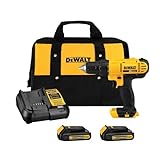

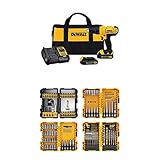

What to look for in a cordless drill
Choose a drill with a two-speed gearbox, a clutch, and a keyless chuck that grips small bits securely. The low gear is helpful for starting a hole and keeping control; the high gear can be used once the bit is cutting cleanly. A 3/8-inch chuck is adequate for common small bits, while a 1/2-inch chuck offers more flexibility but often comes on a larger tool.
Check the drill’s minimum chuck capacity before buying. Some chucks do not clamp very small shanks well, and a bit that spins in the chuck can damage its shank or leave the hole off-center. For frequent work with bits under 1/8 inch, a precision collet or a small pin vise may hold them better than a general-purpose drill chuck.
A compact 12-volt drill is a sensible choice for occasional pilot holes and light assembly. A 18- or 20-volt drill is worthwhile if you also drill larger holes, drive screws, or want one tool for general shop and home work. A compact 12V cordless drill is generally easier to steady than a full-size drill, while still having enough power for brass.
Drill options at a glance
| Tool type | Best fit | Trade-off for brass pilot holes |
|---|---|---|
| Compact 12V drill | Small holes, light assembly, limited workspace | Easy to control; less suited to frequent large-hole drilling |
| Compact 18V/20V drill | Mixed household and workshop jobs | More capable, but bulkier and easier to push too hard |
| Drill/driver with clutch | Drilling plus screw driving | Versatile; clutch setting does not control drilling speed |
| Impact driver | Driving fasteners, not delicate drilling | Impact action can break small bits or enlarge a pilot hole |
How to drill a clean pilot hole
First secure the brass. Clamp a small part in a vise with soft jaws, or use a clamp and a sacrificial wood backing board. Do not hold a small workpiece in your fingers: a bit can catch at breakthrough and spin the part. Mark the location with a center punch. On thin brass, use a light tap; a deep punch mark can distort the material.
Use a sharp, general-purpose high-speed-steel bit for ordinary brass. A bit intended for metal is the right starting point; avoid masonry bits, which have a blunt carbide tip. For a particularly clean entry, make a shallow center mark or begin with a smaller bit, then enlarge to the final diameter. Step drilling adds a setup step, so it is most useful when the larger bit wanders or the part is thin and difficult to support.
Set the drill to low gear and start slowly, holding it as close to perpendicular as you can. Once the bit has established a straight path, increase speed enough to maintain a continuous cut. Brass does not usually need heavy pressure. If the bit squeals, rubs without cutting, or produces powder rather than small chips, stop and check sharpness, alignment, and speed.
For a tiny bit, keep the projection from the chuck short to reduce flex. Back the bit out occasionally to clear chips, particularly in a deeper hole. As the bit approaches the far side, reduce pressure. Breakthrough is a common point for grabbing and broken bits; backing the brass with wood helps support the exit side.
Speed, bit size, and common failures
There is no single ideal speed for every bit and brass alloy. For bits roughly 1/16 to 1/8 inch, a controlled moderate-to-high rotation speed often cuts cleanly, but the drill’s trigger control matters more than chasing a precise RPM. Start slow to prevent skating, then let the bit cut without forcing it. If the workpiece heats quickly, pause and let it cool rather than leaning harder.
A pilot hole should match the fastener or the next drilling step, not simply be as small as possible. For a screw going into a clearance hole, the pilot is sized to the screw’s core diameter and the material being threaded. Check a drill-size chart for the specific screw; “pilot hole” dimensions vary with screw type and whether the brass itself will be tapped.
Common failures are easy to prevent. A bit that wanders usually needs a center mark or better clamping. A snapped bit often indicates too much side pressure, excessive unsupported bit length, or a grab at breakthrough. A hole that is oversized may come from a loose chuck, a dull bit, or letting a small part vibrate. Stop if the bit slips in the chuck; tightening it harder while running is not a safe fix.
What to buy—and what to skip
For occasional holes in brass trim, hinges, or small fittings, buy a compact drill/driver with variable speed and a chuck rated for the bit shanks you use. A basic brushed model is fine if it has a controllable trigger and the battery platform suits your other tools. Brushless motors can improve runtime and size, but they do not automatically make a drill more accurate.
If you already own a full-size cordless drill, use it before buying another. Fit a sharp bit, clamp the brass securely, and use low gear. A smaller drill is only a meaningful upgrade if the current tool is difficult to control or too bulky for the work. For frequent precision work with very small bits, consider a small-bit precision drill or a pin vise rather than paying for a more powerful general-purpose drill.
Skip hammer-drill mode for brass; the impacts are for masonry and can damage a small bit or workpiece. An impact driver is also a poor choice for drilling tiny pilot holes because its striking action is difficult to control at this scale. If your work includes larger holes and routine screw driving, a two-speed cordless drill/driver is a more versatile purchase. For a handful of small brass holes, however, a modest drill, sharp bits, and solid workholding matter more than extra voltage or torque.