What's inside
As an Amazon Associate I earn from qualifying purchases. This post may contain affiliate links at no extra cost to you.
What we cover
What the job requires
Concrete pavers are hard, but drilling a few holes in them is usually a smaller job than drilling into a poured-concrete wall. A compact cordless hammer drill can handle holes for many masonry screws and small wall anchors, provided you use a sharp carbide-tipped masonry bit and keep the paver from moving. The challenge is avoiding a chipped face, a wandering bit, or a cracked paver—not buying the biggest drill available.
For occasional holes around 1/4 to 3/8 inch in diameter, look for a 18V or 20V-class drill with a hammer mode, two mechanical speeds, and a clutch. A side handle is useful but not essential for small bits. If you’re regularly drilling larger holes, working in dense pavers, or making many holes in a row, a rotary hammer is often a better tool. Its dedicated hammer mechanism typically makes faster progress with less pressure.
As an Amazon Associate we earn from qualifying purchases at no extra cost to you.

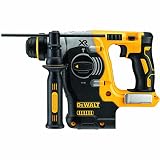


Cordless hammer drills by use
Rather than choosing by maximum torque claims, match the drill to the size and number of holes. The figures below are practical guidelines, not hard limits: paver composition, bit condition, and how well the work is supported all matter.
| Tool type | Good fit for pavers | Trade-off |
|---|---|---|
| Compact 18V/20V hammer drill | A few holes up to about 3/8 inch | Convenient and light; slower in dense material |
| Full-size 18V/20V hammer drill | Repeated holes, larger bits, or tougher pavers | More control and capacity, but heavier |
| Cordless rotary hammer | Frequent holes or roughly 1/2-inch and larger work | Fast in masonry, but bulkier and often unnecessary for a small repair |
For a basic home kit, compare cordless 18V hammer drill kits. A kit is sensible if you also need batteries and a charger. If you already own batteries in a compatible tool system, a bare tool can cost less. Check that the listing includes hammer mode; a standard drill-driver may look similar but won’t provide the same impact action.
For frequent masonry work, consider a cordless SDS-plus rotary hammer. It accepts SDS-plus bits, which fit differently from the round-shank bits used in a standard drill chuck. Don’t buy one solely for a couple of small holes unless speed, reduced effort, or future masonry work justifies the extra cost.
Features worth paying for
Two speeds make the drill easier to control. Start slowly to keep the bit from skating, then use the manufacturer’s recommended hammer-drilling speed; on many drills that means the higher gear once the hole is established. A variable-speed trigger matters more than an impressive advertised top speed. A belt hook, work light, and brushless motor are conveniences, not requirements for drilling a few pavers.
Battery capacity affects working time and weight. A 2.0Ah battery is usually enough for a small batch of holes and keeps a compact drill manageable. A 4.0Ah or larger pack is useful for repeated drilling, but makes the tool heavier. If you have to lean hard on the drill to make progress, stop and inspect the bit. More battery capacity won’t fix a dull bit or a drill that’s poorly suited to the job.
Choose the right bit and hole size
Use a carbide-tipped masonry bit sized for the anchor or screw you plan to install. Follow the fastener maker’s instructions for bit diameter and embedment depth; a hole that is too wide may not hold, while drilling too deep can leave the anchor loose or damage material beneath the paver. For a small selection, compare carbide-tipped masonry bit sets, but check that the shank matches your drill. SDS-plus bits are for SDS-plus chucks, not ordinary three-jaw chucks.
Do not use a wood or metal bit and expect hammer mode to make it suitable for concrete. A worn carbide tip can polish the hole instead of cutting it, leaving you with slow progress and excess heat. If the bit stops advancing, withdraw it while it is still turning gently to clear dust, then check the tip and the hole. Don’t force it until the bit overheats.
Drill without cracking the paver
First check what is below the paver. If it is a loose patio stone, support it flat on a stable surface such as compacted sand or a firm sacrificial board, and clamp it without crushing an edge. A paver that rocks or hangs over a gap can crack under hammering. Wear eye protection; masonry dust and small chips can fly even at low speed.
Mark the hole and start at low speed with the drill square to the surface. Once the bit has formed a shallow starting point, engage hammer mode if the material calls for it and drill with steady pressure. Let the bit do the cutting. Pause if the bit gets hot, clear dust from a deep hole, and avoid drilling close to an edge: a hole near a corner or thin edge is more likely to cause a breakout. The safe edge distance depends on paver thickness and the fastener, so follow the anchor instructions rather than relying on one universal number.
For a single small hole in a soft paver, a non-hammer drill with a sharp masonry bit may work, though it can be slower. For dense concrete, repeated holes, or a bit around 1/2 inch or larger, that bargain approach can turn into a long, hot job. If the paver begins to chip, the bit wanders, or the drill stalls repeatedly, stop and reassess the support, bit, and tool before making the damage worse.