What's inside
As an Amazon Associate I earn from qualifying purchases. This post may contain affiliate links at no extra cost to you.
What we cover
What a cordless hammer drill can—and can’t—do
A cordless hammer drill can make holes for concrete screws and small wall anchors in poured concrete, especially when the job is occasional. It combines rotation with a rapid hammering action. That action helps a carbide masonry bit cut into concrete, but it is not the same as the heavier impact mechanism in a rotary hammer.
For a handful of holes around 1/4 inch in diameter, a good 18V or 20V hammer drill is a practical choice. For frequent holes, large diameters, or deep drilling in hard concrete, a rotary hammer with an SDS-Plus bit usually works faster and puts less strain on your hands. Don’t buy a hammer drill expecting it to behave like a rotary hammer.
As an Amazon Associate we earn from qualifying purchases at no extra cost to you.


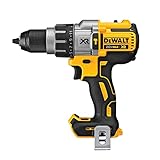

How to choose the drill
Look for a cordless drill with a dedicated hammer mode, a two-speed gearbox, and a clutch for ordinary screwdriving. Hammer mode is for masonry; use rotation-only mode for wood, metal, and fasteners. A side handle is useful when drilling concrete because the bit can bind suddenly. Check that the handle is included or available for the drill you’re considering.
For concrete work, an 18V or 20V brushless drill is a sensible target, though a brushed model can be adequate for occasional small holes. Brushless motors generally use battery energy more efficiently and tend to handle sustained work better; they are not a substitute for enough power or the right bit. If you already own batteries in a tool platform, a compatible bare tool can save money. Compare bare-tool and kit prices, including the battery and charger you actually need.
Battery capacity matters more as the number and size of holes go up. A 2.0Ah pack is lighter and fine for a few small holes, while a 4.0Ah or larger pack offers more working time at the cost of weight. A second battery prevents a job from stopping mid-way. If buying a drill and battery together, compare 18V cordless hammer drill kits by included battery capacity, side handle, and warranty—not just advertised maximum torque.
Which tool fits the job?
| Tool | Good fit | Main trade-off |
|---|---|---|
| Compact cordless hammer drill | A few small anchor holes, roughly 1/4 inch or less | Slower and more tiring in hard concrete |
| Full-size cordless hammer drill | Occasional holes around 3/8 inch, with adequate battery capacity | Heavier; still limited compared with a rotary hammer |
| SDS-Plus rotary hammer | Repeated holes, larger anchors, or stubborn concrete | More tool than needed for a few small holes; usually drills only, not a general-purpose screwdriving tool |
These are practical categories, not guarantees: concrete hardness, aggregate, bit condition, and hole depth all affect drilling time. A cheap hammer drill may be fine for mounting a light bracket with a few shallow holes. If you have a long run of anchors or need holes around 1/2 inch or larger, compare cordless SDS-Plus rotary hammers instead. Renting one for a single bigger job can make more sense than buying a more powerful drill you rarely use.
Use the right bit and drilling technique
Use a carbide-tipped masonry bit rated for rotary hammer drills only if your tool and bit are compatible; for a standard hammer drill, use a bit intended for hammer-drill use with a straight or hex shank that fits the chuck. Follow the anchor maker’s specified hole diameter and depth. A hole that’s too large can leave a concrete screw or expansion anchor loose; too shallow a hole may keep the fastener from seating. For a typical small concrete screw, the manufacturer’s instructions—not a guess based on screw size—set the pilot-hole requirement.
Mark the hole, wear safety glasses and hearing protection, and check for pipes or wiring before drilling. Start the hole at low speed with firm, steady pressure. Once the bit is established, increase speed without forcing it. Too much pressure can overheat the bit, slow the hammering action, or stall the drill. Withdraw the bit periodically to clear dust, especially in deeper holes. Concrete dust left in a hole can prevent an anchor from seating properly; clear it as directed by the fastener maker.
If progress becomes very slow, stop and check the bit. A worn or overheated bit is a common cause. You may also have hit a hard stone aggregate or reinforcing steel. Don’t push harder into suspected rebar: it can damage the bit and leave an anchor hole unusable. Move the hole if the installation allows, or use a method appropriate to the obstruction.
Common mistakes and when to upgrade
Hammer-drill mode is rough on ordinary drill bits and should not be used to drive screws. Likewise, a regular drill in rotation-only mode may polish the concrete surface without making reliable progress. Confirm the hammer symbol is selected and that the chuck holds the bit securely.
Consider an SDS-Plus tool if a sharp masonry bit and fully charged battery still leave you making little progress on repeated holes. If all you need is two or three small holes, upgrading is unlikely to pay off; borrow or rent a rotary hammer for a one-off demanding job. For routine home repairs, a full-size cordless hammer drill with a side handle, one 4.0Ah battery, and a quality carbide masonry bit is a balanced setup. For occasional light anchors, a less expensive drill you already own—and a suitable hammer-drill bit—may be enough.