What's inside
As an Amazon Associate I earn from qualifying purchases. This post may contain affiliate links at no extra cost to you.
What we cover
What structural screws do
Structural screws are designed to carry loads in wood connections, such as joining studs, fastening ledger boards, or assembling timber frames. They are not simply longer versions of drywall or general-purpose screws. Their steel, head, thread and installation instructions are intended for structural use when the screw is installed in the specified materials and configuration.
For a timber frame, choose screws listed for the connection you are making—not just a diameter that looks substantial. Check the manufacturer’s load tables for wood species, member thickness, edge and end distances, screw spacing, and whether the load is in withdrawal or lateral shear. If the connection is part of a permitted building project, follow the plans and local code; a screw substitution can change the capacity.
As an Amazon Associate we earn from qualifying purchases at no extra cost to you.
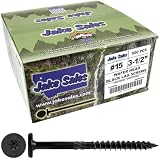


Choosing the right screw
Start with the connection and its required load. A screw resisting pullout needs adequate thread engagement in the receiving member. A screw carrying shear must also be positioned and spaced as specified. Length alone does not establish capacity: a 6-inch screw driven through a thick member may have too little thread in the second piece, or violate required edge distance.
For ordinary framing connections, a broad range of structural screws is available in diameters around 1/4 to 3/8 inch and lengths from a few inches to well over 6 inches. Those are common product ranges, not a design recommendation. Select the exact size from the connection details or the screw maker’s published tables. A selection of structural wood screws for timber framing is a useful starting point, but confirm the listing matches your intended use and has clear installation data.
Structural screw types compared
| Type | Good fit | Trade-off |
|---|---|---|
| Hex-head structural screw | High clamping force and connections where a washer-style head is useful | Needs room for a socket or compatible driver; exposed heads can be prominent |
| Washer-head structural screw | Pulling members together and broad bearing against the wood surface | Head can interfere with trim or tight clearances |
| Flat-head structural screw | Connections where a flush or countersunk head is needed | Countersinking can split wood or weaken the surface if overdone |
| General-purpose construction screw | Light, nonstructural assembly where the screw is not carrying a rated load | Do not assume it can replace a listed structural fastener |
Coating matters too. For dry, interior framing, a coated carbon-steel screw may be adequate if its documentation permits that use. For damp locations or treated lumber, use a fastener with a coating or material approved for the exposure and wood-treatment chemicals. Stainless steel offers corrosion resistance but costs more and may have different strength properties; check the manufacturer’s guidance rather than treating it as an automatic upgrade.
Driver, bit and installation
Most structural screws are driven with an impact driver or a drill fitted with the specified bit. Impact drivers are convenient for repeated long screws, but high torque can snap a screw, strip the drive recess, or bury the head too far. Use the supplied or specified bit, keep it fully seated, and hold the tool square. A set of impact-rated bits for structural screws can reduce cam-out, but the correct drive shape matters more than buying the biggest set.
Follow the screw maker’s instructions on pilot holes. Many self-drilling structural screws need no pilot hole in typical framing lumber, but predrilling may be required near an end, in dense hardwood, or for a particular connection. A pilot hole that is too small can increase splitting risk; one that is too large can reduce thread grip. If the plan calls for a pilot, use the specified diameter and depth.
Do not rely on an impact driver to pull badly misaligned members together. Clamp or brace the pieces, then drive the screw. Stop when the head is seated as instructed. Overdriving can crush fibers under the head and reduce bearing; underdriving leaves a gap and can prevent the connection from behaving as designed. Replace screws with damaged heads or visibly bent shafts rather than trying to force them home.
Common failure modes to avoid
Wood splitting is a frequent problem near ends and edges. Keep the distances and spacing shown in the connection instructions, and do not crowd extra screws into a joint to “make it stronger.” Too many fasteners can split the member, while an incorrect pattern can leave the connection weaker than its rated configuration.
Other failures include using a drywall screw in a load-bearing joint, using a fastener not approved for treated lumber, and confusing a structural screw with a deck screw. Deck screws are meant primarily for decking and may not have the tested capacities required for framing connections. Also watch for obstructions: a screw can miss the intended member or emerge through the far face. Verify the layout before driving long fasteners.
A practical buying checklist
Buy by the documented connection, not by a bargain box with vague claims. The packaging or technical sheet should identify the screw as structural, state permitted applications, provide dimensions and drive type, and link to load or installation data. For a small repair or nonstructural shop jig, ordinary construction screws may be the cheaper, sensible choice. For a timber-frame joint carrying building loads, use the specified fastener or an approved equivalent.
Before starting, confirm screw diameter and length, material and coating, required count and layout, edge distances, pilot-hole instructions, and driver bit. If those details are missing—or the joint’s load is uncertain—pause and get the connection specified by a qualified designer or follow an engineered plan. A washer-head timber structural screw option may suit some framing connections, but its published rating and installation pattern must match yours.