What's inside
- Quick Picks by Storage Situation
- Best Indoor Covers for Classic and Vintage Vehicles
- Best Outdoor Covers for Classic and Vintage Vehicles
- Head-to-Head: Indoor Versus Outdoor Covers
- Fit Matters More on a Classic Car
- A Simple Cost-per-Use Calculation
- Ownership Problems That Wear Covers Out
- How to Choose the Right Cover
- Final Buying Advice
- Quick Picks by Storage Situation
- Best Indoor Covers for Classic and Vintage Vehicles
- Best Outdoor Covers for Classic and Vintage Vehicles
- Head-to-Head: Indoor Versus Outdoor Covers
- Fit Matters More on a Classic Car
- A Simple Cost-per-Use Calculation
- Ownership Problems That Wear Covers Out
- How to Choose the Right Cover
- Final Buying Advice
As an Amazon Associate I earn from qualifying purchases. This post may contain affiliate links at no extra cost to you.
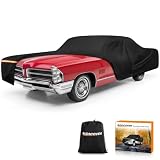
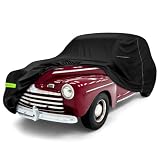
The best car covers for classic and vintage vehicles are breathable, paint-safe indoor covers for garage storage, while outdoor-stored classics need a multilayer cover with a soft lining, waterproof outer fabric, secure tie-downs, and a genuinely accurate fit.
As an Amazon Associate we earn from qualifying purchases at no extra cost to you.


What we cover
- Quick Picks by Storage Situation
- Best Indoor Covers for Classic and Vintage Vehicles
- Best Outdoor Covers for Classic and Vintage Vehicles
- Head-to-Head: Indoor Versus Outdoor Covers
- Fit Matters More on a Classic Car
- A Simple Cost-per-Use Calculation
- Ownership Problems That Wear Covers Out
- How to Choose the Right Cover
- Final Buying Advice
Quick Picks by Storage Situation
| Situation | Best cover type | What to prioritize | Typical market range |
|---|---|---|---|
| Clean, dry garage | Stretch-knit indoor cover | Breathability, soft inner surface, dust retention | $60–$180 |
| Garage with occasional dampness | Breathable multilayer cover | Moisture vapor release, fleece lining, snug fit | $100–$250 |
| Driveway or carport | Water-resistant outdoor cover | UV protection, taped seams, wind straps, soft lining | $80–$220 |
| Full outdoor exposure | Heavy-duty waterproof cover | UV-resistant fabric, ventilation, reinforced tie-down points | $130–$350 |
| Frequent driving | Lightweight, quick-folding cover | Low storage volume, easy fitting, washable fabric | $50–$170 |
These ranges are broad because custom-fit covers for unusual classics cost more than universal covers, and specialized fabrics can differ substantially in weight and construction. A cover that fits a 1965 Ford Mustang, for example, may not fit a 1950s Chevrolet or a lowered Jaguar properly even when the overall length appears similar.
Best Indoor Covers for Classic and Vintage Vehicles
Best for a dry garage: stretch-knit indoor covers
A four-way stretch polyester or cotton-blend cover is usually the safest choice when the car is stored indoors. These covers conform closely to mirrors, spoilers, hood ornaments, and curved fenders, reducing loose fabric that can collect dust or flap against the paint.
Brands such as Covercraft and WeatherTech offer vehicle-specific indoor-cover ranges, while companies including Budge and Classic Accessories sell more economical options. Look for a soft, nonabrasive inner face and a fabric weight substantial enough to stay in place without becoming difficult to handle. A typical indoor cover weighs about 4–10 pounds and folds into a storage bag roughly 12–18 inches long.
The key limitation is weather resistance. Indoor stretch covers are not substitutes for outdoor protection. Many are designed to block dust, not rain, snow, tree sap, or prolonged ultraviolet exposure. Using one outside can trap moisture or allow water through while creating a false sense of security.
Best for a dusty or partly damp garage: multilayer indoor covers
Multilayer covers generally combine a breathable outer fabric, a padded middle layer, and a fleece or similar paint-safe lining. They provide more cushioning against accidental contact and more resistance to dust than a thin stretch cover, but they are bulkier.
Choose this type if the garage has an unsealed floor, nearby woodworking or sanding activity, or regular temperature swings. Do not interpret “water-resistant” as “safe over a wet car.” The vehicle should be dry before covering, and the cover should be removed periodically so you can check for condensation, insects, and leaks.
Best Outdoor Covers for Classic and Vintage Vehicles
Best for a carport: breathable water-resistant covers
A carport blocks direct rain and much of the sun, so a breathable, water-resistant cover is often a better compromise than a fully waterproof shell. Polyester or polypropylene outer fabrics can repel light rain while allowing some moisture vapor to escape. Ventilation panels near the mirrors or lower sides help reduce condensation.
Covercraft’s outdoor lines, WeatherTech’s fitted covers, and several Classic Accessories models are examples of the type to compare. Check the exact fabric and fit for your vehicle rather than choosing by brand alone. The useful features are a soft lining, reinforced grommets, elasticized hems, and at least one strap that passes under the car.
Best for full exposure: heavy-duty multilayer covers
Cars parked outside year-round need protection from ultraviolet light as well as rain. A suitable cover normally has a UV-resistant outer layer, waterproof or water-resistant seams, a soft lining, and vents to prevent ballooning. A center strap with a buckle is more dependable than relying only on an elastic hem.
Waterproofing has a tradeoff: a tightly sealed cover can retain condensation if ventilation is poor. For a valuable classic, the most important question is not whether the fabric is advertised as waterproof, but whether the complete design manages moisture. Avoid covering a car immediately after rain, washing, or driving through wet conditions.
Head-to-Head: Indoor Versus Outdoor Covers
| Criterion | Indoor cover | Outdoor cover | Practical consequence |
|---|---|---|---|
| Breathability | Usually high | Moderate to high when ventilated | Indoor fabric is less likely to trap garage humidity |
| Paint-safe lining | Often cotton, fleece, or soft knit | Usually fleece or nonwoven lining | Both require a clean car and clean cover |
| Weather protection | Low to moderate | Moderate to high | Outdoor covers need UV and seam protection |
| Typical weight | 4–10 lb | 7–18 lb | Heavy covers are harder to fit and store |
| Folded storage volume | 1.5–3 cubic feet | 2–5 cubic feet | Allow shelf or cabinet space before buying |
| Wind security | Elastic hem may be enough | Straps, buckles, and reinforced points are important | Loose fabric can scuff paint and stress seams |
| Maintenance | Usually easier to wash and dry | Needs more frequent inspection for grit and mildew | Outdoor use increases ownership effort |
Fit Matters More on a Classic Car
Measure the vehicle from the furthest point at the front to the furthest point at the rear, including bumpers, then measure its maximum width including mirrors if the cover is designed to accommodate them. Measure height from the ground to the highest fixed point. Compare these measurements with the manufacturer’s size chart rather than choosing solely by model name.
Leave a small amount of working room, but avoid excessive looseness. A cover that is 6 inches longer than necessary may bunch at the bumpers; one that is too short can expose paint and put tension on the seams. Oversized fabric is particularly troublesome outdoors because wind can turn the cover into a moving abrasive layer.
Special features may require a custom pattern: side mirrors in unusual positions, exposed spare tires, wide fenders, running boards, hood ornaments, roll bars, or aftermarket antennas. A custom-fit cover costs more, but it can reduce the rubbing and adjustment associated with a universal cover.
A Simple Cost-per-Use Calculation
Suppose an indoor cover costs $140 and is used five days each week for four years. That is approximately 1,040 uses, or about $0.13 per use before maintenance. A $250 outdoor cover used three days each week for three years provides about 468 uses, or roughly $0.53 per use.
This does not prove that the cheaper cover is the better purchase. Outdoor covers experience more ultraviolet exposure, dirt, wind, and washing, so they may wear sooner. The calculation is useful because it shifts attention from the purchase price to how often the cover will actually be fitted and removed.
Ownership Problems That Wear Covers Out
- Grit under the cover: Even a soft lining can mark paint when dust or sand is dragged across the surface by wind. Wash or dust the vehicle before covering it.
- Covering a wet car: This can create a humid pocket that encourages mildew and corrosion, especially around trim, seams, and poorly ventilated compartments.
- Dirty storage bags: Folding a cover on a dusty garage floor transfers abrasive particles to the lining. Fold it lining-in and store it off the floor.
- Neglected straps: Buckles and elastic lose effectiveness before the main fabric does. Replace damaged straps rather than tying improvised cords against painted surfaces.
- Washing with harsh detergent: Strong chemicals or high heat can reduce water repellency and damage elastic. Follow the care label, use a mild detergent when permitted, and dry completely.
- Leaving it on during severe wind: No consumer cover is a guarantee against wind damage. If the cover is ballooning, remove it or move the vehicle to sheltered storage.
How to Choose the Right Cover
- Identify the environment: Decide whether the car is indoors, under a carport, or fully exposed. This determines whether breathability or weather resistance is the primary requirement.
- Measure the car: Record length, width, and height, including unusual bodywork and mirrors.
- Choose the lining: Select fleece, cotton, or soft knit for clean paint. A cover does not compensate for a dirty vehicle.
- Check the restraint system: Outdoor vehicles should have a center strap, reinforced attachment points, and an elasticized hem.
- Plan storage: Confirm that the folded cover and its bag will fit on a dry shelf or cabinet. A cover that is difficult to store is more likely to be left on the floor.
- Inspect regularly: Remove the cover at least monthly in normal storage, and more often in damp or windy conditions. Check for condensation, mildew, paint rubbing, and seam damage.
Final Buying Advice
For a valuable classic kept in a dry garage, choose the best-fitting breathable indoor cover with a soft lining rather than paying for unnecessary waterproofing. For a carport, choose a ventilated water-resistant cover with secure straps. For full outdoor exposure, spend more on UV-resistant multilayer construction, reinforced seams, and a precise fit.
The best car covers for classic and vintage vehicles are not simply the thickest or most waterproof. They are the covers that match the storage environment, stay clean inside, fit without flapping, release moisture, and are convenient enough to use consistently.