We research everything we recommend. When you buy through our links, we may earn a commission. As an Amazon Associate we earn from qualifying purchases.
Best Circular Saws for Framing, DIY and Clean Cuts
Compare the best circular saws for framing, sheet goods and clean DIY cuts, from corded sidewinders and a worm drive to a cordless 20V MAX pick.
A circular saw is usually the first serious power tool in a garage, and for good reason. It breaks down sheet goods, crosscuts framing lumber, rips boards to width and handles deck, fence and shed work that would take all day with a hand saw. The catch is that saws that look nearly identical on a shelf can feel very different once the blade is spinning, because motor layout, shoe material, weight and bevel range all change how a cut tracks.
The five saws below cover the main ways people actually work. There are corded sidewinders for all-day power, a worm drive for heavy framing torque, and a cordless model for anyone who would rather leave the extension cord in the truck. Every pick uses the standard 7-1/4 inch blade size, so blades stay cheap and easy to find anywhere.
As an Amazon Associate, we earn from qualifying purchases.
For most garages, the DEWALT DWE575SB is the circular saw to buy first: light, strong and fitted with an electric brake. Framers who want torque should look at the SKILSAW SPT77WML-01 worm drive, while anyone already on DEWALT 20V MAX batteries should pick the DCS570B and skip the cord entirely on site.
The picks in detail
DEWALT DWE575SB 7-1/4-Inch Circular Saw
Top Pick
DEWALT DWE575SB 7-1/4-Inch Circular Saw
Best for: Homeowners and DIYers who want one light, capable corded saw for framing, sheet goods and general building work.
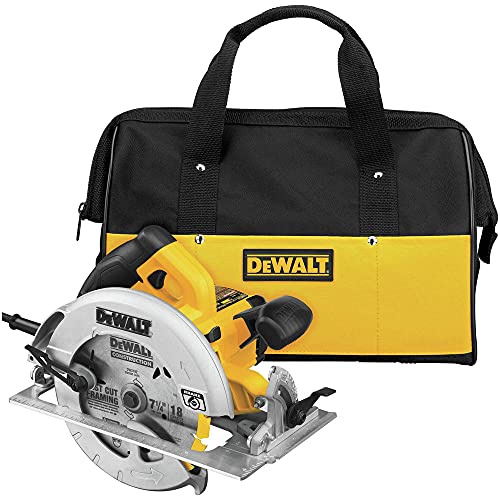
The DWE575SB is the sidewinder most buyers should start with. Its 15-amp motor spins the blade at 5,200 RPM, which is enough pace to push through doubled-up framing lumber and sheet goods without the saw feeling strained. At 8.8 pounds it is one of the lightest full-size corded saws in its class, and that low weight shows up at the end of a long cutting session when arms start to tire.
Two details make it easier to live with than basic sidewinders. The electric brake stops the blade quickly when the trigger is released, which shortens the pause between cuts and makes the saw feel calmer in use. The bevel capacity reaches 57 degrees with positive stops at 22.5 and 45 degrees, and the magnesium shoe keeps the base flat and light. An integrated dust blower clears the cut line so the mark stays visible.
Makita built the 5007Mg around magnesium components — the shoe, blade case and motor housing — to keep a pro-duty saw easy to handle all day. The 15-amp motor runs at 5,800 RPM, the fastest blade speed in this group, and that speed helps the blade clear chips quickly in thick stock. Large, easy-to-read depth and bevel scales make setup changes quick, and the bevel range runs to 56 degrees.
Visibility is a strong point here. Twin LED lights illuminate the cut line, and a built-in dust blower works alongside them, which helps in dim garages and early-morning work. The saw does skip an electric brake, so the blade coasts down after the trigger is released, and at 10.6 pounds it carries more weight than the DEWALT above. Buyers who cut overhead or on ladders often accept that trade for the build quality and balance.
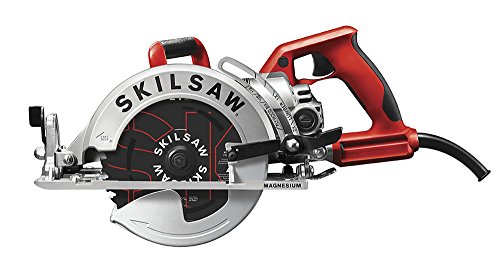
The SPT77WML-01 is the worm drive pick, built for framers who cut stacked lumber, engineered beams and wet pressure-treated stock. In a worm drive, the motor sits behind the blade and drives it through a gear set, which delivers more torque and puts the handle behind the cut for a natural push. The blade sits on the left side of the saw, so right-handed users can see the cut line without leaning over the tool.
SKILSAW trimmed the traditional worm drive weight down with a magnesium housing, bringing this model to 11.5 pounds — still the heaviest saw here, but light for its class. The 15-amp Dual-Field motor is designed to stay cooler under long ripping loads, and the 51-degree bevel capacity includes a positive stop at 45 degrees. Worm drives do ask for a little more upkeep, since the gear oil should be checked and changed as the manual directs.
The DCS570B takes the sidewinder formula cordless. Its brushless motor delivers 5,200 RPM and enough power to rip sheet goods and crosscut framing lumber without a cord trailing across the work. Because it runs on the DEWALT 20V MAX platform, anyone who already owns those batteries and a charger can add this saw as a bare tool and be cutting within minutes.
Depth capacity matches the corded DWE575SB at 2-9/16 inches, the bevel reaches 57 degrees, and an electric brake stops the blade fast between cuts. At 7.5 pounds bare, it is the lightest saw in this roundup, though a battery adds weight once clipped on. Runtime depends heavily on battery size, so framing crews usually rotate larger packs. For punch-list work, remodels and sites without convenient power, the freedom from the cord is the whole point.
Specs:
– Motor: 20V MAX brushless, 5,200 RPM
– Blade: 7-1/4 inch, sidewinder layout
– Cutting depth: 2-9/16 inches at 90 degrees
– Bevel capacity: 57 degrees
– Weight: 7.5 pounds, tool only
– Extras: electric brake, battery and charger sold separately
Bosch CS10 7-1/4-Inch Circular Saw
Bosch CS10 7-1/4-Inch Circular Saw
Best for: Buyers who want a dependable corded sidewinder with clear scales and strong cut-line visibility.
The CS10 is Bosch’s straightforward corded sidewinder, and its appeal is control. The 15-amp motor turns at 5,600 RPM, the bevel capacity reaches 56 degrees, and the magnesium footplate keeps the base rigid without much weight. High-contrast depth and bevel scales are easy to read at a glance, which matters when a cut has to be set up quickly and checked once.
Bosch paid attention to the cut line as well. The bevel mechanism directs airflow across the line of cut to keep it clear of dust, a small detail that helps accuracy on long rips. At 10.2 pounds the CS10 sits in the middle of this group for weight, and it lacks an electric brake, so plan for the blade to spin down on its own. For buyers who want a durable, no-drama corded saw from a long-running platform, it remains a sensible pick.
Start with the motor layout. A sidewinder places the motor beside the blade, which keeps the saw compact and light; it is the right default for general work. A worm drive moves the motor behind the blade and trades extra weight for torque and a blade-left view of the cut, which framers cutting heavy lumber tend to prefer.
Next, decide on power. Corded 15-amp saws deliver the same power at the end of the day as at the start and never wait on a charger, which suits long ripping sessions. Cordless saws make sense when the work moves around a site or the user already owns batteries in that platform; a bare tool only saves money if compatible packs are already on the shelf.
Blade size is the easiest call. The 7-1/4 inch standard cuts through two-by lumber in one pass at 90 degrees and still handles it at a 45-degree bevel, and blades in this size are sold everywhere. Smaller saws cut shallower and limit material choices later.
Then check the details that affect daily use. An electric brake shortens the wait between cuts and adds a measure of control. Bevel capacity beyond 45 degrees helps with roof and trim work, and positive stops speed up common angles. Finally, weigh the shoe: magnesium bases cut weight and resist bending, which matters if the saw rides in a truck box. A lighter saw is simply easier to guide accurately when fatigue sets in.
Who should skip
Anyone whose cutting is mostly fine furniture work should skip a general-purpose circular saw and look at a track saw instead, since guided rails deliver the splinter-free edges cabinets and tabletops demand. Occasional users who only break down a few boards a year may also find a compact 6-1/2 inch saw easier to store and handle.
A worm drive is the wrong pick for casual users who cut a few times a season; its weight and oil maintenance buy torque they will never use. Likewise, a cordless saw makes little sense as a bare tool for someone with no batteries in that platform, because adding packs and a charger changes the real cost of getting started.
FAQ
Is a worm drive circular saw better than a sidewinder?
Neither layout is better in general. Worm drives deliver more torque and a blade-left view of the cut, suiting heavy framing. Sidewinders are lighter and simpler to maintain, suiting most homeowners. The right choice depends on the lumber and how long the saw runs each day.
Can a 7-1/4 inch circular saw cut a 2×4 at a 45-degree angle?
Yes. A 2×4 is 1.5 inches thick, and a 45-degree cut lengthens the path through the wood to about 2.1 inches. Every saw here has bevel capacity above that, so one pass handles the cut.
How long does a cordless circular saw battery last?
Runtime varies with battery capacity, blade sharpness and material thickness. A mid-size 20V MAX pack typically handles a stack of sheet goods or a modest run of framing cuts per charge. Production crews keep a second pack on the charger and rotate.
What blade should be used for clean cuts in plywood?
Swap the stock framing blade for a fine-tooth blade with 40 to 60 teeth. More teeth leave a smoother edge with less tear-out on veneered plywood. Keep the coarse 24-tooth blade for framing lumber, where speed beats edge quality.
Final verdict
For a single saw that covers nearly everything a homeowner or DIY builder cuts, the DEWALT DWE575SB is the safest buy: light, powerful and equipped with a brake. The Makita 5007Mg suits buyers who cut often and want magnesium construction and better lighting, while the SKILSAW SPT77WML-01 remains the torque pick for framing. Choose the DCS570B if DEWALT batteries already live on your charger, and the Bosch CS10 if a clear cut line and simple, durable design matter most.
M
Miller the Driller Editorial Team
We compare specs, warranty terms, long-term owner feedback and street pricing before anything earns a spot. Rankings are never paid.
Affiliate disclosure. As an Amazon Associate we earn from qualifying purchases at no extra cost to you. Prices accurate as of the date shown.
Three wireless routers for small offices compared on device capacity, network separation, wired speed, and coverage, with specs taken from their Amazon listings.
Compare 5 mechanic tool sets for car repairs: a 247-piece DEWALT kit, a 450-piece CRAFTSMAN set, a drawer-box GEARWRENCH set, a 170-piece Crescent set and a 450-piece WORKPRO set.
Four splitting axes and mauls that actually split firewood: a long 36-inch axe for tall users, a shorter 28-inch option, and two 8 lb mauls for knotty rounds.
Learn whether a 20V rechargeable drill battery can be repaired, which faults you can check safely at home, and when replacing the pack is the safer choice.
A specs-based review of the officially licensed Retro-Bit Sega Saturn 2.4 GHz wireless controller: dual receivers, Genesis Mini and Switch support, battery, layout, limits, and FAQs.
Find the best drill battery for Power Wheels ride-on toys for families, with DeWalt, Milwaukee and Ryobi adapters, voltage and safety guidance in this guide.
Find the best hole saw for noching dom pipe: bi-metal saws, deep cups, and the right sizes for clean, tight notches in DOM tube for fabrication shops today.
Find the best diy tile saws for home tiling projects. Compare wet tile saws by blade size, cutting capacity, and features for ceramic and porcelain tile.


 DEWALT DCS570B 20V MAX 7-1/4-Inch Circular Saw
 Bosch CS10 7-1/4-Inch Circular Saw









