What's inside
As an Amazon Associate I earn from qualifying purchases. This post may contain affiliate links at no extra cost to you.
What we cover
What matters for flat-pack assembly
For assembling a bookcase, bed frame or desk, a cordless drill’s main job is driving screws without stripping their heads or crushing particleboard. High torque and a hammer function are rarely useful here. Control, a light body and a clutch with several settings matter more.
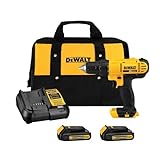
A compact 12-volt drill is usually enough. Look for a variable-speed trigger, a clutch, a keyless chuck that accepts 1/4-inch hex bits, and a low-speed setting. A battery around 1.5 to 2.0 amp-hours keeps the tool light and will typically handle a furniture project on one charge. A 3/8-inch chuck is ample for common drill bits and screwdriver bits.
As an Amazon Associate we earn from qualifying purchases at no extra cost to you.


Clutch numbers are not standardized across brands, so “setting 5” on one drill may not match “setting 5” on another. Start low and test on a spare piece of the same material, or on an inconspicuous spot. If the screw stops before it is flush, increase the setting one step. If the head sinks, the board dents or the screw keeps turning, reduce it.
Which drill type fits the job?
| Tool | Best for | Trade-off |
|---|---|---|
| 12V drill/driver | Most flat-pack assembly and occasional household drilling | Less power than an 18V model, but lighter and easier to control |
| 18V drill/driver | Frequent DIY use, larger holes and heavier fastening jobs | More weight and power than furniture assembly usually needs |
| Impact driver | Driving many long screws into timber | Harder to control on small furniture screws; usually lacks a clutch |
| Manual screwdriver | A few screws, final snugging and delicate fittings | Slower and tiring for a large assembly |
For most buyers, a 12V cordless drill-driver kit is the sensible starting point. Choose an 18V drill if you already own batteries in that system or expect to drill into studs, bore larger holes or tackle regular renovation work. The larger tool is not automatically better for assembling a flat-pack wardrobe in a tight corner.
Drill-driver or impact driver?
A drill-driver spins continuously and lets you set a clutch to limit torque. That makes it easier to stop when a furniture screw is seated. An impact driver delivers rotational blows as resistance rises. It is excellent for driving longer screws, but can twist small screws, strip a Phillips head or damage a cam fitting before you react.
If you already own an impact driver, it can do the work with a light trigger touch and the correct bit, but it is not the first tool I would buy for flat-pack assembly. A drill-driver with an adjustable clutch gives more forgiving control. A basic manual screwdriver is still useful for the last quarter-turn on a cam lock or for snugging a screw after power driving.
Bits, speed and settings
Use the exact bit type and size that fits the screw head. Many flat-pack kits use Phillips, Pozidriv, hex or Torx screws; a Phillips bit can appear to fit a Pozidriv head but may cam out under load. If the bit slips, stop rather than pushing harder. A damaged head is difficult to remove and can leave the furniture unfinished.
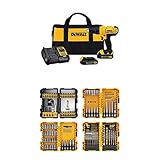
A small driver-bit set with Phillips, Pozidriv, Torx and hex bits covers common furniture hardware. Short bits are easier to control in cramped spaces; a magnetic bit holder helps keep screws in place. Keep the manufacturer’s supplied hex key nearby for fittings that need a specific shape or reach.
Set the drill to low gear for driving screws, and squeeze the trigger slowly. High speed makes it easier to overshoot and strip the board. Keep the bit straight and press firmly enough to prevent it slipping, but do not lean your full weight on the tool. For holes the instructions require, switch to drill mode, which bypasses the clutch, and use a bit matching the specified diameter.
Avoid the common damage
Particleboard and MDF have limited holding strength. A screw driven too far can tear out the material or pull a fitting loose; a screw driven at an angle can split an edge or leave panels misaligned. If resistance suddenly increases, stop and check that the screw is entering the intended hole and that the panels are aligned. Do not use the drill to force a misaligned joint together.
Assemble the unit on a flat surface and leave joints slightly loose until the frame is square, unless the instructions specify another order. Then tighten evenly. Do not treat the clutch as a substitute for care: it can still drive a screw too far, especially in soft board. Finish sensitive screws by hand if you are unsure.
Most furniture assembly does not call for wall anchors. For a tall bookcase or dresser, follow the manufacturer’s tip-over-restraint instructions and attach the restraint to a suitable wall structure. Drywall alone may not hold a loaded unit securely. Use an appropriate stud fixing where possible; when a stud is unavailable, choose an anchor rated for the wall type and intended load, and install it as directed. A cordless drill can make the pilot hole, but the correct anchor and fixing matter more than drill power.
When a cheaper drill is enough
If you assemble furniture once or twice a year, a budget 12V drill with a clutch and one battery is generally adequate. Spend extra for a second battery, better balance or a longer warranty only if you will use the tool often. A two-battery kit is convenient for long jobs, but it adds cost and may be unnecessary for a single wardrobe or desk.
If you already have a compatible drill, buy the right bits before buying another tool. For a handful of screws, use the supplied hex key or a manual screwdriver; it is slower, but gives excellent feedback and avoids accidental over-tightening. The best setup is the one that lets you stop as soon as the fitting is secure.