What's inside
As an Amazon Associate I earn from qualifying purchases. This post may contain affiliate links at no extra cost to you.
What we cover
What matters when drilling composite lumber
Composite decking and trim are usually made from wood fibers and plastic. They’re denser and more abrasive than ordinary softwood, and the material can soften or deform if it gets hot. For typical pilot holes and fastener holes, a cordless drill is the right tool; a hammer drill’s impact action is unnecessary and can damage the hole.
For most homeowners, a good 18V or 20V drill with a variable-speed trigger and a clutch is plenty. A compact 12V drill can handle small holes and occasional repairs, but it may bog down with larger bits or repeated drilling. Look for a low-speed setting around 0–500 rpm for larger holes, and a higher range for small pilot holes. Battery capacity matters less than having a fresh battery: a 2.0Ah pack is adequate for occasional work, while a 4.0Ah pack is more comfortable for a long deck project.
As an Amazon Associate we earn from qualifying purchases at no extra cost to you.
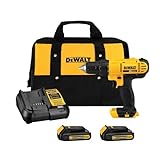


Choose a drill with a side handle if you expect to use hole saws or bits larger than about 1/2 inch. Those can bind suddenly, twisting the drill in your hand. A side handle gives you better control, but adds bulk for routine screw-pilot work.
Which drill type fits the job?
| Drill type | Best use | Trade-off |
|---|---|---|
| Compact 12V drill | Small pilot holes, occasional repairs, tight spaces | Less reserve for large bits or continuous work |
| 18V/20V standard drill | Deck boards, trim, general-purpose holes | Heavier than a compact drill |
| 18V/20V hammer drill | Composite work plus occasional masonry drilling | Extra weight and cost; keep hammer mode off for composite |
| Impact driver | Driving compatible screws | Not a substitute for a drill when making clean holes |
If you already own batteries from a tool platform, buying a bare drill in that system is often the sensible choice. Otherwise, compare the kit price with the cost of a battery and charger separately. A basic 18V cordless drill kit is a practical starting point for deck and repair work. Pay for a hammer function only if you also need to drill masonry; it does not improve composite drilling.
Use the right bit and hole size
For a small pilot hole, use a sharp brad-point or twist bit sized to the fastener and the composite manufacturer’s instructions. A twist bit is easy to find and works for most jobs; a brad-point bit starts more accurately, especially near a board edge. For larger, clean openings, use a sharp hole saw or Forstner bit and work slowly. A cheap, dull bit can rub instead of cutting, creating heat and a ragged hole.
There isn’t one pilot-hole size that suits every composite board or screw. Check the decking or trim maker’s installation guidance, and test on an offcut if available. As a general approach, the pilot hole should clear the screw’s solid shank while leaving enough material for its threads to grip. Too small a hole can split or bulge the board; too large a hole can leave the screw loose.
For through-holes, support the back of the board when possible to reduce breakout. If the hole must be clean on both faces, drill partway from one side, then finish from the other using the first hole as a guide. Clear chips regularly; packed debris adds friction and can overheat the bit.
A controlled way to drill
Mark the hole carefully and clamp the work if it can move. Set the drill to low speed for larger bits and start with light pressure. Let the cutting edges do the work rather than forcing the tool. If the bit squeals, smokes, or leaves a melted-looking rim, stop. Let it cool, clear the chips, and resume at lower speed with less pressure. Heat can soften the plastic in the composite and make the hole rough or oversized.
Keep the drill straight and avoid leaning hard on it, particularly near board edges. For a screw pilot, use a depth stop or a piece of tape on the bit so you don’t drill deeper than needed. When fastening, follow the product instructions for board spacing, edge distances, and screw type. Some composite systems need specific screws or hidden fasteners; an ordinary wood screw may not hold or finish correctly.
Wear eye protection. Composite chips are sharp, and a long bit can catch or bind. If a large hole saw is required, use the drill’s low gear and a side handle, and keep both hands on the tool. Do not use the drill’s hammer setting on composite lumber.
Spend where it helps
For a few pilot holes and small repairs, a serviceable compact drill is enough. There’s little benefit in buying a high-torque premium model solely for composite boards. Step up to an 18V/20V drill if you’ll drill repeatedly, use larger bits, or want one tool for household projects. A compact 12V drill kit keeps cost and weight down; an 18V/20V drill with a side handle is a better fit for frequent large-hole work.
Before buying, check that the kit includes a battery and charger, confirm the chuck accepts the bit sizes you need, and compare the tool’s weight with the battery installed. For routine composite drilling, sharp bits, controlled speed, and correct hole sizing matter more than the highest advertised torque.