What's inside
As an Amazon Associate I earn from qualifying purchases. This post may contain affiliate links at no extra cost to you.
A cordless drill is a sensible tool for making holes in PVC pipe, but a high-powered model is rarely necessary. PVC cuts easily; the challenge is keeping the bit from grabbing, melting the plastic, or wandering across a curved surface. For most home plumbing and shop projects, a basic variable-speed drill with a clutch and a sharp bit will do the job.
As an Amazon Associate we earn from qualifying purchases at no extra cost to you.


What we cover
What to look for in a cordless drill
Prioritize a controllable trigger, a low-speed setting, and a chuck that accepts the bits you plan to use. Two-speed drills are useful: start in the low range, then increase speed only if the bit cuts cleanly without chatter. A clutch helps with fasteners, but it does not control drilling speed.
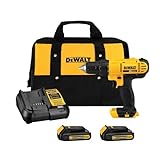
A compact 12V drill is usually enough for holes up to about 1 inch in thin-wall PVC. For frequent work with larger hole saws, thick-wall pipe, or other materials, an 18V or 20V-class drill gives more reserve. That extra power is a convenience, not a requirement for ordinary small holes. If you own compatible batteries, staying within that platform often makes better sense than buying a new system for this task.
For occasional repairs, a basic 12V cordless drill is a reasonable low-cost choice. If you regularly drill larger holes or work across several materials, compare 18V cordless drill-drivers for better endurance and capacity. Skip hammer mode: its impact action is for masonry and can crack or damage plastic pipe.
Which drill setup fits the job?
| Setup | Best for | Trade-off |
|---|---|---|
| 12V drill-driver | Small holes, occasional repairs, thin-wall PVC | Less comfortable with large hole saws |
| 18V/20V-class drill-driver | Frequent use, larger cutters, mixed-material projects | Heavier and often more expensive than needed |
| Drill with sharp twist bit | Small holes around 1/4 inch or less | Can wander on round pipe; deburring may be needed |
| Drill with step bit or hole saw | Larger, clean openings when the cutter suits the pipe | Needs careful speed and support to prevent grabbing |
Choose a bit for the hole
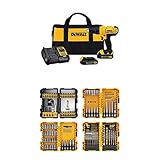
For small holes, a sharp standard twist bit is usually the simplest option. On a curved pipe, the tip may skate before it bites. Make a shallow dimple with an awl or center punch used gently, or place masking tape over the spot to help the bit start. Do not strike PVC hard; a sharp blow can start a crack.
For a larger hole, use a step bit within its stated capacity or a hole saw sized for the opening. A step bit can make a tidy round hole in thin pipe, but it is not a substitute for a cutter designed for thick material. A hole saw can chatter or catch as its teeth enter the curved surface, so support the work securely and keep both hands on the drill. Check the cutter’s instructions and confirm its diameter before drilling.
Do not use an oversized bit just because it is available. An opening that is too large can leave a fitting, grommet, or fastener poorly supported. Measure the part that must pass through the hole, then allow only the clearance it needs.
Drill without melting or cracking the pipe
Secure loose pipe in a padded vise or support it on a bench so it cannot roll. Do not crush it in the jaws. Mark the location, hold the drill square to the pipe, and start slowly. Apply steady, light pressure rather than forcing the bit. If the plastic starts to soften, smear, or smell hot, stop and let it cool; a dull cutter, excessive speed, or too much pressure may be the cause.
For small bits, start around 300–600 rpm if your drill has a speed setting or you can control the trigger gently. A large hole saw should also be run slowly, following its manufacturer’s guidance. There is no need to chase a precise speed if your drill lacks a readout: use a restrained trigger and watch the cut. Pull the bit out periodically to clear chips, especially in deeper holes.
Keep the hole away from pipe ends, joints, and fittings unless the design specifically calls for drilling there. A hole close to an edge leaves less material to resist splitting. After drilling, remove burrs with a deburring tool, a sharp utility knife used carefully, or fine sandpaper. Clean out the chips before putting the pipe into service. If the pipe will carry pressurized water, gas, or chemicals, do not drill it unless the application and fitting are approved for that use.
Common mistakes and when to spend more
The most common failures are a bit that walks off the mark, a hole saw that grabs and twists the pipe, and heat that leaves a rough melted edge. Better clamping and a sharp, correctly sized cutter usually fix these problems; buying a stronger drill does not. A large cutter can also stall a small drill if pushed too hard, so back off rather than leaning into it.
Pay more for a drill if you will use it often, need long runtime, or already own batteries from a compatible tool system. For a few small holes in household PVC, a budget drill is fine. Spend the extra money on a sharp bit suited to the hole size and a secure way to hold the pipe before upgrading to a heavier drill.