What's inside
As an Amazon Associate I earn from qualifying purchases. This post may contain affiliate links at no extra cost to you.
A cordless hammer drill is a sensible choice for putting a few holes in brick without dragging out a corded tool. The important catch: hammer mode helps the bit chip masonry, but it does not turn a general-purpose drill into a rotary hammer. For a handful of holes for light fixtures or wall anchors, a good 18V-class drill is usually enough. For repeated holes, large diameters, or hard concrete, a rotary hammer is faster and less tiring.
As an Amazon Associate we earn from qualifying purchases at no extra cost to you.

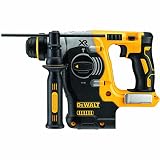


What we cover
Choose the right tool for the wall
Brick, mortar, and concrete are not interchangeable. Brick can be relatively soft or very hard; mortar joints are often easier to drill but may crumble. Concrete is generally tougher and may contain aggregate or reinforcing steel. If you can choose where a fixture goes, drilling into the brick is often more reliable than putting a load-bearing anchor in weak mortar. Follow the anchor maker’s instructions, which may specify a particular location.
For occasional holes roughly 1/4 to 3/8 inch across, look for a cordless hammer drill with a variable-speed trigger, a clutch, and a side handle. A brushless motor can improve runtime and reduce wear, but it is not essential for light household jobs. Battery voltage alone does not tell you how well a drill will bore masonry; design, battery capacity, bit condition, and wall material all matter.
Compare the 18V cordless hammer drills you are considering by checking whether the kit includes a battery, charger, and side handle. A bare tool may look inexpensive but cost more once you add batteries from a new platform.
Which drill makes sense?
| Tool | Best for | Main trade-off |
|---|---|---|
| 12V hammer drill | Small, occasional holes in softer brick | Compact, but slower and less comfortable for sustained masonry drilling |
| 18V-class hammer drill | Typical home projects and several small anchor holes | Versatile, but still slower than an SDS rotary hammer in hard masonry |
| Corded or cordless SDS rotary hammer | Repeated holes, larger bits, hard brick, or concrete | More capable but heavier, louder, and often unnecessary for a few small holes |
A lower-cost 18V hammer drill is fine if you already own its batteries and only need to hang a few shelves or brackets. Paying extra for a premium drill makes more sense when it will also handle frequent drilling and fastening, or when its battery platform is already part of your kit. If the job is dozens of holes or anything around 1/2 inch and larger, consider a cordless SDS rotary hammer instead. Check the tool’s stated drilling capacity and use the bit system it accepts; SDS bits do not fit ordinary three-jaw chucks.
Match the bit and anchor
Use a carbide-tipped masonry bit, not a standard twist bit intended for wood or metal. The bit diameter must match the anchor’s specified hole size. A hole that is too large may leave the anchor loose; one that is too small can prevent it from seating or make installation damagingly difficult. Buy a sound set of carbide-tipped masonry bits in the sizes your anchors require rather than forcing one bit to do every job.
For a light picture or small fitting, a plastic masonry plug may be adequate when used with the correct screw and hole. For cabinets, rails, or other substantial loads, choose an anchor rated for the actual base material and load; installation conditions matter, and a generic plug is not a substitute for a specified anchor. Check the required embedment and hole depth on the packaging. Drilling deeper than necessary can weaken the fixing or risk striking wiring and pipes behind the wall.
Drill without burning the bit
Before drilling, check for concealed wires and pipes, choose a safe location, and mark the hole. Wear safety glasses and a suitable dust mask; masonry dust is harmful to breathe. Keep other people clear of the work area. If you are unsure what is behind the wall, stop and investigate rather than relying on guesswork.
Fit the side handle and hold the drill with both hands. Start slowly to establish the hole, then use steady pressure and hammer mode. Let the carbide tip do the cutting; leaning hard on the drill can overheat the bit, stall the motor, or make the hole wander. Ease off if the bit becomes very hot, and clear dust from a deep hole by withdrawing the bit periodically. Follow the tool and bit makers’ instructions, especially if the drill has a hammer setting that should not be used with certain accessories.
If the drill spins without making progress, first check that hammer mode is on and the bit is designed for masonry. A blunt bit, unusually hard brick, or a bit slipping in the chuck can all look like a weak drill. Let the motor stop before changing speed or direction, and do not keep forcing a stalled bit. If a small drill still cannot advance after checking those basics, an SDS rotary hammer is the practical upgrade—not more pressure.
What to check before buying
Check the maximum masonry bit size in the manufacturer’s specifications, whether a side handle is included, and whether the quoted kit includes a battery and charger. A larger battery can reduce interruptions, but it also adds weight, which matters when drilling overhead. For a few holes, a compact drill and a fresh, correctly sized bit may be more useful than a heavier high-capacity setup.
Pick the tool for the wall and the number of holes, not the biggest headline torque figure. A basic cordless hammer drill is a reasonable, lower-cost buy for occasional small holes in brick. Hard masonry, larger anchors, and repeat work are where an SDS rotary hammer earns its extra cost and bulk.