What's inside
- The best DeWalt hammer drill depends on the work: choose the DCD999 for demanding concrete and heavy drilling, the DCD996 for a capable full-size all-rounder, or the compact 20V Atomic hammer drill for lighter anchors and long wood-drilling sessions.
- DeWalt hammer drill comparison: the useful numbers
- Which one should you choose?
- Match the drill to the job, not just the BPM
- Using one drill for Tapcons and wood
- Ownership details that affect the choice
- Related Guides
- The best DeWalt hammer drill depends on the work: choose the DCD999 for demanding concrete and heavy drilling, the DCD996 for a capable full-size all-rounder, or the compact 20V Atomic hammer drill for lighter anchors and long wood-drilling sessions.
- DeWalt hammer drill comparison: the useful numbers
- Which one should you choose?
- Match the drill to the job, not just the BPM
- Using one drill for Tapcons and wood
- Ownership details that affect the choice
- Related Guides
As an Amazon Associate I earn from qualifying purchases. This post may contain affiliate links at no extra cost to you.
What we cover
- The best DeWalt hammer drill depends on the work: choose the DCD999 for demanding concrete and heavy drilling, the DCD996 for a capable full-size all-rounder, or the compact 20V Atomic hammer drill for lighter anchors and long wood-drilling sessions.
- DeWalt hammer drill comparison: the useful numbers
- Which one should you choose?
- Match the drill to the job, not just the BPM
- Using one drill for Tapcons and wood
- Ownership details that affect the choice
- Related Guides
The best DeWalt hammer drill depends on the work: choose the DCD999 for demanding concrete and heavy drilling, the DCD996 for a capable full-size all-rounder, or the compact 20V Atomic hammer drill for lighter anchors and long wood-drilling sessions.
For Tapcon anchors in concrete, prioritize hammering speed and a correctly sized masonry bit; for repeated large holes in wood, lower weight and a sharp wood bit matter more. These are cordless combination drills, not rotary hammers: they suit occasional small anchor holes, but a rotary hammer is a better choice for frequent or large concrete drilling.
DeWalt hammer drill comparison: the useful numbers
The table compares published tool specifications. Weights are tool-only unless a configuration is stated; a battery adds weight, and exact totals vary with battery size. “Atomic” refers to DeWalt’s compact 20V MAX hammer-drill/driver, model DCD799, rather than the impact driver in the Atomic lineup.
As an Amazon Associate we earn from qualifying purchases at no extra cost to you.

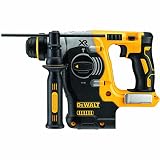


| Model | Maximum blows per minute | Chuck | Tool-only weight | Best fit |
|---|---|---|---|---|
| DeWalt DCD999 | Up to 38,250 BPM | 1/2-inch, 3-jaw | About 4.2 lb | Heavy-duty drilling and demanding applications |
| DeWalt DCD996 | Up to 38,250 BPM | 1/2-inch, 3-jaw | About 4.7 lb | Full-size concrete and wood versatility |
| DeWalt DCD799 Atomic | Up to 28,050 BPM | 1/2-inch, 3-jaw | About 2.5 lb | Compact work, light anchors, and overhead drilling |
Specifications can vary slightly by market and kit. The DCD999 is designed to work with DeWalt’s 20V MAX and FLEXVOLT battery platforms; it does not turn into a rotary hammer with a larger battery. The DCD996 and DCD799 use 20V MAX batteries. None of these models has an SDS-plus chuck, so use a standard round- or hex-shank masonry bit that fits a three-jaw chuck.
Which one should you choose?
Choose the DCD999 for tougher, repeated drilling
The DCD999 is the pick when you want DeWalt’s higher-end hammer drill for a mix of demanding wood, metal, and occasional concrete work. Its listed maximum BPM is the same as the DCD996, so the advantage is not a higher hammering-speed figure. Its appeal is the heavy-duty platform and compatibility with FLEXVOLT batteries, which can make sense if you already own them or need a robust drill for varied jobsite tasks.
For Tapcon anchors, it can drill suitable small holes in concrete or masonry with a sharp masonry bit and a steady grip. Avoid forcing the bit: hammer drills rely on rapid, relatively shallow impacts, and pushing hard can slow the bit, overheat it, and wear the chuck. If you are installing many anchors or drilling into hard concrete, an SDS-plus rotary hammer will generally make the job faster and less tiring.
Choose the DCD996 for a full-size all-rounder
The DCD996 offers the same stated maximum 38,250 BPM as the DCD999 and a 1/2-inch chuck for common drilling and driving accessories. It is a sensible choice if you want a full-size DeWalt hammer drill for occasional masonry and regular construction or woodworking, without needing the DCD999’s FLEXVOLT compatibility.
Its weight is a trade-off during all-day wood drilling. A battery makes the working setup heavier still, and repeated overhead or ladder work makes that difference more noticeable. If the holes are mostly in timber rather than masonry, the compact Atomic is likely more comfortable; if you need to bore large holes repeatedly, compare the drill’s capacity and your bit choice rather than treating BPM as a measure of wood-drilling speed.
Choose the Atomic DCD799 for lighter drilling and tighter spaces
The DCD799 is the lightest option here by a wide margin. Its lower maximum BPM does not make it unsuitable for every concrete anchor: for occasional small Tapcon holes in ordinary concrete, it can be a practical, more maneuverable choice when paired with the correct bit. It is less suited to sustained masonry drilling or stubborn, large-diameter holes.
For all-day wood drilling, the lighter body can reduce arm fatigue, especially when working overhead, inside cabinets, or between framing members. The compact size is also useful in a van or home workshop where storage space matters. Choose it for convenience, not as a substitute for a rotary hammer on substantial concrete work.
Match the drill to the job, not just the BPM
| Your situation | Best fit | Why |
|---|---|---|
| A few small Tapcon anchors, occasional DIY use | DCD799 Atomic | Light and compact; adequate for intermittent, appropriately sized holes. |
| Mixed framing, woodworking, and occasional masonry | DCD996 | Full-size versatility and high listed BPM without requiring FLEXVOLT compatibility. |
| Demanding mixed work or existing FLEXVOLT batteries | DCD999 | Heavy-duty option with a compatible battery platform. |
| Frequent anchors, larger holes, or hard concrete | SDS-plus rotary hammer | Purpose-built impact mechanism and bit system are better suited to sustained masonry drilling. |
| Mostly small holes in wood, including overhead | DCD799 Atomic | Lower tool weight is more useful than maximum hammering speed when hammer mode stays off. |
A 1/2-inch chuck describes the shank size it can accept, not the maximum hole size the drill can efficiently make. Check each model’s published drilling capacity for the material and bit type you plan to use. Large auger, spade, or hole-saw bits place much greater demands on torque and control than a small twist bit.
Using one drill for Tapcons and wood
- For concrete anchors: Confirm the anchor maker’s required hole diameter and depth, then fit a masonry bit of that size. Select hammer mode, keep the drill square, and clear dust from the hole as the anchor instructions require.
- For wood: Turn hammer mode off. Use a sharp bit suited to the hole—such as a brad-point bit for clean, accurate holes or an auger for deeper, larger ones—and start in low gear when the bit is large.
- For overhead or repetitive work: Consider the complete tool-and-battery weight, not just the bare-tool figure. A smaller battery can reduce weight but may mean more frequent swaps under heavy use.
- For accuracy and safety: Use the side handle when appropriate, keep both hands clear of rotating accessories, and reduce speed before a large bit breaks through material.
Ownership details that affect the choice
Concrete dust is abrasive. Brush dust from the tool’s exterior and chuck after masonry work, and keep it out of the motor vents and battery contacts. A masonry bit that becomes blunt or overheated will make any cordless hammer drill feel weak; replace worn bits rather than compensating with extra pressure. For wood, dull cutters can burn the workpiece and place unnecessary strain on the drill.
Chuck jaws can also wear or hold a bit poorly after repeated heavy use. Keep bit shanks clean, tighten the chuck securely, and stop if a bit starts slipping. Do not use a hammer drill as a driver with hammer mode engaged, and do not assume a more powerful battery will make every bit or drilling task appropriate for the tool.
Bottom line: The DCD999 is the heavy-duty pick, the DCD996 is the balanced full-size choice, and the DCD799 Atomic is the comfort-first option for lighter work. For a dewalt hammer drill machine aimed at frequent concrete drilling, compare these combination drills with an SDS-plus rotary hammer before buying. The best DeWalt hammer drill is the one that fits your actual hole sizes, work frequency, battery platform, and tolerance for tool weight.