What's inside
- Quick picks: the 7 best cement drill bits for 2026
- Carbide-tipped masonry bits versus SDS-plus bits
- 1. Bosch carbide-tipped masonry bits: best all-around cement drill bit
- 2. DEWALT percussion masonry bits: best budget choice
- 3. Milwaukee masonry bits: best for repeated small anchors
- 4. Bosch Bulldog Xtreme SDS-plus: best general SDS-plus option
- 5. Milwaukee MX4 SDS-plus bits: best for durability and rebar encounters
- 6. DEWALT SDS-plus four-cutter bits: best for clean anchor holes
- 7. Carbide-tipped masonry hole saws: best for large penetrations
- Match the bit to the anchor and drill
- How to drill concrete without ruining the bit
- Ownership costs and common mistakes
- FAQ
- Quick picks: the 7 best cement drill bits for 2026
- Carbide-tipped masonry bits versus SDS-plus bits
- 1. Bosch carbide-tipped masonry bits: best all-around cement drill bit
- 2. DEWALT percussion masonry bits: best budget choice
- 3. Milwaukee masonry bits: best for repeated small anchors
- 4. Bosch Bulldog Xtreme SDS-plus: best general SDS-plus option
- 5. Milwaukee MX4 SDS-plus bits: best for durability and rebar encounters
- 6. DEWALT SDS-plus four-cutter bits: best for clean anchor holes
- 7. Carbide-tipped masonry hole saws: best for large penetrations
- Match the bit to the anchor and drill
- How to drill concrete without ruining the bit
- Ownership costs and common mistakes
- FAQ
As an Amazon Associate I earn from qualifying purchases. This post may contain affiliate links at no extra cost to you.
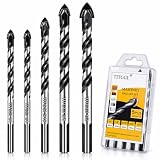
The best cement drill bit for most homeowners is a carbide-tipped masonry bit for occasional anchor holes, while an SDS-plus bit is the better choice for repeated drilling, larger diameters, or hard concrete with a rotary hammer.
As an Amazon Associate we earn from qualifying purchases at no extra cost to you.



What we cover
- Quick picks: the 7 best cement drill bits for 2026
- Carbide-tipped masonry bits versus SDS-plus bits
- 1. Bosch carbide-tipped masonry bits: best all-around cement drill bit
- 2. DEWALT percussion masonry bits: best budget choice
- 3. Milwaukee masonry bits: best for repeated small anchors
- 4. Bosch Bulldog Xtreme SDS-plus: best general SDS-plus option
- 5. Milwaukee MX4 SDS-plus bits: best for durability and rebar encounters
- 6. DEWALT SDS-plus four-cutter bits: best for clean anchor holes
- 7. Carbide-tipped masonry hole saws: best for large penetrations
- Match the bit to the anchor and drill
- How to drill concrete without ruining the bit
- Ownership costs and common mistakes
- FAQ
Quick picks: the 7 best cement drill bits for 2026
| Pick | Best for | Typical sizes | Usable drilling depth | Required drill |
|---|---|---|---|---|
| Bosch carbide-tipped masonry bits | General-purpose anchors and small holes | 3/16–1/2 in | About 2–4 in | Standard corded or cordless drill; hammer mode preferred |
| DEWALT percussion masonry bits | Budget-friendly concrete and block work | 3/16–1/2 in | About 2–4 in | Standard drill with hammer mode |
| Milwaukee masonry bits | Frequent anchor installation | 3/16–1/2 in | About 2–4 in | Standard drill with hammer mode |
| Bosch Bulldog Xtreme SDS-plus bits | Fast drilling in hard concrete | 5/32–1-1/4 in | About 4–12 in | SDS-plus rotary hammer |
| Milwaukee MX4 SDS-plus bits | Long life and reinforced concrete | 5/32–1-1/4 in | About 4–12 in | SDS-plus rotary hammer |
| DEWALT SDS-plus 4-cutter bits | Clean holes near rebar | 5/32–1-1/4 in | About 4–12 in | SDS-plus rotary hammer |
| Carbide-tipped hole saws for masonry | Large passages for pipe or cable | 1–6 in | About 1–3 in per pass | Heavy-duty drill or rotary hammer, depending on arbor |
Depth figures are practical working ranges rather than limits. The bit’s flute length, anchor instructions, concrete hardness, and the amount of dust that can be cleared from the hole all affect the result.
Carbide-tipped masonry bits versus SDS-plus bits
A conventional carbide-tipped cement drill bit has a round or hex shank and fits an ordinary drill chuck. Its brazed carbide tip chips through brick, block, mortar, and lighter concrete. Use one when you need a few holes for plastic anchors, picture hardware, conduit clips, or small screws.
SDS-plus bits have longitudinal drive slots that lock into an SDS-plus chuck. They are designed for rotary hammers, whose hammering mechanism delivers substantially more impact energy than a drill’s electronic hammer mode. The result is faster drilling, better dust removal, and less strain on the tool for holes deeper than roughly 3 inches or wider than 1/2 inch.
The key limitation is compatibility: an SDS-plus bit cannot be clamped safely in a normal three-jaw chuck, and a conventional round-shank bit does not belong in an SDS-plus holder unless a manufacturer-approved adapter is used. Adapters reduce impact performance and are a poor substitute for the correct tool.
1. Bosch carbide-tipped masonry bits: best all-around cement drill bit
Bosch’s standard carbide-tipped masonry range is a sensible first choice for occasional concrete and masonry work. Common diameters from 3/16 to 1/2 inch cover many sleeve anchors, plastic wall plugs, and Tapcon-style screw installations. The carbide cutting tip tolerates hammer drilling, while the fluted steel body clears moderate amounts of dust.
Choose this type for a standard drill that has a hammer setting. On very hard poured concrete, expect slower progress and more frequent pauses than with an SDS-plus rotary hammer. It is a practical, relatively inexpensive option when you will drill fewer than a dozen small holes per project.
2. DEWALT percussion masonry bits: best budget choice
DEWALT percussion masonry bits are suitable for homeowners who need a few small holes without buying an SDS system. The carbide tip is intended for concrete, brick, block, and mortar, with common sizes covering typical light-duty anchors. Their round shanks fit ordinary keyed or keyless chucks.
They make the most sense when price and availability matter more than maximum speed. Use moderate pressure, keep the drill aligned, and withdraw the bit periodically to clear dust. Continuous force can overheat the tip without making the hole appreciably faster.
3. Milwaukee masonry bits: best for repeated small anchors
Milwaukee’s carbide masonry bits are a good upgrade for users who install anchors regularly but still work with a conventional drill. Select the diameter from the anchor manufacturer’s chart rather than assuming the screw diameter equals the bit diameter. A masonry bit’s carbide geometry is optimized for impact and abrasive mineral material, not for cutting wood or metal.
These bits are most useful in concrete block, brick, mortar joints, and ordinary concrete where hole diameters stay at or below 1/2 inch. If the bit begins spinning without advancing, the concrete may be unusually hard, the drill may lack hammer action, or the tip may be worn.
4. Bosch Bulldog Xtreme SDS-plus: best general SDS-plus option
Bosch Bulldog Xtreme SDS-plus bits are designed for rotary hammers and are a strong choice for deeper anchor holes, repeated drilling, and hard concrete. The SDS-plus connection transfers impact efficiently, while the flutes move dust out of the hole more effectively than many short conventional bits.
Use the smaller sizes for concrete anchors and the larger sizes for sleeve anchors, pipe supports, or electrical penetrations. A rotary hammer with a hammer-only setting is preferable for drilling masonry. Do not use the hammer-only setting when driving a bit through tile or other fragile surfaces; a non-hammer rotation setting is safer for the initial breakthrough.
5. Milwaukee MX4 SDS-plus bits: best for durability and rebar encounters
Milwaukee MX4 SDS-plus bits use a multi-cutter carbide head intended for demanding concrete work. The head design is particularly valuable where the hole may encounter embedded aggregate or occasional reinforcing steel. It is not indestructible, but it is less prone to losing its cutting geometry than a simple two-cutter tip.
Choose this line when the cost of a stopped job or a damaged bit is more important than the lowest purchase price. For ordinary brick and a few shallow holes, its extra capability may not repay the premium.
6. DEWALT SDS-plus four-cutter bits: best for clean anchor holes
DEWALT’s four-cutter SDS-plus format is aimed at consistent holes in concrete and reinforced concrete. Four cutting edges help maintain a more symmetrical hole, which matters when a mechanical anchor needs full contact with the concrete. The bits are available in the diameters commonly specified for concrete anchors.
This is a good match for contractors and serious DIY users who drill many holes of the same size. Check the anchor maker’s required embedment and hole depth, then select a bit with enough flute length to reach that depth while leaving room for dust evacuation.
7. Carbide-tipped masonry hole saws: best for large penetrations
For a 1-inch or larger hole, a masonry hole saw is usually more appropriate than repeatedly enlarging a small bit hole. Carbide-tipped masonry hole saws can create openings for cables, small pipes, vents, and conduit, although they remove a core rather than producing a simple drilled hole.
Use a tool and arbor combination rated for masonry. Large hole saws generate more heat and binding force than small bits, so avoid leaning your full body weight into the drill. For deep or reinforced concrete, a diamond core system is usually a better professional solution than a carbide hole saw.
Match the bit to the anchor and drill
| Situation | Recommended bit | Why |
|---|---|---|
| Two or three 1/4-inch holes for a light fixture | 3/16–1/4-inch carbide masonry bit | Low cost and compatible with an ordinary drill |
| Several 3/8-inch sleeve-anchor holes | 3/8-inch SDS-plus bit | Faster drilling and better dust clearance |
| Deep holes in hard poured concrete | SDS-plus four-cutter bit | Rotary-hammer impact and stable cutting geometry |
| Hole may cross reinforcing steel | Multi-cutter SDS-plus bit; stop if steel is confirmed | More durable head, but structural reinforcement must not be casually drilled |
| 1–2-inch opening for conduit | Carbide masonry hole saw | Creates the required large diameter efficiently |
| Limited budget and infrequent use | Single carbide bit in the exact anchor size | A complete set may contain sizes you never use |
How to drill concrete without ruining the bit
- Confirm the surface. Check for wiring, plumbing, post-tension cables, and structural reinforcement before drilling. Avoid drilling into structural concrete or rebar unless the work has been approved appropriately.
- Choose the anchor’s specified diameter. For example, if an anchor instruction calls for a 3/8-inch hole and 2-1/2 inches of embedment, use a 3/8-inch bit and drill deeper than 2-1/2 inches to leave room for dust.
- Mark the depth. Wrap masking tape around a conventional bit, or use the depth stop on the rotary hammer. A practical hole is often 1/4 to 1/2 inch deeper than the anchor’s required embedment.
- Start slowly and square. Begin without hammer action if the surface is slippery or tiled, then engage hammer mode after a shallow guide recess has formed.
- Clear the dust. Withdraw the bit every few seconds, especially in deep holes. Vacuum or blow out the hole using appropriate eye protection; dust left in the bottom can prevent an anchor from reaching full depth.
- Stop for heat. If the tip becomes extremely hot, let it cool naturally. Quenching a hot carbide-tipped bit can cause thermal shock and shorten its life.
Ownership costs and common mistakes
A small carbide masonry bit commonly costs about $5–$15 individually, while premium SDS-plus bits often cost about $10–$35 depending on diameter and cutter design. A rotary hammer adds considerably more if you do not already own one, but it can reduce drilling time and bit wear on larger projects.
Consider a simple use calculation: if you need twenty 3/8-inch holes in hard concrete, a $15 conventional bit may take several minutes per hole and may be worn out afterward. A $25 SDS-plus bit used with a rotary hammer may complete the job faster and remain useful for later projects. For only two holes, the conventional bit is usually the better value once tool ownership is considered.
The cutting tip normally wears first, followed by rounded edges, slower penetration, and a hole that becomes undersized or irregular. Replace the bit when it requires excessive pressure, wanders, or produces more heat than dust. Never use a masonry bit to drill steel; use a metal bit for exposed reinforcement only where the work is permitted and safe.
FAQ
Can I use a cement drill bit in regular concrete?
Yes. “Cement drill bit” is commonly used to mean a masonry bit, but the material being drilled is usually concrete, mortar, brick, or block. Carbide-tipped bits work for light-duty holes; SDS-plus bits are better for hard or deep concrete.
Is an SDS-plus bit better than a carbide masonry bit?
Neither is universally better. SDS-plus is better for speed, depth, larger diameters, and frequent work, but it requires an SDS-plus rotary hammer. A conventional carbide bit is cheaper and more convenient for a few small holes.
Should the hole be the same size as the anchor?
Use the anchor manufacturer’s specified bit diameter. The nominal anchor diameter and the required hole diameter are not always identical, particularly for plastic plugs and specialized concrete anchors.