What's inside
As an Amazon Associate I earn from qualifying purchases. This post may contain affiliate links at no extra cost to you.
Thick galvanized pipe is a tougher drilling job than thin sheet metal. The steel wall can be several millimeters thick, and the zinc coating makes poor bits skate before they bite. The right bit depends on the hole diameter, pipe wall thickness, and how many holes you need—not just the drill’s power.
As an Amazon Associate we earn from qualifying purchases at no extra cost to you.


What we cover
Choose the bit for the hole
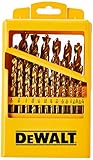
For small holes—roughly 1/8 to 1/2 inch—a quality cobalt twist bit is a reliable choice. Look for M35 cobalt for occasional work or M42 for longer life in harder steel. Cobalt bits are high-speed steel alloyed with cobalt, not merely coated; their heat resistance makes them more durable than ordinary bits when cutting thick steel. A M35 cobalt drill-bit set is a sensible buy for a range of small holes.
For larger holes, use a hole saw or annular cutter rated for steel. A bi-metal hole saw can handle occasional large openings, but it removes a wide ring of material and can grab hard if the teeth catch. Annular cutters remove only a ring and are efficient in thick steel, but they generally need a compatible magnetic drill or arbor and are excessive for a one-off repair. Don’t use a wood hole saw on pipe.
Carbide-tipped masonry bits are not a substitute for metal-cutting bits, and standard black-oxide or titanium-coated bits are poor choices for repeated holes in thick steel. Titanium nitride is a surface coating, not an alloy that keeps a bit cutting after the coating wears through.
Bit types at a glance
| Bit type | Best use | Trade-off |
|---|---|---|
| M35 or M42 cobalt twist bit | Small holes, occasional or repeated work | Costs more than basic HSS; still needs low speed and cutting fluid |
| Bi-metal hole saw | Occasional larger holes | Can chatter or grab; needs a pilot bit and steady control |
| Annular cutter | Large holes in thick steel, repeated work | Requires a compatible arbor or magnetic drill; higher setup cost |
| Basic HSS twist bit | Thin pipe or a few small holes | Wears quickly and overheats more readily in thick steel |
Use a controlled drill setup
A cordless drill is adequate for many holes if it has a low-speed setting, a sound chuck, and enough torque. Select low gear and keep the speed modest. As a practical starting point, run a 1/4-inch bit at about 500–800 RPM in steel, then go slower for larger bits; the exact useful speed depends on the bit, steel, and drill. If the drill stalls, chatters, or needs hard pressure to cut, stop and correct the setup rather than forcing it.
A hammer drill should be set to rotation-only. Hammer action is for masonry and can damage the bit, make it wander, or create a rough, oversized hole. An impact driver is also usually the wrong tool: its pulsing action makes control difficult and can break a bit or catch the pipe suddenly. Use a drill with a side handle for larger holes, and keep a firm two-handed grip.
For occasional small holes, an inexpensive HSS drill-bit set can be fine if the pipe wall is relatively thin and you don’t mind replacing dull bits. For thick-wall pipe or several holes, cobalt usually saves time and frustration.
How to drill cleanly
First, confirm the pipe is safe to drill. Do not drill a gas line, pressurized pipe, or any pipe carrying an unknown fluid. If the pipe is installed, identify what it contains and isolate or drain it as appropriate. Secure loose pipe in a vise or with clamps; never hold it by hand. If it is part of a structure or railing, make sure the hole will not compromise its use.
Mark the hole and use a center punch to make a small dimple. This helps keep the bit from skating on the galvanized surface. For holes larger than about 1/4 inch, drill a pilot hole—around 1/8 inch is a useful starting size—then step up. A pilot reduces the load on a larger bit, but it does not remove the need for low speed or a steady grip. Clamp a scrap backing block behind the pipe where possible to support the exit side and reduce burrs.
Use cutting oil or a metal-cutting fluid. Apply a little to the cutting area, drill with steady pressure, and pause if the bit or pipe gets hot. A squeal, smoke, blueing, or shiny rubbing without chips signals excess heat or a dull bit. Let the bit cut; pressing harder often makes heat worse. Keep oil off painted or finished areas, and wipe away residue after drilling.
When the bit breaks through, ease off pressure. The sudden breakthrough can make a drill twist, especially on thin-walled tubing. Deburr both sides with a deburring tool, countersink, or file. Wear safety glasses and gloves for handling the pipe, but keep gloves and loose clothing away from a rotating bit.
Avoid the usual failures
If the bit walks, improve the center-punch mark or use a guide. If it turns blue or stops making chips, reduce speed, add cutting fluid, and check for a dull edge. A dull bit usually rubs and heats rather than cuts. If the drill kicks back, the bit may have snagged at breakthrough or the workpiece may be moving; stop and secure the pipe before continuing.
Galvanizing is zinc coating, and drilling or grinding it can produce dust and fumes. Work with good ventilation, avoid breathing the dust, and clean up chips rather than leaving them where they can be handled or tracked indoors. For a single small hole in thin pipe, a basic HSS bit and careful technique may be enough. For thick wall, larger holes, or repeat work, spend on cobalt for twist-bit sizes or a steel-rated hole cutter matched to the drill and job.